Skip to content
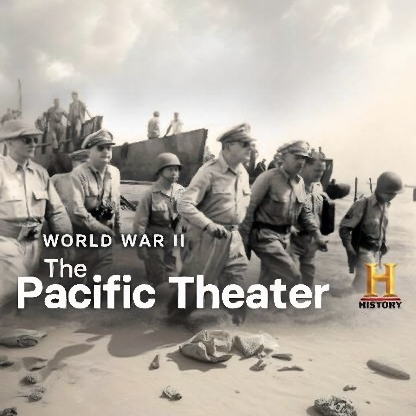
World War II: The Pacific Theater
Original price was: $39.99.$7.99Current price is: $7.99.
Be a part of the largest naval war in world history, experiencing the heat of battle under the sea, in the air, and on land. In 24 vivid lectures, Professor Craig L. Symonds (U.S. Naval War College) chronicles the Pacific War’s strategic logic, major campaigns, key leaders (MacArthur, Nimitz, Halsey), decisive naval and air battles, amphibious operations, submarine warfare, codebreaking, and the moral and political choices that ended the war
Course Overview
Be a part of the largest naval war in world history, experiencing the heat of battle under the sea, in the air, and on land. In 24 vivid lectures, Professor Craig L. Symonds (U.S. Naval War College) chronicles the Pacific War’s strategic logic, major campaigns, key leaders (MacArthur, Nimitz, Halsey), decisive naval and air battles, amphibious operations, submarine warfare, codebreaking, and the moral and political choices that ended the war.
Course Details
- Course No.: 8756
- Instructor: Professor Craig L. Symonds
- Format: 24 recorded lectures (~29–34 minutes each)
- Focus: origins of the Pacific war, carrier warfare, island‑hopping campaigns, submarine commerce warfare, air campaigns, kamikaze tactics, and the decision to use atomic weapons
Video Lectures (organized)
01: The Road to War in the Pacific, 1931–1941 — 33 min
Origins: Japanese expansion in China, resource pressures (notably oil), regional strategy, and the strategic calculations that led to conflict with the United States.
02: Infamy! The Japanese Attack Pearl Harbor — 32 min
Detailed reconstruction of December 7, 1941: Japanese planning and objectives, U.S. vulnerabilities, tactical results, and the strategic consequences of awakening American power.
03: Japan Moves South, December 1941–May 1942 — 31 min
Rapid Japanese advances across Southeast Asia and the Southwest Pacific, the fall of the Philippines, the Bataan Death March, and MacArthur’s escape to Australia.
04: The Doolittle Raid on Japan, April 1942 — 29 min
The raid’s planning and execution, its operational limitations, and its strategic and psychological impact on both American and Japanese leadership.
05: Station HYPO: Breaking the Japanese Code — 28 min
Allied signals intelligence in the Pacific—how codebreaking at Station HYPO and other units provided critical operational advantages.
06: Battle of the Coral Sea, May 1942 — 30 min
The first carrier‑only naval battle: tactical exchanges without ship‑to‑ship contact and the strategic failure of Japan’s Port Moresby objective.
07: Midway: 10 Minutes That Changed the War — 32 min
Minute‑by‑minute analysis of Midway, how intelligence and decision timing shaped the battle, and why Midway marked a strategic watershed.
08: Guadalcanal: Jungle Warfare — 32 min
The first major U.S. offensive: Marines ashore, duel for Henderson Field, command frictions, and the onset of protracted island campaigning.
09: Ironbottom Sound, 1942–1943 — 31 min
The brutal Solomon Islands naval battles, heavy ship losses that gave the area its grim name, and Japan’s strategic withdrawal from the campaign.
10: MacArthur, Halsey, and Operation Cartwheel — 33 min
Dual Allied command approaches—MacArthur’s and Nimitz’s coordination—Operation Cartwheel’s role in neutralizing Rabaul and advancing toward the Philippines.
11: The Big Blue Fleet and American Industry — 31 min
U.S. industrial mobilization: shipbuilding, aircraft production (Hellcat, Essex carriers), logistics, and the material basis for sustained Pacific operations.
12: Battle for Tarawa: A Square Mile of Hell — 32 min
Tarawa’s amphibious assault, tactical miscalculations (tides, reefs), and the heavy Marine casualties that exposed challenges for future landings.
13: A Three‑Front Pacific War, January–May 1944 — 33 min
Simultaneous operations across the Gilberts, Marshalls, and New Guinea—stepping‑stone strategy, lessons learned, and consolidation of momentum.
14: The US Leaps to the Marianas, June 1944 — 32 min
Strategic rationale for the Marianas campaign, the link to airbases for B‑29 operations, and the strain of fighting multiple theaters (Europe and Pacific).
15: Battle of the Philippine Sea, June 1944 — 30 min
Carrier battle that decimated Japanese naval air power (“Great Marianas Turkey Shoot”) and its implications for Japan’s capacity to resist.
16: Bombing Japan: Fire from the Sky — 30 min
Development of strategic and tactical air campaigns against Japan, incendiary raids on cities, and the growing debate over airpower’s effects on the homeland.
17: American Submarines in the Pacific, 1944–1945 — 32 min
Submarine campaign against Japanese merchant shipping: doctrine, successes, and the profound impact on Japan’s logistics and economy.
18: MacArthur Returns to the Philippines — 30 min
MacArthur’s personal and strategic commitment to liberate the Philippines, planning and execution of the Leyte operation.
19: Battle of Leyte Gulf, October 1944 — 32 min
A colossal, multi‑axis naval engagement; chaotic phases, near catastrophes, Japanese strategies, and the decisive Allied victory that broke the IJN’s power.
20: Admiral Halsey’s Typhoons, 1944–1945 — 30 min
Halsey’s command choices during typhoons, risks of naval weather operations, controversies, and lessons in command responsibility.
21: Battle for Iwo Jima, February–March 1945 — 30 min
Strategic rationale for invading Iwo Jima, intense volcanic terrain combat, casualty costs, and its role in escorting B‑29s and staging operations.
22: Battle for Okinawa, April–June 1945 — 31 min
Operation Iceberg’s scale, fierce ground fighting, massive casualties, and strategic implications for any planned invasion of Japan.
23: Kamikazes: Japan’s Special Attack Units — 31 min
Origins, doctrine, psychological and material effects of kamikaze tactics on Allied naval operations during late‑war island campaigns.
24: Dropping the Atomic Bomb — 34 min
Political and military context of the atomic decision, Potsdam deliberations, the attacks on Hiroshima and Nagasaki, and the end of hostilities in the Pacific.
Related products