Skip to content
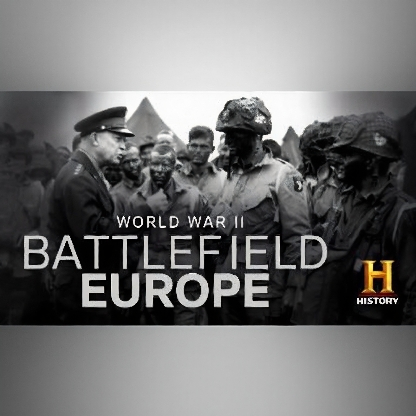
World War II: Battlefield Europe
Original price was: $39.99.$7.99Current price is: $7.99.
Parachute into World War II’s European Theater alongside a military strategist who explains the who, what, where, when, why, and how. This 24‑lecture course by Professor David R. Stone examines strategic decisions, major campaigns, decisive battles, occupation and resistance, the Holocaust, home‑front mobilization, and the political outcomes that shaped postwar Europe. Emphasis is placed on the interplay between political choices and military operations that determined the war’s course across the continent.
Course Overview
Parachute into World War II’s European Theater alongside a military strategist who explains the who, what, where, when, why, and how. This 24‑lecture course by Professor David R. Stone examines strategic decisions, major campaigns, decisive battles, occupation and resistance, the Holocaust, home‑front mobilization, and the political outcomes that shaped postwar Europe. Emphasis is placed on the interplay between political choices and military operations that determined the war’s course across the continent.
Course Details
- Course No.: 8762
- Instructor: Professor David R. Stone
- Format: 24 recorded lectures (~24–30 minutes each)
- Focus: strategic analysis of the European Theater — Eastern Front, Western campaigns, the air and naval wars, resistance movements, the Holocaust, logistics, intelligence, and war termination
Video Lectures (organized)
01: The Battle of Moscow, December 1941 — 30 min
Why Moscow in 1941 was a turning point: the German advance, Soviet resilience, the counteroffensive, and the strategic consequences for Nazi ambitions.
02: Anti‑Semitism and the Nazis — 30 min
The evolution of European anti‑Semitism into Nazi racial policy and how ideology shaped persecution and ultimately the mechanics of the Holocaust.
03: Tearing Up the Treaty of Versailles — 28 min
How Versailles’ legacy, Spanish Civil War, and diplomatic failures created the strategic environment that allowed German revisionism to succeed.
04: The War Begins, 1939 — 29 min
Molotov‑Ribbentrop, the invasion of Poland, the outbreak of general war in Europe, and the early use of Blitzkrieg.
05: The Nazi Rise to Power, 1922–1933 — 29 min
Social, economic, and political forces enabling Hitler’s ascent and the domestic consolidation that underwrote foreign policy aggression.
06: The Fall of France, Spring 1940 — 28 min
German operational innovation in the West, the collapse of French defenses, Dunkirk, and the emergence of Vichy France.
07: The Battle of Britain—and the Blitz — 28 min
Strategic stakes of air supremacy, RAF defenses, German objectives, and the sustained aerial campaign against Britain’s cities.
08: Britain and Germany’s Standoff at Sea — 28 min
U‑boat versus convoy war, German surface and submarine strategy, and early naval actions linking Mediterranean and Atlantic theaters.
09: Hitler, Stalin, and Operation Barbarossa — 29 min
The strategic logic and miscalculations behind the German invasion of the Soviet Union and the initial successes and vulnerabilities it exposed.
10: Roosevelt, Isolationism, and Lend‑Lease — 29 min
U.S. politics and policy from neutrality to material support for Britain and the USSR; rearmament debates and planning for global war.
11: North Africa and the Battle of El‑Alamein — 29 min
Desert warfare, Axis ambitions in the Mediterranean, Rommel and Montgomery, and Operation Torch’s strategic impact.
12: The Battle of Stalingrad, 1942–1943 — 28 min
Urban combat, operational encirclement, German losses, and why Stalingrad marked the strategic reversal on the Eastern Front.
13: Resistance in Nazi‑Occupied Europe — 28 min
Occupied societies’ range of responses: collaboration, covert resistance, partisans, and the impact of underground operations on Axis control.
14: The Holocaust — 29 min
How Nazi genocide was organized and carried out, the operation of the extermination system, and questions about Allied responses.
15: U‑Boats and the Battle of the Atlantic — 29 min
Submarine warfare fundamentals, convoy tactics, intelligence (ULTRA), anti‑submarine technology, and the campaign’s ultimate Allied victory.
16: The Allies Invade Italy: Sicily to Anzio — 30 min
The Italian campaign’s operational demands, Monte Cassino and Anzio, political ramifications, and effects on the broader timetable for opening a Western front.
17: Strategic Bombing over Germany — 29 min
The doctrine, execution, and ethical debates of area and precision bombing; industrial effects and civilian costs.
18: Allied Industry, Spying, and Wonder Weapons — 26 min
Intelligence, codebreaking, industrial mobilization, and the race for “wonder” technologies versus mass production as the decisive element.
19: Soviets, Germans, and the Eastern Front — 27 min
Kursk, German allied collapses, and the massive Soviet offensives (including the Belorussian operation) that shattered German strategic capacity.
20: D‑Day, June 1944 — 28 min
Planning, deception (Operation Bodyguard), the Normandy landings, and the operational challenges of the invasion and breakout.
21: Hitler Runs Out of Options, Fall 1944 — 27 min
Allied pressure in the West, German shortages, and the Ardennes offensive (Battle of the Bulge) as Germany’s last major counterattack.
22: Soviet Push to Berlin and Yalta Power Play — 29 min
Soviet strategic advances, the race to Berlin, and the Yalta conference’s decisions over postwar Europe and spheres of influence.
23: Eisenhower’s Endgame in Europe — 24 min
Final Allied operational decisions, German capitulation dynamics, surrender arrangements, and the transition to occupation.
24: War’s End: Picking Up the Pieces — 30 min
Immediate postwar challenges: displaced persons, denazification, the origins of NATO and the Cold War, and Europe’s political and economic reconstruction.
Related products

By Area