Skip to content
Wonders of the National Parks: A Geology of North America
Original price was: $69.99.$22.99Current price is: $22.99.
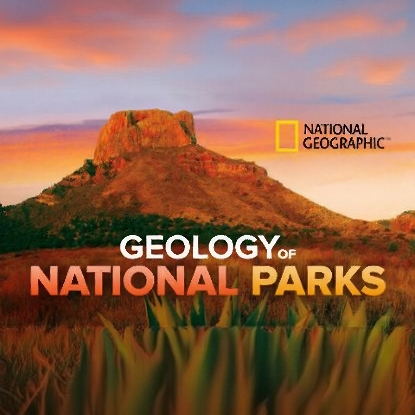
From Yellowstone to the Everglades, join geologist and National Geographic director Ford Cochran on a fascinating scientific tour of all of America’s national parks. There’s no better education in the remarkable forces that formed our world than a tour of the national parks of North America. Most visitors, guided by informational signposts or tour books, get only a superficial view of these sites. But there is so much more to be discovered.
Overview
Course No. 1707
From Yellowstone to the Everglades, join geologist and National Geographic director Ford Cochran on a fascinating scientific tour of all of America’s national parks. There’s no better education in the remarkable forces that formed our world than a tour of the national parks of North America. Most visitors, guided by informational signposts or tour books, get only a superficial view of these sites. But there is so much more to be discovered.
These 36 lectures provide in-depth insights, intriguing perspectives, and riveting little-known facts about these treasured places that you won’t find simply by driving through them. Ford Cochran – geologist, journalist, and National Geographic programming director – has crafted a fascinating introduction to the geology that forged North America’s national parks. He covers every national park in the United States, together with exceptional state parks, national monuments, historical parks, marine sanctuaries, and other preserves, plus a number of outstanding parks in Canada, Mexico, and beyond.
You’ll learn how each park fits into the geological epic of North America – a story of mountain ranges created by the collision of tectonic plates; of oceans rising and drowning the lowlands; of volcanoes raining ash and liquid fire; of glaciers growing to towering heights and scouring the terrain down to the bedrock; of desert sands burying entire regions; of earthquakes transforming the land in an instant; and of the tenacious, erosive power of flowing water. In addition to geology, Professor Cochran also touches on botany, zoology, atmospheric science, and other disciplines as they relate to specific protected areas.
No previous background in geology or science is needed to experience the thrill these lectures offer – just a sense of curiosity as you unravel the mysteries of some of the most beautiful landscapes on the planet. Anyone planning a trip to one or more of these sites will find their experiences immeasurably enriched by this insightful, entertaining presentation.
Video Lessons
01: Yellowstone: Microcosm of the National Parks
Start your tour of the geological wonders of North America’s national parks with Yellowstone, where the breathtaking landscape inspired the idea of a national park. Focus on the processes that produce Yellowstone’s many geothermal formations, particularly its geysers.
Duration: 36 min
02: Yellowstone’s Cataclysmic Origins and Future
Read the evidence in the rocks to discover Yellowstone’s bigger story: the massive volcanic eruptions that created the region and will one day destroy it, the glaciers that shaped the terrain, and the meltwater floods that carved the impressive Grand Canyon of Yellowstone.
Duration: 34 min
03: Grand Teton and Jackson Hole
At Grand Teton National Park south of Yellowstone, an active fault lifts some of North America’s oldest rocks to the summits of some of the continent’s youngest mountains. Explore these glacier-sculpted peaks, and learn the origin of the broad valley, called Jackson Hole, at the base of the Teton Range.
Duration: 30 min
04: Hawaii Volcanoes: Earth’s Largest Mountains
Compare the lessons of hotspot volcanism at Yellowstone with the very different landscape at Hawaii Volcanoes National Park, which is also stoked by upwelling magma from Earth’s mantle. Professor Cochran describes rivers of fire on the Big Island of Hawaii and suggests distinctive lava formations to visit.
Duration: 30 min
05: The Hawaiian Islands and Maui’s Haleakala
How does a barren volcanic landscape become a tropical paradise? Study the speed with which volcanic islands erode, leaving rich soil behind. Watch these processes at work on the Big Island of Hawaii, at Haleakala National Park on Maui, and also in the National Park of American Samoa.
Duration: 32 min
06: Mount Saint Helens, Lassen Volcanic, Rainier
Tour Mount Rainier National Park and Lassen Volcanic National Park in the Pacific Northwest, which are part of the Cascade Range of active volcanoes that include Mount Saint Helens. Then visit a group of similarly cataclysmic volcanoes in national parks in central Mexico.
Duration: 29 min
07: Crater Lake, Olympic, North Cascades
Learn how seafloor subduction raised a lofty volcano only to obliterate it in a colossal eruption that created Crater Lake in Oregon. Hundreds of miles to the north, tectonic forces upended the imposing mountains of Olympic National Park and formed the high jagged peaks at North Cascades National Park.
Duration: 27 min
08: Volcanoes of Alaska: Katmai and Lake Clark
Travel to Alaska to explore the vast national parks at Katmai and Lake Clark. Katmai was the site of the 20th century’s largest volcanic eruption, while Lake Clark is unusual among national parks for having no roads and being accessible only by boat or small plane.
Duration: 31 min
09: Alaska’s Glacier Bay and Kenai Fjords
Continue your tour of the largest state with stops at two spectacular parks that are popular destinations for cruise ships: Glacier Bay and Kenai Fjords. Discover how glaciers form and examine their historical advance and retreat in this region. Also, learn how a glacier is like a candy bar!
Duration: 29 min
10: Yosemite: Nature’s Cathedral
Survey the most beautiful valley on Earth: Yosemite. Even for those who have not yet visited, its views are iconic thanks to stunning photos by Ansel Adams and others. Investigate the geological history of the park, focusing on its most distinctive rock type—granite.
Duration: 33 min
11: Redwoods, Sequoias, and the Sierra Nevada
Dig deeper into the geology of Yosemite, charting the role of glaciers in shaping the terrain. Also, learn the origin of California’s famous gold deposits. Then study the special conditions that promote the growth of giant sequoias, and visit the national parks that preserve these towering trees for posterity.
Duration: 34 min
12: Pinnacles to Joshua Tree: The San Andreas
Trace the earth-shaking San Andreas fault through a series of national parks and recreation areas—from Point Reyes, Golden Gate, and Pinnacles in the north to the Santa Monica Mountains, Channel Islands, Joshua Tree, and Mexico’s Sierra de San Pedro Martir in the south.
Duration: 29 min
13: Denali to Gates of the Arctic
The story of the tectonic train wreck that built Alaska is written all over the three largest national parks in the U.S.: Wrangell-St. Elias, Gates of the Arctic, and Denali. These remote preserves encompass America’s tallest mountains, all built by subduction zone processes.
Duration: 35 min
14: Death Valley and Great Basin: The Rift Zone
Continental rifting has caused huge blocks of land to sink between high mountain belts, producing Death Valley, the lowest, hottest, driest place in North America. Explore this and other national parks and monuments in the Great Basin region.
Duration: 30 min
15: Shenandoah: The Collision of Old Continents
A hike along the Appalachian Trail is a journey back in time to a continental collision that raised mountains rivaling the Himalayas—now eroded into the Appalachians. Chart the geology of this ancient chain from Shenandoah National Park to Gros Morne National Park in Newfoundland.
Duration: 33 min
16: Great Smoky Mountains and Hot Springs
Survey some of the attractions that make the Great Smoky Mountains America’s most visited national park. Investigate a related geological structure in the famous Hot Springs National Park, discovering why there are hot springs so far from volcanic activity.
Duration: 29 min
17: National Rivers: Gorges, Falls, and Meanders
Rivers are an important clue to the geology of a region and also offer superb possibilities for recreation. Journey to some of America’s national rivers, wild and scenic rivers, water trails, and other river parks, including the Upper Missouri River Breaks, the New River Gorge, and Niagara Falls.
Duration: 31 min
18: Great Dune Fields of North America
Sand dunes aren’t usually pictured in a setting of alpine peaks, but that’s precisely the scene at Great Sand Dunes National Park in the Colorado Rockies. Study the conditions that create sprawling dune fields here as well as in Kobuk Valley, White Sands, Death Valley, and Nebraska’s Sand Hills.
Duration: 31 min
19: National Seashores and Lakeshores
Get your feet wet at America’s coastal national parks, where dunes, salt marshes, ponds, and lagoons characterize shorelines. Investigate the myriad dynamic processes at Cape Hatteras, Cape Cod, and Assateague National Seashores, and at Sleeping Bear Dunes, Indiana Dunes, Pictured Rocks, and Apostle Islands National Lakeshores.
Duration: 30 min
20: Reefs: Virgin Islands, Florida, Texas
Turn to a trio of national parks where corals and other reef creatures are helping create new carbonate rock. Then encounter a massive reef from our planet’s past, raised to towering heights at Guadalupe Mountains National Park.
Duration: 28 min
21: National Marine Sanctuaries and Monuments
Continue your underwater adventures by touring America’s national marine sanctuaries and monuments, spread over more than a dozen locations up and down the Atlantic and Pacific coasts, plus the Gulf of Mexico, the Great Lakes, Hawaii, and beyond.
Duration: 32 min
22: Acadia’s Highlands and Islands
The rocks of coastal Maine reveal a gripping legacy of lost oceans, colliding continents, epic mountains, furious volcanoes, and massive glaciers. Acadia National Park records evidence of all this, etched into its granite summits and boulder-strewn shores.
Duration: 30 min
23: The Dakota Badlands
Visit Theodore Roosevelt, Badlands, and Mount Rushmore National Parks in the Dakotas, beholding the landscape that inspired Theodore Roosevelt to become an ardent conservationist. Learn how the fantastic forms of the badlands are the product of deposition, uplift, and erosion.
Duration: 32 min
24: The Grand Canyon’s 2-Billion-Year Staircase
Descend into the Grand Canyon, recording the full sequence of strata from top to bottom—a story that takes you from 270-million-year-old limestone formed in a shallow sea to basement rocks that record a mountain-building saga from 1.7 billion years ago.
Duration: 34 min
25: Carving the Grand Canyon
What did it take to carve the Grand Canyon? Explore theories on how this remarkable chasm came to be. Then take a boat trip through the park, from the Colorado River’s access point at Lee’s Ferry, down fearsome rapids and into a majestic wonderland. Also, study how humans have changed the river.
Duration: 29 min
26: Petrified Forest and Other Fossil Parks
See Petrified Forest National Park, a colorful landscape littered with fossil trees that shaded Earth’s earliest dinosaurs. Here and in other parks in the U.S. and Canada, fossilized flora and fauna open a window on ancient ecosystems, extinct species, and the history of life on Earth.
Duration: 30 min
27: Bryce Canyon, Canyonlands, Arches
Nowhere is nature’s artistry more exquisite than in the intricately eroded parks of the Colorado Plateau—from Bryce Canyon to Arches National Park to Canyonlands National Park. Seek answers to these strange, sculpted landforms, asking questions such as: How did more than 2,000 natural arches form in the Arches region?
Duration: 31 min
28: Zion, Gunnison’s Black Canyon, Capitol Reef
Witness other wonders of canyon erosion on the Colorado Plateau, including the deep and narrow Black Canyon of the Gunnison, as well as The Narrows, a dramatic slot canyon in Zion National Park.
Duration: 30 min
29: Mesa Verde and Ancient Settlements
Explore parks where geology supported the settlement of people in North America. Begin at the Mesa Verde cliff dwellings, cleverly engineered to exploit natural shelter and rock seeps. Then survey other cliff dwellings and pueblos in the Southwest.
Duration: 30 min
30: The Colorado Rocky Mountains
Ascend the heights of the Rocky Mountains, asking how tectonic processes nearly a thousand miles away could possibly have raised this extensive range. Venture to Rocky Mountain National Park, Red Rocks, the Garden of the Gods, the Maroon Bells, and the Canadian Rockies.
Duration: 31 min
31: Montana’s Glacier and the Canadian Rockies
Journey to Glacier National Park, where the glaciers may be disappearing, but the impressive glacier-sculpted terrain remains.
Duration: 32 min
32: Big Bend on the Rio Grande and Saguaro
Investigate the multitude of geological processes on view at Big Bend National Park in Texas. Here you find signs of continental collisions, volcanic eruptions, dramatic erosion, and other breathtaking events. Then survey another geologist’s paradise—Saguaro National Park.
Duration: 30 min
33: Mammoth Cave, Wind Cave, Carlsbad Caverns
Visit underground parks, exploring a tiny portion of the hundreds of miles of mapped passages in Mammoth Cave, Wind Cave, and Carlsbad Caverns National Parks. Consider the similarities and differences between these caves—two carved by mildly acidic rainwater, the other by dilute sulfuric acid!
Duration: 31 min
34: The Everglades and the Congaree Bottomland
Florida is a limestone-dominated piece of proto-Africa that got stuck to North America. Also study similar terrain at Congaree National Park and Chichen Itza in the Yucatan.
Duration: 33 min
35: Voyageurs, Isle Royale, the Canadian Shield
Explore the ancient heart of North America—the Canadian Shield—heading north from Voyageurs National Park in Minnesota to Northeast Greenland National Park, the largest, most northerly national park in the world. En route, stop off at parks on Isle Royale, Baffin Island, and Ellesmere Island.
Duration: 31 min
36: Assembling North America, Park by Park
Conclude by surveying national parks not yet visited in the course, traversing North America on a grand expedition. Along the way, assess the geology of this spectacularly diverse continent. From the Appalachians to the Aleutians, the national parks and other protected lands tell a dramatic and unforgettable story.
Duration: 42 min
Related products