Skip to content
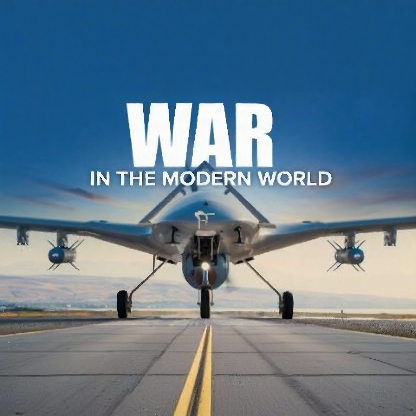
War in the Modern World
Original price was: $49.99.$9.99Current price is: $9.99.
Dive into military history and strategy with this 24‑episode course focused on the geopolitical conflicts, weapons, strategies, and personalities that have defined war since 1945. Professor David R. Stone traces how the nature of war shifted after World War II—from great‑power confrontation to proxy wars, insurgencies, and technological leveling—and examines major postwar conflicts, critical innovations (IEDs, guided missiles, drones, cyber), and enduring strategic lessons.
Course Overview
Dive into military history and strategy with this 24‑episode course focused on the geopolitical conflicts, weapons, strategies, and personalities that have defined war since 1945. Professor David R. Stone traces how the nature of war shifted after World War II—from great‑power confrontation to proxy wars, insurgencies, and technological leveling—and examines major postwar conflicts, critical innovations (IEDs, guided missiles, drones, cyber), and enduring strategic lessons.
Course Details
- Course No.: 30280
- Instructor: Professor David R. Stone (U.S. Naval War College)
- Format: 24 lectures (~24–31 minutes each)
- Focus: post‑1945 conflicts, insurgency and counterinsurgency, Cold War and decolonization wars, major regional wars, modern weapons and technologies, and the strategic logic of contemporary war
Video Lectures (organized)
01: Afghanistan and the Nature of Modern War — 31 min
Use the U.S. war in Afghanistan as a lens to understand how post‑1945 conflicts differ in actors, methods, and political constraints.
02: Nightmare Scenarios of Modern War — 25 min
Consider plausible future conflicts and the structural factors (economy, nuclear weapons, global interdependence) that shape great‑power war risks.
03: The Tools of Modern Warfare — 24 min
Survey five transformational technologies—AK‑47, IEDs, guided missiles, drones, and cyber—and how they changed battlefield dynamics.
04: From World War to Cold War — 28 min
Trace the transition from 1945 occupation politics to a bipolar rivalry, including early insurgencies and Soviet responses in Eastern Europe.
05: Europe’s Exit from Colonial Asia — 30 min
Examine decolonization conflicts in Indonesia, the Philippines, and India and how imperial withdrawal reshaped regional power structures.
06: China’s Civil War — 26 min
Study the decisive struggle between Mao’s Communists and Chiang Kai‑shek’s Nationalists and the international stakes involved.
07: The Unfinished Korean War — 26 min
Analyze the causes, conduct, and legacy of Korea’s limited war and the enduring armistice on the peninsula.
08: Britain’s Exit from Palestine, Malaya, and Kenya — 28 min
Assess British counterinsurgency efforts and the political costs of suppressing postwar rebellions in three theaters.
09: France’s Vietnam War — 28 min
Follow France’s attempt to retain empire in Indochina and Algeria and the military and political consequences of protracted colonial wars.
10: Insurgency and Counterinsurgency — 28 min
Define insurgency and COIN doctrine, comparing rebel and state methods across multiple historical cases.
11: The Arab‑Israeli Wars: Israel’s String of Triumphs — 28 min
Survey the 1948–1967 period and how Israel’s military successes shaped regional politics.
12: The Arab‑Israeli Wars: Victory without Peace — 30 min
Examine the post‑1967 challenges, negotiations (Camp David, Oslo), and continuities of conflict with non‑state actors.
13: India‑Pakistan: The Enduring Rivalry — 30 min
Explore the origins and consequences of the Kashmir disputes and the regional security dynamics they produced.
14: The World War That Never Happened — 29 min
Why nuclear deterrence and crises like the Cuban Missile Crisis prevented direct great‑power war after 1945.
15: America’s Vietnam War — 28 min
A focused study of U.S. strategy, political constraints, and the lessons of protracted counterinsurgency in Vietnam.
16: The Soviet War in Afghanistan — 29 min
Analyze Soviet strategic choices, insurgent resilience, and the conflict’s broader geopolitical reverberations.
17: Latin America’s Revolutionary Wars — 29 min
Examine civil wars and revolutionary movements in Guatemala, Cuba, Chile, and Nicaragua and external interventions.
18: The War for the Falklands — 27 min
A post‑WWII conventional naval/expeditionary war: causes, British operational success, and the role of anti‑ship missiles.
19: Africa’s Modern World War: Rwanda and Congo — 29 min
Study the mass violence and regional upheaval of the 1990s and why civil wars in Africa produce massive humanitarian and security crises.
20: The Iraq‑Iran War — 30 min
The 1980–1988 conflict’s origins, conduct, and long‑term effects on Middle Eastern geopolitics.
21: Desert Storm: The U.S. versus Iraq — 29 min
Coalition warfare, operational art, and post‑war political outcomes in the 1991 Gulf War.
22: Yugoslavia’s Civil Wars — 28 min
Ethnic fragmentation, international responses, and the limits of the post‑Cold‑War “new world order” in Bosnia and Kosovo.
23: A New Russian Empire? — 29 min
Post‑Soviet Russian interventions (Chechnya, Georgia, Ukraine) and the reassertion of regional force politics.
24: Iraq and ISIS in the War on Terror — 31 min
Trace the U.S. invasions, the rise of extremist groups, state collapse, and enduring counterterror challenges in the 21st century.
Related products