Skip to content
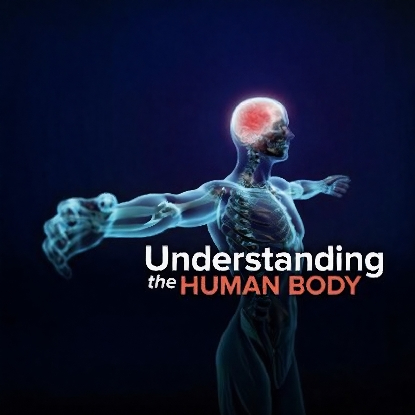
Understanding the Human Body: An Introduction to Anatomy and Physiology, 2nd Edition
Original price was: $89.99.$29.99Current price is: $29.99.
Discover the remarkable complexity of the human body in this 32-lecture course by Dr. Anthony Goodman, a surgeon and professor of medicine. Each lecture explores a major bodily system—first its anatomy, then its physiology, and finally common pathologies. Covering cardiovascular, respiratory, nervous, digestive, endocrine, and other systems, this course blends scientific rigor with accessible explanations.
Understanding the Human Body: An Introduction to Anatomy and Physiology, 2nd Edition
Course Overview
Discover the remarkable complexity of the human body in this 32-lecture course by Dr. Anthony Goodman, a surgeon and professor of medicine. Each lecture explores a major bodily system—first its anatomy, then its physiology, and finally common pathologies. Covering cardiovascular, respiratory, nervous, digestive, endocrine, and other systems, this course blends scientific rigor with accessible explanations.
Video Lectures
01: Cardiovascular System—Anatomy of the Heart (47 min)
Examine the heart’s structure, coverings, and subdivisions, and distinguish arteries from veins.
02: Cardiovascular System—Physiology of the Heart (46 min)
Explore the cardiac cycle, heart valves, conduction system, and conditions like atherosclerosis.
03: Cardiovascular System—Anatomy of the Great Vessels (45 min)
Study the three vessel networks and major circulatory routes (systemic, pulmonary, hepatic portal).
04: Cardiovascular System—Physiology of the Great Vessels (45 min)
Learn how vessels regulate blood flow, pressure, and clotting, and review blood composition.
05: Respiratory System—Anatomy of the Lungs (45 min)
Analyze respiratory structures and their integration with the circulatory system.
06: Respiratory System—Physiology of the Lungs (46 min)
Understand gas exchange, respiratory centers, and disorders like asthma and COPD.
07: Nervous System—Anatomy of the Brain (45 min)
Map the brain’s divisions, cerebrum, and functional areas of the cerebral cortex.
08: Nervous System—Physiology of the Brain (45 min)
Compare nervous and endocrine systems, and classify central/peripheral nerves.
09: Nervous System—Spinal Cord and Spinal Nerves (46 min)
Review spinal cord anatomy, reflex arcs, and spinal nerve categories.
10: Nervous System—Autonomic Nervous System and Cranial Nerves (45 min)
Contrast parasympathetic (rest) and sympathetic (fight/flight) systems, plus 12 cranial nerves.
11: Nervous System—The Eyes (45 min)
Dissect eyeball anatomy, photoreceptors, and visual perception pathways.
12: Nervous System—The Ears, Hearing, and Equilibrium (45 min)
Explore ear structures, sound transmission, and vestibular balance mechanisms.
13: Nervous System—Memory (46 min)
Investigate memory formation, brain pathologies, anesthesia, and referred pain.
14: Digestive System—Anatomy of the Mouth, Esophagus, and Stomach (46 min)
Trace food’s path through upper digestive structures and stomach layers.
15: Digestive System—Physiology of the Mouth, Esophagus, and Stomach (45 min)
Detail mechanical/chemical digestion, gastric phases, and disorders like ulcers.
16: Digestive System—Anatomy of the Pancreas, Liver, and Biliary Tree (45 min)
Examine these organs’ structure, blood supply, and bile drainage pathways.
17: Digestive System—Physiology of the Pancreas, Liver, and Biliary Tree (45 min)
Learn digestive enzyme roles, liver functions, and conditions like cirrhosis.
18: Digestive System—Anatomy of the Small Intestine, Colon, and Rectum (45 min)
Study nutrient absorption in the small intestine and waste processing in the colon.
19: Digestive System—Physiology of the Small Intestine, Colon, and Rectum (45 min)
Review digestion reflexes, peristalsis, and defecation physiology.
20: Endocrine System—The Pituitary and Adrenal Glands (46 min)
Compare endocrine/nervous systems and hormone functions in key glands.
21: Endocrine System—Pancreas (45 min)
Analyze insulin/glucagon roles and diabetes mellitus pathologies.
22: Endocrine System—Thyroid and Parathyroid Glands (45 min)
Link thyroid hormones to metabolism and parathyroid to calcium regulation.
23: Urinary System—Anatomy of the Kidneys, Ureters, and Bladder (45 min)
Map nephron structure and urine transport pathways.
24: Urinary System—Physiology of the Kidneys, Ureters, and Bladder (45 min)
Explain filtration, reabsorption, and homeostasis maintenance.
25: Reproductive System—Male (45 min)
Detail testes, sperm production, and prostate functions.
26: Reproductive System—Female (46 min)
Cover ovaries, menstrual cycles, fertilization, and breast anatomy.
27: Reproductive System—Physiology of Genetic Inheritance (45 min)
Distinguish DNA inheritance patterns and developmental abnormalities.
28: Musculoskeletal System—Physiology and Physics of the Muscles (45 min)
Classify muscle types (skeletal, smooth, cardiac) and contraction mechanisms.
29: Musculoskeletal System—Anatomy of the Muscles (45 min)
Name muscles by features like fiber orientation and mechanical action.
30: Musculoskeletal System—Bones (46 min)
Review skeletal divisions, marrow, and fracture treatments.
31: Immune System—Anatomy and Physiology (46 min)
Explore T-cells, B-cells, and immune responses to HIV/AIDS and transplants.
32: The Biology of Human Cancer (47 min)
Unpack cancer’s causes (mutations, environmental factors) and invasive mechanisms.
Related products