Skip to content
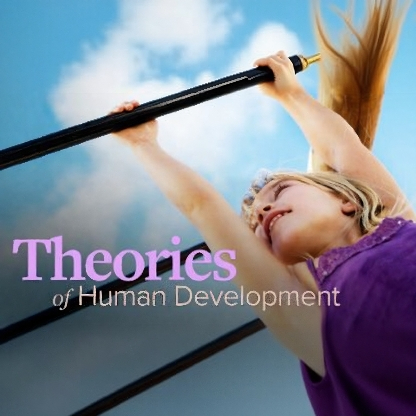
Theories of Human Development
Original price was: $29.99.$7.99Current price is: $7.99.
“Human development” is the science that studies how we learn and develop psychologically from birth to the end of life. To a large extent, the study of human development is the study of child development, because the most significant changes take place from infancy through adolescence. This very young science not only enables us to understand children and help them develop optimally, but also gives us profound insights into who we are as adults.
Theories of Human Development
Course Overview
“Human development” is the science that studies how we learn and develop psychologically from birth to the end of life. To a large extent, the study of human development is the study of child development, because the most significant changes take place from infancy through adolescence. This very young science not only enables us to understand children and help them develop optimally, but also gives us profound insights into who we are as adults.
In Theories of Human Development, Professor Malcolm W. Watson introduces you to the six theories that have had perhaps the greatest influence on this field. You will meet the people who formulated each theory, become familiar with their philosophical backgrounds and the historical contexts in which they worked, and study the specific processes of human development that each theory describes.
Video Lectures
01: Introduction—The Value of Theories (33 min)
This lecture introduces the major objectives of the course. It allows students to assess where they stand on major issues regarding human development. The lecture then discusses the value of scientific theories for understanding development, and the criteria for judging whether a theory is valuable.
02: The Early History of Child Study (28 min)
Prior to and during the Industrial Revolution in Europe and America, people often showed a lack of humane concern for children. This translated into an absence of systematic study of child development.
03: Two Worldviews—Locke vs. Rousseau (31 min)
Two major philosophers, John Locke and Jean-Jacques Rousseau, changed the prevailing perception of children. Locke espoused the “mechanistic” worldview, while Rousseau proposed the “organismic” worldview.
04: Later History—Becoming Scientific (30 min)
This lecture traces the application of scientific method and theory to the study of human development.
05: Freud’s Psychodynamic Theory (31 min)
Freud’s psychodynamic theory caused a revolution in thinking about human development. This lecture discusses his history, theory, and reliance on concepts like psychic energy.
06: How We Gain Contact with Reality—The Ego (30 min)
Focuses on the nonadaptive nature of the unconscious id, the development of the ego, and the superego.
07: Freud’s Psycho-Sexual Stages (31 min)
Discusses Freud’s concept of erogenous zones, the five psychosexual stages, and the Oedipus complex.
08: Erikson’s Psycho-Social Theory (30 min)
Introduces Erikson’s stages of development, based on the need to develop mastery and personal identity through life crises.
09: Erikson’s Early Stages (31 min)
Covers the first four stages of Erikson’s theory: trust vs. mistrust, autonomy vs. shame, initiative vs. guilt, and industry vs. inferiority.
10: Identity and Intimacy (31 min)
Examines adolescence (identity vs. role confusion) and young adulthood (intimacy vs. isolation).
11: Erikson’s Later Stages—Adult Development (31 min)
Discusses generativity vs. stagnation (adulthood) and ego integrity vs. despair (old age).
12: Bowlby and Ainsworth’s Attachment Theory (31 min)
Introduces attachment theory, describing the personal histories and research of its creators.
13: How Nature Ensures That Attachment Will Occur (31 min)
Explores innate releasing mechanisms and the allure of babyish features in attachment.
14: Development of Secure and Insecure Attachments (31 min)
Describes Ainsworth’s “strange situation” task and the causes of insecure attachments.
15: Early Attachments and Adult Relationships (31 min)
Examines how early attachments influence adult romantic relationships.
16: Bandura’s Social Learning Theory (31 min)
Introduces Bandura’s theory, emphasizing cognitive focus and vicarious reinforcement.
17: Bandura’s Self-Efficacy Theory (31 min)
Discusses self-efficacy—how belief in one’s abilities shapes skill development.
18: Piaget’s Cognitive-Developmental Theory (31 min)
Introduces Jean Piaget and his work on genetic epistemology (how knowledge develops).
19: Piaget’s Early Stages (31 min)
Covers the sensory-motor and pre-operational periods in cognitive development.
20: Concrete Operations (31 min)
Explores the five-to-seven-year shift and the concrete-operational period.
21: Piaget’s Last Stage (31 min)
Examines formal-operational thinking, abstraction, and hypothetical reasoning.
22: Vygotsky’s Cognitive-Mediation Theory (31 min)
Introduces Lev Vygotsky’s Marxist-influenced theory of psychological development.
23: Vygotsky’s Zone of Proximal Development (31 min)
Discusses scaffolding and the shifting “zone of proximal development.”
24: Conclusion—Our Nature and Development (31 min)
Integrates major theories using the allegory of blind men describing an elephant.
Related products


Courses