Skip to content
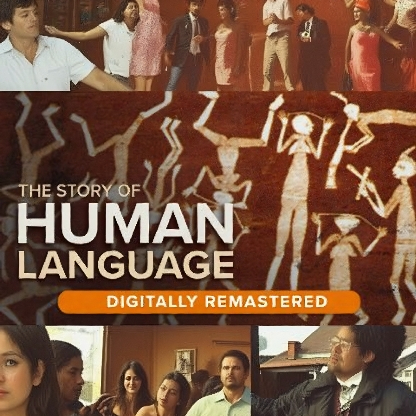
The Story of Human Language
Original price was: $69.99.$19.99Current price is: $19.99.
Explore the evolution, diversity, and mysteries of human communication with linguist John McWhorter in this digitally remastered classic.
The Story of Human Language
Course Overview
Course No. 1600
Explore the evolution, diversity, and mysteries of human communication with linguist John McWhorter in this digitally remastered classic.
This 36-lecture journey examines:
- Origins of language 150,000 years ago to today’s 7,000 tongues
- How and why languages change over time
- Major language families and their connections
- Dialects, creoles, and artificial languages
- Threats to linguistic diversity and revival efforts
Video Lectures
01: What Is Language? (28 min)
Distinguish human communication from animal systems and explore language’s origins.
02: When Language Began (30 min)
Debate whether language is an innate ability or part of general cognition.
03: How Language Changes: Sound Change (30 min)
Track phonetic shifts like the Great Vowel Shift in English.
04: Building New Material (30 min)
Discover how languages develop novel words and grammatical structures.
05: Meaning and Order (31 min)
See how “silly” evolved from “blessed” and how syntax transforms.
06: Many Directions (30 min)
Understand how Latin diversified into Romance languages.
07: Modern English (30 min)
Analyze Shakespearean vs. contemporary English meanings.
08: Language Families: Indo-European (30 min)
Trace this family’s roots to 4000 BCE Eurasian steppes.
09: Tracing Indo-European (30 min)
Reconstruct proto-words like “sister-in-law” through comparative linguistics.
10: Diversity of Structures (30 min)
Compare Semitic root systems to Sino-Tibetan contextual grammar.
11: Clues to the Past (30 min)
Map human migrations through Austronesian and other language distributions.
12: Case Against Proto-World (31 min)
Challenge controversial claims of reconstructing the first language.
13: Case For Proto-World (30 min)
Examine evidence for ancient “mega-ancestor” language groups.
14: Dialects: Subspecies (30 min)
Reframe dialects as natural variations, not corruptions.
15: Drawing the Line (30 min)
Explore how politics turns dialects into separate languages.
16: Two Tongues in One Mouth (30 min)
Study diglossia in societies using formal/casual language variants.
17: The Standard as Token (30 min)
See how literacy slows language change, creating diglossia.
18: Spoken vs. Written Style (31 min)
Contrast oral and literary language conventions.
19: Fallacy of Blackboard Grammar (30 min)
Debunk prescriptive notions of “correct” speech.
20: Language Mixture: Words (30 min)
Track lexical borrowing across languages worldwide.
21: Grammar Mixture (29 min)
Analyze Yiddish’s Slavic-influenced German grammar.
22: Language Areas (30 min)
Discover how geographic proximity shapes grammatical convergence.
23: Beyond the Call of Duty (31 min)
Examine “grammatical frills” like gender markers.
24: Language Interrupted (30 min)
Learn how isolation breeds complexity vs. contact-driven streamlining.
25: New Perspective on English (30 min)
Reconstruct English’s journey from Proto-Indo-European roots.
26: Does Culture Drive Change? (30 min)
Evaluate the Sapir-Whorf hypothesis on language and thought.
27: Pidgins (30 min)
Study simplified contact languages for basic communication.
28-29: Creoles I-II (31 min each)
Trace how pidgins evolve into full-fledged creole languages.
30: Signs of the New (30 min)
Compare creole grammars to hypothesized first language structures.
31: The Creole Continuum (30 min)
Map dialectal gradations between creoles and source languages.
32: What Is Black English? (30 min)
Root African American Vernacular English in British/Irish dialects.
33: Language Death: The Problem (31 min)
Confront the crisis of 5,500 languages potentially disappearing by 2100.
34: Language Death: Prognosis (30 min)
Assess challenges in reviving endangered languages.
35: Artificial Languages (30 min)
Survey Esperanto and sign languages as constructed communication systems.
36: Finale: Master Class (32 min)
Deconstruct an English sentence’s etymological tapestry.
Related products