Skip to content
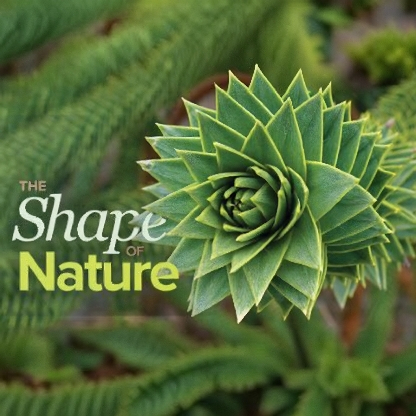
The Shape of Nature
Original price was: $69.99.$22.99Current price is: $22.99.
Discover the intricate relationship between nature and mathematics with this visually stunning guide to the mathematical shapes all around you.
The Shape of Nature
Course Overview
Discover the intricate relationship between nature and mathematics with this visually stunning guide to the mathematical shapes all around you.
Course No. 1460
This 36-lecture course with Professor Satyan L. Devadoss reveals how geometry and topology help us understand:
- DNA structures and protein folding
- Wind currents and mountain terrain
- Facial recognition technology
- Robot movement design
- The possible shape of the universe
Through clear explanations and vivid animations, explore how mathematical shapes appear in nature and drive technological innovation.
Key Topics Covered:
- Knot theory and DNA entanglement
- Platonic solids and polyhedra
- Surface topology and curvature
- Voronoi diagrams and convex hulls
- Higher dimensional geometry
- Chaos theory and fractals
- Applications in science and art
Video Lectures
01: Understanding Nature (32 min)
Introduction to how mathematics reveals nature’s hidden shapes.
02: The Language of Shapes (30 min)
Geometry and topology as tools for studying natural forms.
03: Knots and Strings (30 min)
Mathematical analysis of knots appearing in DNA and molecules.
04: Creating New Knots from Old (30 min)
Knot manipulation through addition and invariant properties.
05: DNA Entanglement (29 min)
Borromean rings and measuring knot complexity.
06: The Jones Revolution (32 min)
Constructing the Jones polynomial to classify knots.
07: Symmetries of Molecules (31 min)
How knot theory aids chemistry and molecular studies.
08: The Messy Business of Tangles and Mutations (31 min)
Mathematical modeling of DNA mutation processes.
09: Braids and the Language of Groups (33 min)
Algebraic structures underlying braid patterns.
10: Platonic Solids and Euler’s Masterpiece (32 min)
The five perfect polyhedra and their mathematical properties.
11: Surfaces and a New Notion of Equivalence (31 min)
Homeomorphism and comparing surface shapes.
12: Reaching Boundaries and Losing Orientations (32 min)
Non-orientable surfaces like Möbius strips.
13: Knots and Surfaces (32 min)
Connecting knot theory with surface topology.
14: Wind Flows and Currents (33 min)
Modeling atmospheric patterns using vector fields.
15: Curvature and Gauss’s Geometric Gem (33 min)
The profound Gauss-Bonnet theorem linking geometry and topology.
16: Playing with Scissors and Polygons (32 min)
Discrete geometry through polygon dissection.
17: Bending Chains and Folding Origami (31 min)
Mathematics of linkages and paper folding.
18: Cauchy’s Rigidity and Connelly’s Flexibility (31 min)
When polyhedra can or cannot be deformed.
19: Mountain Terrains and Surface Reconstruction (32 min)
Using triangulation to model geographic features.
20: Voronoi’s Regions of Influence (32 min)
Diagrams for urban planning and biological studies.
21: Convex Hulls and Computational Complexity (31 min)
Finding the smallest convex shape containing points.
22: Patterns and Colors (30 min)
The mathematics behind map coloring problems.
23: Orange Stackings and Bubble Partitions (31 min)
Optimal sphere packing and space division.
24: The Topology of the Universe (29 min)
3-manifolds and possible cosmic shapes.
25: Tetrahedra and Mathematical Surgery (31 min)
Constructing shapes through polyhedron gluing.
26: The Fundamental Group (31 min)
Algebraic invariants for classifying shapes.
27: Poincaré’s Question and Perelman’s Answer (32 min)
History’s greatest topology problem solved.
28: The Geometry of the Universe (32 min)
Einstein’s relativity through geometric lenses.
29: Visualizing in Higher Dimensions (32 min)
Techniques for imagining 4D+ spaces.
30: Polyhedra in Higher Dimensions (31 min)
4D polytopes and Schlegel diagrams.
31: Particle Motions (31 min)
Configuration spaces describing movement.
32: Particle Collisions (30 min)
The influential associahedron polyhedron.
33: Evolutionary Trees (30 min)
Phylogenetic structures in genetics.
34: Chaos and Fractals (31 min)
Sierpinski Triangle and Koch Snowflake patterns.
35: Reclaiming Leonardo da Vinci (29 min)
Mathematics in art from Renaissance to modern.
36: Pushing the Forefront (31 min)
Future directions in shape research.
Related products


Courses


Courses