Skip to content
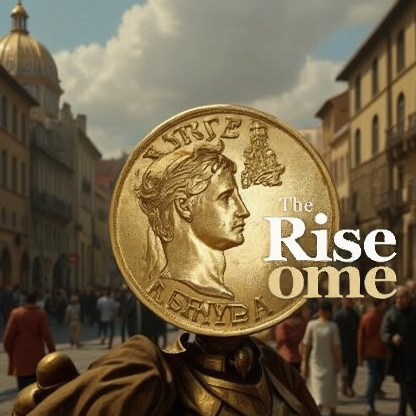
The Rise of Rome
Original price was: $49.99.$9.99Current price is: $9.99.
Course No. 3350 — From great leaders to ordinary citizens, explore the Roman Republic’s ascent from a modest city on the Tiber to a dominant Mediterranean power—and the internal strains that led to its dramatic collapse. Over 24 lectures, Professor Gregory S. Aldrete traces Rome’s political institutions, social life, military conflicts, cultural transformations, and the personalities who shaped the republic.
Overview
Course No. 3350 — From great leaders to ordinary citizens, explore the Roman Republic’s ascent from a modest city on the Tiber to a dominant Mediterranean power—and the internal strains that led to its dramatic collapse. Over 24 lectures, Professor Gregory S. Aldrete traces Rome’s political institutions, social life, military conflicts, cultural transformations, and the personalities who shaped the republic.
Course Description
How did Rome become so powerful, and what was life like for its citizens during the Republic (c. 500 BCE–1st century BCE)? The Rise of Rome examines the city’s geographic advantages, founding myths, evolving constitution, expansion across Italy and the Mediterranean, economic and social consequences of imperial growth, and the political crises that ultimately ended the republican experiment. Using the latest scholarship and digital tools, Professor Aldrete reconstructs both elite and everyday experiences—political institutions, religion, slavery, family life, education, industry, and the great wars (including the Punic Wars)—culminating in the civil wars and the end of the Republic.
Instructor
Professor Gregory S. Aldrete — University of Wisconsin—Green Bay
Lecture List
- The City on the Tiber
- Description: Introduces the core question—how did Rome become so powerful?—and examines geography and political structures that enabled early growth.
- Duration: 32 min
- The Monarchy and the Etruscans
- Description: Reviews Rome’s legendary origins, myths (Aeneas, Romulus and Remus), and the influence of the Etruscans on early urban and cultural development.
- Duration: 31 min
- Roman Values and Heroes
- Description: Considers Roman moral ideals through the stories of foundational heroes (Mucius, Horatius, Lucretia) and what these tales reveal about civic identity.
- Duration: 30 min
- The Early Republic and Rural Life
- Description: Traces the transition from monarchy to republic, using literary and archaeological sources (e.g., Livy) to reconstruct early republican institutions and rural society.
- Duration: 29 min
- The Constitution of the Roman Republic
- Description: Surveys republican government: magistracies, senate, assemblies, and social orders (patricians, plebeians, citizens, noncitizens).
- Duration: 31 min
- The Unification of the Italian Peninsula
- Description: Shows how Rome consolidated control over Italy through persistent military campaigns and political integration of conquered communities.
- Duration: 30 min
- Roman Religion: Sacrifice, Augury, and Magic
- Description: Examines Roman religious practices, institutions (Pontifex Maximus, Vestal Virgins), and how religion shaped public and private life.
- Duration: 30 min
- The First Punic War: A War at Sea
- Description: Explores Rome’s first major conflict with Carthage, including naval innovation and the struggle for Mediterranean influence.
- Duration: 31 min
- The Second Punic War: Rome versus Hannibal
- Description: Analyzes Hannibal’s campaign, the Battle of Cannae, and how the Second Punic War forged Rome’s military and political transformation.
- Duration: 30 min
- Rome Conquers Greece
- Description: Covers Rome’s expansion into the Greek world, cultural encounters with Hellenism, and the unexpected consequences of conquest.
- Duration: 32 min
- The Consequences of Roman Imperialism
- Description: Assesses social and economic impacts of expansion—veterans’ woes, inequality, administration of provinces, and domestic tensions.
- Duration: 32 min
- Roman Slavery: Cruelty and Opportunity
- Description: Surveys the Roman slave system—origins of slaves, daily life, roles, and pathways to manumission and social mobility for freedpeople.
- Duration: 31 min
- Roman Women and Marriage
- Description: Investigates women’s lives across classes, marriage customs, legal status, and the varied experiences of elite and nonelite women.
- Duration: 30 min
- Roman Children, Education, and Timekeeping
- Description: Looks at childhood, education (from toys to schooling), and Roman systems of timekeeping that structured daily and civic life.
- Duration: 29 min
- Food, Housing, and Employment in Rome
- Description: Surveys diet, domestic architecture, and occupations—how Romans lived, worked, and sustained urban life.
- Duration: 31 min
- The Gracchi Attempt Reform
- Description: Examines the land-reform efforts of the Gracchi (c. 133 BCE), rising social tensions, and the political fractures that followed.
- Duration: 31 min
- Gaius Marius the Novus Homo
- Description: Follows Marius’s military career, reforms, and unprecedented political rise that reshaped recruitment and loyalties.
- Duration: 31 min
- Sulla the Dictator and the Social War
- Description: Covers the Social War over citizenship and Sulla’s march on Rome—how civil violence and constitutional breaks deepened republican crisis.
- Duration: 29 min
- The Era of Pompey the Great
- Description: Considers Pompey’s career, military successes, and political role amid the late republic’s turbulence (including Spartacus’s revolt).
- Duration: 30 min
- The Rise of Julius Caesar
- Description: Traces Caesar’s ascent—military triumphs, political alliances, and reforms that intensified elite competition and popular support.
- Duration: 30 min
- Civil War and the Assassination of Caesar
- Description: Follows Caesar’s crossing of the Rubicon, the ensuing civil wars, his Egyptian campaign, and assassination—key turning points of collapse.
- Duration: 30 min
- Cicero and the Art of Roman Oratory
- Description: Explores Cicero’s rhetorical skill, political thought, and role as a stabilizing figure in the post-assassination power struggles.
- Duration: 30 min
- Octavian, Antony, and Cleopatra
- Description: Traces the final power struggle: Octavian’s rise, Antony’s alliance with Cleopatra, and the battles that ended republican politics.
- Duration: 31 min
- Why the Roman Republic Collapsed
- Description: Summarizes leading explanations for the Republic’s fall—institutional stress, social inequality, military personalization of power, and imperial overreach.
- Duration: 32 min
Learning Objectives
- Explain the institutional features of the Roman Republic and how they functioned.
- Reconstruct daily life for Romans across social classes (family, work, religion, education).
- Analyze the military, economic, and political processes that produced Roman expansion.
- Evaluate causes and mechanisms behind the Republic’s collapse and the transition to imperial rule.
- Connect republican history to later political thought and modern discussions about constitutional resilience.
Target Audience
Students and enthusiasts of Classics, ancient history, political theory, military history, and anyone curious about the origins and decline of one of history’s most influential republics.
Related products