 Skip to content
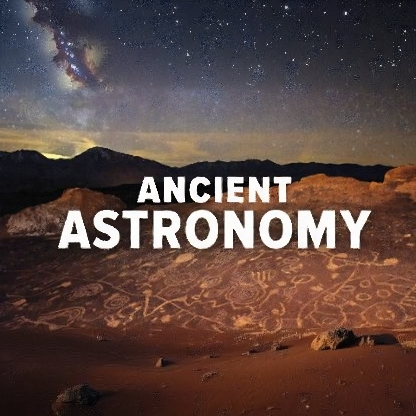
The Remarkable Science of Ancient Astronomy
Original price was: $49.99.$9.99Current price is: $9.99.
Discover the ancient sky with award-winning teacher and astronomer Professor Bradley Schaefer. In a world without artificial lights, the Sun, Moon, planets, and stars governed time, direction, agriculture, religion, and philosophy. This 24-lecture course (Course No. 1866) surveys archaeoastronomy, calendars, constellations, navigation, noteworthy monuments (Stonehenge, Newgrange, the Great Pyramid, Chaco Canyon), priceless artifacts (the Antikythera mechanism, astrolabes), and how ancient records inform modern astrophysics.
The Remarkable Science of Ancient Astronomy
Overview
Discover the ancient sky with award-winning teacher and astronomer Professor Bradley Schaefer. In a world without artificial lights, the Sun, Moon, planets, and stars governed time, direction, agriculture, religion, and philosophy. This 24-lecture course (Course No. 1866) surveys archaeoastronomy, calendars, constellations, navigation, noteworthy monuments (Stonehenge, Newgrange, the Great Pyramid, Chaco Canyon), priceless artifacts (the Antikythera mechanism, astrolabes), and how ancient records inform modern astrophysics.
Course Details
- Course No.: 1866
- Instructor: Professor Bradley Schaefer (astrophysicist and historian of astronomy)
- Format: 24 lectures, ~28–32 minutes each
- Central themes: archaeoastronomy, monument alignments, celestial phenomena as omens, origins of constellations and astrology, ancient timekeeping and calendars, navigation by the stars, Greek and medieval astronomical advances, the Antikythera mechanism, Ptolemy’s legacy, and the link between ancient records and modern astrophysics.
Lecture List
01: Stonehenge and Archaeoastronomy — 31 min
Why Sun, Moon, and stellar motions mattered to ancient peoples; introduction to Stonehenge’s role in the birth of archaeoastronomy and key astronomical directions noticed worldwide.
02: The Real Stonehenge — 30 min
Reassess popular views of Stonehenge (Druids, priestly astronomers) and evaluate archaeological evidence to determine the monument’s most probable functions.
03: Alignments at Maes Howe and Newgrange — 29 min
Survey Neolithic tombs and monuments in Europe oriented to astronomical events, focusing on Maes Howe (Orkney) and Newgrange (Ireland) and their winter-solstice alignments.
04: Astronomy of Egypt’s Great Pyramid — 29 min
Examine the Great Pyramid’s exceptional cardinal alignment, the possible stellar targets of its shafts, and modern claims about pyramidal “mystical” powers.
05: Chaco Canyon and Anasazi Astronomy — 28 min
Explore Chaco Canyon’s sky-centered rituals, sun-dagger phenomena, and the debated pictograph possibly recording the Crab Nebula supernova (1054 AD).
06: Ancient Cosmologies and Worldviews — 29 min
Compare how different cultures answered cosmological questions—Greek, Chinese, Australian Aboriginal, and others—and identify common elements in sky-based worldviews.
07: Meteorite Worship and Start of the Iron Age — 30 min
Investigate meteorite veneration and how impacts provided rare meteoric iron before smelting technology transformed metal use in the Iron Age.
08: Eclipses, Comets, and Omens — 29 min
Recreate ancient perceptions of unexpected celestial events—eclipses and comets—as divine omens, and explain why comets often inspired greater fear.
09: The Star of Bethlehem — 29 min
Assess modern astronomical theories addressing the Star of Bethlehem and consider a promising recent hypothesis that solves prior explanatory problems.
10: Origins of Western Constellations — 32 min
Trace the birth of Western constellations (many rooted in Mesopotamia) and consider extremely ancient star patterns, including at least one possibly >14,000 years old.
11: Chinese and Other Non-Western Constellations — 30 min
Study Chinese lunar lodges and other non-Western constellations from India, Arabia, South America, and Australia, and compare their origins and functions.
12: Origins and Influence of Astrology — 31 min
Follow astrology’s parallel growth with astronomy across Mesopotamia, China, India, and Mesoamerica, and trace its spread through the Mediterranean (e.g., Octavian’s horoscope).
13: Tracking Planet Positions and Conjunctions — 31 min
Learn how pre-telescopic astronomers recorded planet positions and conjunctions with extraordinary precision and review a major lost Babylonian discovery.
14: Ancient Timekeeping and Calendars — 31 min
See how cultures tracked time using the Sun, Moon, and stars; study diverse calendar solutions and learn to use instruments such as the astrolabe.
15: The Lunar Crescent and the Islamic Calendar — 29 min
Examine the problem of dating lunar months by first sighting the crescent Moon, learn Professor Schaefer’s algorithm, and see an application to dating the crucifixion.
16: Ancient Navigation: Polynesian to Viking — 29 min
Discover celestial navigation techniques used by Polynesians to cross the Pacific and by Vikings in the North Atlantic before compasses and GPS.
17: Breakthroughs of Early Greek Astronomy — 31 min
Chart Greek advances (600–200 BC) from flat‑Earth ideas to proto‑scientific models: achievements of Thales, Aristarchus, Eratosthenes, and Aristotle.
18: The Genius of Hipparchus — 31 min
Study Hipparchus’s contributions—the star catalog, discovery of precession—and consider cultural impacts (e.g., possible links to Mithraic traditions).
19: Revealing the Antikythera Mechanism — 29 min
Learn the discovery history, X‑ray imaging revelations, probable construction date, and candidate designers for the interlocking‑gear astronomical computer.
20: How the Antikythera Mechanism Worked — 28 min
Operate modern reconstructions: see how one crank could display day of year, lunar phase, eclipse predictions, cycles of games, and other calendrical data.
21: Achievements and Legacy of Ptolemy — 30 min
Evaluate Ptolemy’s star catalog, celestial coordinate system, and magnitude scale; measure his influence on astronomy across a millennium.
22: Star Catalogs from around the World — 30 min
Compare Greek star catalogs with Chinese and Arabic records; examine a star chart influenced by Hipparchus’s lost catalog and worldwide catalog traditions.
23: How Ancient Astronomy Ended — 30 min
Review astronomy around 1500 and trace the Copernican revolution that transformed heliocentric theory into the foundation for modern astronomy.
24: Ancient Astronomy and Modern Astrophysics — 32 min
See how ancient eclipse and supernova records refine modern knowledge of Earth–Moon dynamics and stellar events, demonstrating ancient astronomers’ lasting scientific value.
Related products





Courses