Skip to content
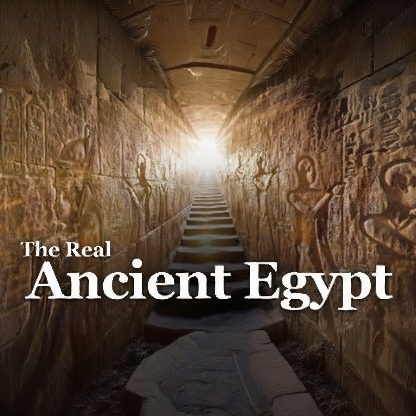
The Real Ancient Egypt
Original price was: $24.99.$6.99Current price is: $6.99.
See how modern research sometimes supports—but often refutes—what we thought we knew about the ancient Egyptians and their world. Four working Egyptologists reinterpret artifacts, texts, and material evidence to reconstruct a more accurate, nuanced history of Egypt’s politics, religion, daily life, and iconic figures.
The Real Ancient Egypt
Overview
See how modern research sometimes supports—but often refutes—what we thought we knew about the ancient Egyptians and their world. Four working Egyptologists reinterpret artifacts, texts, and material evidence to reconstruct a more accurate, nuanced history of Egypt’s politics, religion, daily life, and iconic figures.
Course Details
- Course No.: 30550
- Instructors: Four Egyptologists (Professors Bryan, Hartwig, Liszka, and Szpakowska)
- Focus: reassessment of popular assumptions about ancient Egypt using archaeology, inscriptions, burial evidence, and new scholarly methods.
- Themes: royal biography and reputation, religion and ritual, law and society, material culture, cross-cultural contacts, and everyday life.
Lecture List
01: The Fall and Rise of King Tut — 28 min
Introduction to the problems of reconstructing Egyptian history across 3,000 years and to how Egyptologists continually revise interpretations. Using Tutankhamun’s life, family, health, and burial, the lecturers show why piecing together the past is complex and how new evidence reshapes long-held narratives.
02: Akhenaten the Heretic — 26 min
A close look at Akhenaten’s radical religious reform: his unique god, the new capital and art style, the social and diplomatic disruptions he caused, and the deliberate campaign by successors to erase his memory.
03: Egypt’s Female Kings — 29 min
Stories and evidence for female rule in Egypt (Merneith, Sobekneferu, Nefertiti, Hatshepsut, Twosret, Cleopatra). The lecturers reconstruct how these women ruled, the archaeological traces they left, and their political and cultural impact.
04: The Truth about Cats and Gods — 25 min
Reassessment of the idea that Egyptians “worshipped” animals. The module explains real roles of animals and animal imagery in religion, divination, pilgrimage, and how foreigners misinterpreted Egyptian practices—cats included.
05: Demons of the Desert — 24 min
Examination of Egyptian fears and protective beliefs: malevolent beings associated with war and disease, benevolent guardians, shielding objects, and rituals developed to ward off threats both ordinary and extraordinary.
06: Death and Beyond — 24 min
Challenging the stereotype that Egyptians were obsessed with death; instead the lecturers show Egyptians’ passion for life and continuity, explain funerary rituals, and clarify beliefs about the afterlife and what evidence was previously misread.
07: Money and Murder in Egypt’s Courts — 24 min
Survey of Egyptian law and justice based on maat (cosmic order): legal practices, judicial records, divine oracles, and the social politics of law—illustrated by cases including a dramatic pharaonic murder story.
08: Becoming an Egyptian — 27 min
Exploration of ethnicity, immigration, and identity in Egypt’s position as a crossroads: iconographic representation of “otherness,” the role and evolution of the Medjay, and how outsiders integrated into Egyptian military and royal life.
09: How to Rob a Pyramid — 28 min
Investigation of tomb robbery from ancient times to modern consequences: who the raiders were, methods and motivations, legal punishments, and how ancient looting both deprived and paradoxically informed modern archaeology.
Related products