Skip to content
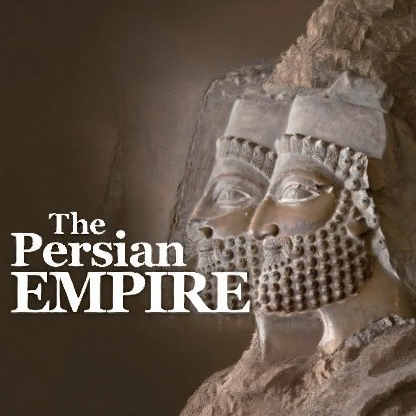
The Persian Empire
Original price was: $49.99.$9.99Current price is: $9.99.
For the past 2,500 years the Persian Empire has often been misrepresented as a decadent despotism. This 24-lecture course (Course No. 3117) rethinks that story from the Persian perspective, showing how the Achaemenid state became arguably the world’s first global power: a multicultural empire with efficient communication, flourishing commerce, significant cultural exchange, and influential rulers and non-royal actors alike. Professor Lee guides you through archaeology, inscriptions, administrative records, and narrative sources to reveal the empire’s institutions, people, economy, religion, wars, and legacies.
The Persian Empire
Overview
For the past 2,500 years the Persian Empire has often been misrepresented as a decadent despotism. This 24-lecture course (Course No. 3117) rethinks that story from the Persian perspective, showing how the Achaemenid state became arguably the world’s first global power: a multicultural empire with efficient communication, flourishing commerce, significant cultural exchange, and influential rulers and non-royal actors alike. Professor Lee guides you through archaeology, inscriptions, administrative records, and narrative sources to reveal the empire’s institutions, people, economy, religion, wars, and legacies.
Course Details
- Course No.: 3117
- Format: 24 lectures, ~29–33 minutes each
- Central themes: Persian kingship and image, administration and roads, provincial diversity, economy and currency, daily life in city and countryside, roles of women, Persian religion, Persian–Greek and Macedonian conflicts, and the empire’s long-term legacies.
Lecture List
01: Rethinking the Persian Empire — 31 min
Reassess stereotypes about Cyrus, Darius, and Xerxes and see the Achaemenid Empire as an “empire of information” stretching from Egypt and Asia Minor to the Indus Valley.
02: Questioning the Sources — 29 min
Examine how Greek narratives (e.g., Herodotus) are biased and how archaeology, inscriptions, and administrative tablets let Persians “speak for themselves.”
03: The World before Cyrus — 33 min
Survey the regional political landscape before Cyrus—especially the Assyrian collapse—and how that vacuum set the stage for Persian expansion.
04: Cyrus and Cambyses — Founders of the Empire — 30 min
Study Cyrus’s pragmatic methods for gaining legitimacy across diverse territories and Cambyses’s expansion into Egypt.
05: Darius I — Creator of the Imperial System — 30 min
See how Darius consolidated power after civil war, crafted royal genealogy and identity, and built administrative and infrastructural systems.
06: Persian Capitals and Royal Palaces — 30 min
Tour the five Persian capitals (Pasargadae, Ecbatana, Babylon, Susa, Persepolis) and learn how palaces and halls (e.g., Persepolis’ great hall) symbolized imperial power.
07: The Great King — Images and Realities — 30 min
Compare external stereotypes of Persian monarchs with royal reliefs and inscriptions that emphasize cooperation, legitimacy, and imperial values.
08: Royal Roads and Provinces — 29 min
Explore the empire’s roads, bridges, and express messenger system that enabled rapid communication and provincial governance.
09: East of Persepolis — 31 min
Travel eastward (Central Asia, Afghanistan, Pakistan, India) to see Persian administrative reach and cultural influence across vast distances.
10: Challenges in the West, 513–494 B.C. — 30 min
Analyze early western revolts (Ionia, Cyprus) and Athenian interference, and Darius’s responses via diplomacy, force, and information control.
11: Across the Bitter Sea, 493–490 B.C. — 29 min
Study Persian operations in Greece leading to the setback at Marathon from the Persian perspective.
12: Xerxes Becomes King — 29 min
Reframe Xerxes’ image: his succession, suppression of revolts, and continuation of domestic building projects at Persepolis.
13: Xerxes’s War, 480–479 B.C. — 30 min
Follow Xerxes’ invasion of Greece—initial successes, Thermopylae, and the strategic defeat at Salamis that forced Persian retreat.
14: Cultures in Contact — 30 min
Examine the intense cultural exchange across the multinational empire and the Persian policy of tolerating local customs to foster cohesion.
15: Achaemenid Religion — 30 min
Investigate religious life including Zoroastrian influences, polytheistic practices, and the king’s role as an instrument of Ahura Mazda in legitimizing rule.
16: From Expansion to Stability, 479–405 B.C. — 30 min
Trace the empire’s shift to relative stability after Xerxes: Artaxerxes I’s diplomacy and Darius II’s role in navigating Greek affairs.
17: The War of the Two Brothers — 29 min
Relive the succession crisis—Artaxerxes II vs. Cyrus—and the decisive clash at Cunaxa that revealed internal vulnerabilities.
18: Persian Gold — 29 min
Explore the Persian currency system, business records, and how entrepreneurship and wealth concentration affected the imperial economy.
19: City and Countryside — 29 min
Meet ordinary Persians: farmers, laborers, migrants, and slaves; understand agriculture’s centrality to imperial wealth and daily life beyond capitals.
20: Women in the Persian Empire — 30 min
Assess debates over women’s political power and legal/economic freedoms; learn about prominent royal women (e.g., Artemisia, Mania, Epyaxa).
21: Artaxerxes II — The Longest-Ruling King — 29 min
Chart Artaxerxes II’s consolidation after civil strife, diplomacy with Greeks, and renewed building programs demonstrating imperial capacity.
22: Persia and Macedon, 359–333 B.C. — 30 min
Follow rising Macedonian power under Philip II and the preparation of Darius III as the two empires converge toward confrontation.
23: The End of an Empire, 333–323 B.C. — 31 min
Witness Alexander’s campaigns, the defeats of Darius III, and how Alexander adopted Persian royal ideology even as he displaced the Achaemenids.
24: Legacies of the Persian Empire — 33 min
Discuss the Achaemenid legacy in successor states (Seleucids, Parthians, Sasanians) and the empire’s enduring cultural and institutional influence up to and beyond the Islamic conquest.
Related products


Courses