Skip to content
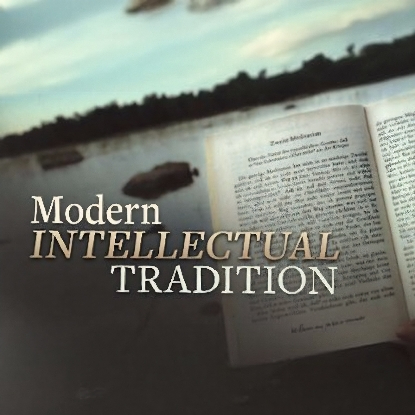
The Modern Intellectual Tradition: From Descartes to Derrida
Original price was: $54.99.$14.99Current price is: $14.99.
Get an introduction to the contemporary Western approaches to the philosophies of both reality and knowledge, led by an author and award-winning professor. Explore the ideas that underpin modern philosophy’s most important movements.
Course Overview
Get an introduction to the contemporary Western approaches to the philosophies of both reality and knowledge, led by an author and award-winning professor. Explore the ideas that underpin modern philosophy’s most important movements.
What is reality? Have you ever considered whether you can know the answer? These profound metaphysical and epistemological dilemmas have challenged modern philosophy’s greatest minds since the onset of modern science. This course features 36 lectures designed to introduce you to modern and contemporary Western philosophies concerning metaphysics and epistemology, spanning right through the end of the 20th century. Led by Professor Cahoone, embark on an engaging intellectual journey, encompassing key figures and major movements including dualism, rationalism, empiricism, idealism, existentialism, and postmodernism. Delve into the thoughts of significant philosophers such as Descartes, Locke, Spinoza, Hume, Kant, Hegel, Nietzsche, and Derrida, and gain a clear understanding of how these thinkers shaped philosophy and related disciplines.
Course Videos
- Philosophy and the Modern Age
Preview the course, examining the scientific and social changes from the 17th to the 19th centuries that compelled philosophers to develop new perspectives.
Duration: 31 min
- Scholasticism and the Scientific Revolution
Understand how the Scientific Revolution emerged amidst significant religious and social upheaval, challenging the medieval Aristotelian-Christian worldview.
Duration: 33 min
- The Rationalism and Dualism of Descartes
Learn about Descartes’ influential views on self-consciousness, innate ideas, and the division between matter and mind.
Duration: 31 min
- Locke’s Empiricism, Berkeley’s Idealism
Discover how Locke’s rejection of innate ideas shaped empiricism, and how Berkeley’s idealism asserted that only minds and their experiences truly exist.
Duration: 33 min
- Neo-Aristotelians: Spinoza and Leibniz
Follow Spinoza’s and Leibniz’s efforts to integrate religion, philosophy, and science while remaining grounded in Aristotelian thought.
Duration: 33 min
- The Enlightenment and Rousseau
Observe the Enlightenment’s advocacy for science, freedom, and progress, contrasted by Rousseau’s critique of progress in morality and happiness.
Duration: 32 min
- The Radical Skepticism of Hume
Watch Hume explore empiricism to its radical point, questioning the basis of science and the certainty of knowledge.
Duration: 31 min
- Kant’s Copernican Revolution
Learn how Kant aimed to transcend Hume’s skepticism, asserting that the human mind actively constructs knowledge from sensations.
Duration: 30 min
- Kant and the Religion of Reason
Investigate Kant’s rationale for the existence of God and how it safeguarded faith amid scientific understanding.
Duration: 31 min
- The French Revolution and German Idealism
See how the revolution inspired German idealists like Fichte and Schelling to develop philosophies centered on spirit and freedom.
*Duration: 31 min*
- Hegel: The Last Great System
Grasp Hegel's synthesis of history, idealism, and the concept of God's self-consciousness through a dialectical process.
*Duration: 32 min*
- Hegel and the English Century
Learn how Hegel influenced thinkers during the Industrial Revolution, creating historical explanations of mind and society development.
*Duration: 30 min*
- The Economic Revolution and Its Critic: Marx
Examine Karl Marx’s critique of industrial capitalism and its significant impact on Western liberalism.
*Duration: 31 min*
- Kierkegaard’s Critique of Reason
Explore Kierkegaard’s rejection of rationality in favor of fundamental choices, emphasizing the irrationality intrinsic to faith.
*Duration: 32 min*
- Nietzsche’s Critique of Morality and Truth
Engage with Nietzsche's radical critiques of Judeo-Christian and Greek values, highlighting his call for new values in a post-religious world.
*Duration: 33 min*
- Freud, Weber, and the Mind of Modernity
Discover how Freud and Weber analyzed the social shifts of modernity and their implications on human discontent.
*Duration: 32 min*
- Rise of 20th-Century Philosophy: Pragmatism
Observe how philosophy began to fragment into various subcultures, particularly the emergence of the pragmatic tradition.
*Duration: 31 min*
- Rise of 20th-Century Philosophy: Analysis
Understand how developments in logic and critique of idealism led to the rise of analytic philosophy as a dominant approach.
*Duration: 32 min*
- Rise of 20th-Century Philosophy: Phenomenology
Explore Husserl's attempts to create a holistic philosophy of meaning, significantly impacting European philosophical thought.
*Duration: 32 min*
- Physics, Positivism, and Early Wittgenstein
Witness the logical positivists' response to radical scientific theories and evaluate Wittgenstein’s claims about language and meaning.
*Duration: 31 min*
- Emergence and Whitehead
Investigate British Emergentism and Alfred North Whitehead’s efforts to align metaphysics with physics to explain reality.
*Duration: 31 min*
- Dewey’s American Naturalism
Examine John Dewey's transformative approach to philosophy, emphasizing pragmatic and naturalistic principles.
*Duration: 32 min*
- Heidegger’s Being and Time
Learn how Heidegger’s influential work contributed to existentialism by investigating the meaning of human existence.
*Duration: 31 min*
- Existentialism and the Frankfurt School
Analyze how existentialist ideas merged with Marxism in the Frankfurt School’s critique of mass culture, especially during WWII.
*Duration: 30 min*
- Heidegger’s Turn against Humanism
Follow Heidegger’s shift towards anti-humanism, rejecting Western metaphysics and urging for more profound engagements with Being.
*Duration: 31 min*
- Culture, Hermeneutics, and Structuralism
Discover the emergence of culture and language in philosophy, integrating neo-Kantian, hermeneutic, and structuralist perspectives.
*Duration: 31 min*
- Wittgenstein’s Turn to Ordinary Language
Explore how Wittgenstein’s later work shifted the focus from logical to contextual uses of language in philosophical discussions.
*Duration: 31 min*
- Quine and the End of Positivism
Understand how Quine challenged the logical positivists' views by critiquing the distinction between truths of reason and experience.
*Duration: 32 min*
- New Philosophies of Science
Examine post-positivist views on scientific knowledge, emphasizing theories like Popper's and Kuhn's approaches to scientific revolutions.
*Duration: 31 min*
- Derrida’s Deconstruction of Philosophy
Analyze Jacques Derrida’s concept of deconstruction and its implications for understanding meaning in Western philosophy.
*Duration: 32 min*
- The Challenge of Postmodernism
Investigate how Derrida and others redefined modern philosophy by rejecting foundational notions and metanarratives.
*Duration: 30 min*
- Rorty and the End of Philosophy
Explore Richard Rorty's contributions to philosophical postmodernism and his critique of the traditional search for knowledge foundations.
*Duration: 32 min*
- Rediscovering the Premodern
Learn how 20th-century philosophers are calling for a return to premodern ideas to reinvigorate contemporary philosophy.
*Duration: 32 min*
- Pragmatic Realism: Reforming the Modern
Examine the resurgence of pragmatism in philosophy as thinkers seek nonfoundational approaches to understanding reality.
*Duration: 30 min*
- The Reemergence of Emergence
Delve into the revival of the idea of emergence in philosophy and science, particularly concerning complex systems.
*Duration: 31 min*
- Philosophy’s Death Greatly Exaggerated
Reflect on philosophy's future and the potential for integrating diverse human activities within philosophical inquiry.
*Duration: 32 min*Related products

By Area