Skip to content
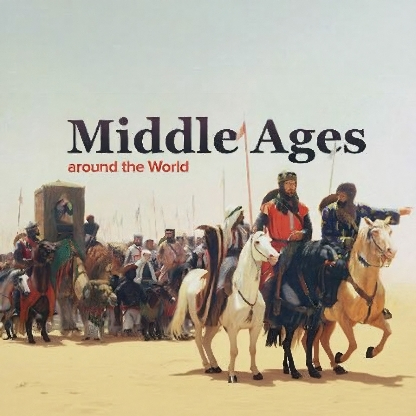
The Middle Ages around the World
Original price was: $39.99.$8.99Current price is: $8.99.
Uncover the seminal events and currents of the Middle Ages as they radiated not only through Europe but also around the world. The Middle Ages was a time of major historical shifts and transformations. This amazing era reverberates with discoveries, innovations, events, and historical processes that are integral to the world we know now.
Overview
Uncover the seminal events and currents of the Middle Ages as they radiated not only through Europe but also around the world. The Middle Ages was a time of major historical shifts and transformations. This amazing era reverberates with discoveries, innovations, events, and historical processes that are integral to the world we know now.
In these 24 enthralling lectures, Professor Salisbury leads you on a sumptuous tour of this incredible historical epoch, making clear that the remarkable historical currents and advances of the Middle Ages unfolded not only in the West but across the globe, from Europe, Africa, and the Middle East to Asia, the Americas, and beyond:
- Expansion, Prosperity, and Networks of Trade: Grasp the advances in technology and agriculture that drove civilizations from Europe to China and map the great trading networks that connected medieval civilizations.
- The Age of Faith: The Middle Ages was an era of vast religious expansion and controversy; witness this in events such as the rise of Islam, the drama and disaster of the Crusades, Buddhism’s spread across Asia, and the internal schisms within Islam, Buddhism, and Christianity.
- Medieval Treasures of Art and Architecture: Explore the triumphs of medieval architecture, from European castles and cathedrals to the sublime religious monuments of Indonesia and Cambodia; delve into the medieval literary epics of heroes and lovers that still move us.
- The Phenomenon of Travel: Visualize the amazing sea voyages of the Vikings and the Polynesians, and travel Asia and the Far East in the company of legendary travelers Marco Polo, Ibn Battuta, and Lady Nijo.
- The Medieval Americas: Study the economies, religions, and monumental architecture of the Maya in Mexico, the Chaco Canyon peoples in North America, the Chimu civilization in Peru, and the forest peoples of the Amazon.
Crossing many cultures, continents, and 1,000 years of history, The Middle Ages around the World offers you a dazzling journey through an epoch that continues to speak meaningfully to the modern world.
Video Lectures
- Medieval Beginnings: The Fall of Empires
Duration: 33 min
Investigate the turbulent events that marked the beginning of the Middle Ages. Trace the rise of warrior peoples from the Asian steppes that brought down the Chinese, Indian, and Roman empires, and the advent of Germanic kings who ruled the West. Take account of the great trading networks that connected the civilizations of Asia with those of the Middle East, Africa, and Europe.
- Constantinople, Aksum, and Tang China
Duration: 32 min
Grasp the vital relationship in the medieval world between sophisticated, walled cities, and the rural peasants and serfs that supported their existence. Visit the three greatest cities of the early Middle Ages: Constantinople, capital of the Byzantine Empire; Chang’an, the seat of China’s Tang Dynasty; and the African kingdom of Aksum, a crossroads of trade, culture, and religions.
- The Rise of Islam and Europe’s Knights
Duration: 32 min
One of the pivotal events of the Middle Ages was the rise of Islam. Learn about the visions of the merchant Muhammad and how his ideas spread as a powerful new religion. Track the expansion of Islam through the conquests of Arab armies and how conquered peoples fared under Muslim rule. Then discover the origins of the European feudal system and the warfare practiced by armored knights.
- Creating an Islamic Culture
Duration: 33 min
Take account of the cultural transformations that Muslim rule brought to its domains and the growth of trade, new cities, and great centers of learning that it fostered. Study the five “pillars” of Islam and its main religious rituals. Assess forces of disunity within Islam, such as the split between Shiite and Sunni factions, and the influences of non-Arab cultures that joined the religion.
- The Medieval Spread of Religions
Duration: 34 min
The medieval era was an Age of Faith, characterized by world-changing religious events and processes of change. Within Christianity, examine the doctrinal disputes that led to the schism between the Roman Catholic and Eastern Orthodox churches. Learn how Hinduism predominated within India, and how Buddhism moved from India into Southeast Asia, China, and Japan, splitting into two main schools.
- The Medieval Rebuilding of Empires
Duration: 33 min
The 8th and 9th centuries brought a re-ordering of empires from Europe to the Far East. First, study the reuniting of Northern Europe under the Frankish emperor, Charlemagne, and the rule of Abbasid Caliph Harun al-Rashid, who founded the great city of Baghdad. Witness the golden age of China’s Tang dynasty and the burgeoning cultures of the Silla kingdom of Korea and the Heian Empire of Japan.
- North America and Viking Explorers
Duration: 33 min
Peoples from Northern Europe also ventured far afield in the Middle Ages. Here, follow the voyages of the Vikings in their fast-moving ships and how they reached North America in the 10th century. Learn about the Viking settlements on Iceland and Greenland and their expeditions further west while seeking hospitable lands, leading to violent conflict with Algonquian tribes and later the Inuit.
- Medieval Growth and Prosperity
Duration: 31 min
The High Middle Ages saw phenomenal growth in civilizations across the world, in the areas of population, wealth, and expansion. Look into the technological innovations that underlay the flourishing of China’s Song Dynasty, and the agricultural innovations and new technology for power that fueled prosperity in Europe. Then note the rise of the Seljuk Turks, and the threat they posed to the West.
- The Crusades’ Clash of Cultures, 1097–1291
Duration: 32 min
Trace the origins of the Crusades, as Europeans launched wars to recover the Holy Lands for Christendom. Follow the series of Crusades that unfolded over 200 years, initially taking Jerusalem and establishing Christian kingdoms in the Middle East. Take account of the disasters of the later Crusades, and the consequent strengthening of Islam and loss of prestige for the Western church.
- Medieval Towns and Trade Networks
Duration: 29 min
In the High Middle Ages, new commerce and trade networks transformed societies and cultures. See how medieval commercial towns arose across Western Europe in order to satisfy the desire for trade. Survey the long-distance trading zones that fed the wealth of these cities. Within Africa, assess the trade-rich Mali Empire, the fabled city of Timbuktu, and the wealthy trade of the Swahili Coast.
- Cathedrals to Pagodas: Sacred Architecture
Duration: 30 min
Religious buildings are perhaps the most visited remnants of the Middle Ages. Begin with the sublime Hagia Sophia church in Istanbul, emblem of the Byzantine Empire and later a mosque. Then study the features and symbolism of medieval Romanesque churches, Gothic cathedrals, synagogues, and mosques. See their Asian counterparts in Angkor Wat (Hinduism), Borobodur (Buddhism), and Chinese pagodas.
- Universities and Intellectual Discovery
Duration: 31 min
The High Middle Ages saw a global movement toward a culture of education. Look first at China, and the educational system rooted in rigorous civil service examinations. Study intellectual trends in the Muslim world, and the major advances in medicine, mathematics, and philosophy. Then witness the rise of universities in the West, which set the stage for the post-medieval scientific revolution.
- Life in a Medieval Palace
Duration: 31 min
Look into medieval values through daily life in great palaces. Visualize life in European castles, taking account of accommodations, dress, and food and drink. Contrast that with the Alhambra palace of Islamic Spain and its layout, interiors, and separation of men and women. Conclude with China’s sumptuous palaces, highlighting the lifestyle of royals, diet, and traditional cultural practices.
- Medieval Tales of Heroes and Lovers
Duration: 31 min
Delve into the landmarks of medieval literature, beginning with the heroic epics of different cultures, from Europe’s *Beowulf* and *The Song of Roland* to the Tibetan *Epic of King Gesar*. Then study the tradition of medieval Romantic Love, as seen in works such as Japan’s *Tale of Genji* and the Western Arthurian romances and *Romance of the Rose*. Consider the enduring influence of these works.
- Mongol Conquests: From China to Russia
Duration: 31 min
The Mongol Empire shaped the history of Central and East Asia through the 13th century. See how Genghis Khan created a vast empire and note the features of Mongol rule, including its religious inclusiveness, strategic control of trade, and freedoms for women. Follow the Mongol conquests of India, Russia, the Islamic world, from Persia to Baghdad, and finally, China, establishing the Yuan Dynasty.
- Marco Polo Travels East to China
Duration: 29 min
The *Travels of Marco Polo* is among history’s most famous and influential travel narratives. Track the route of Marco’s three-year journey from Venice across Central Asia to reach the court of the great Kublai Khan. Learn about the 24 years he spent in service to the Khan, during which he traveled extensively across China and Asia, before making a triumphant journey back to Venice.
- Medieval Pilgrims and Travelers
Duration: 30 min
Religious pilgrimage was a central feature of medieval life. First, visualize pilgrimage to the Holy Land through the writings of the Spanish pilgrim Egeria. Note how travel to venerate holy relics was a major lure for the faithful. Witness spiritual pilgrimage in Asia, in Japan through the diaries of Abutsu and Lady Nijo, and in the Muslim world with Ibn Battuta, Islam’s most iconic traveler.
- Fictional Travels and Monstrous Races
Duration: 30 min
In the Middle Ages, fictional travel writing became more influential than real accounts. Discover *The Travels of Sir John Mandeville*, a hugely impactful work written by a man who never left home. Follow the route and details of his invented travels, drawn from other books. See how his descriptions of nonexistent creatures contributed to the cruelty and exploitation of the later Age of Discovery.
- High Middle Ages in the Pacific: Polynesia
Duration: 29 min
Consider the astonishing feat of navigation through which medieval peoples from Samoa and Tonga settled the Polynesian islands of the South Pacific. Learn about Polynesian societies and culture, highlighting the phenomenal giant statues of Rapa Nui (Easter Island) and how they were built. Note how the statue building ultimately had severe consequences for the island’s ecosystem.
- High Middle Ages in the Americas
Duration: 27 min
Investigate the agricultural methods, based in cultivating maize and other staple crops, that supported highly populated, advanced civilizations in the Americas. Discover the culture, artifacts, and monumental architecture of the Maya in Mexico, the Anasazi in North America, and the Chimu in Peru. Learn also about the innovative, large-population cultures that thrived in the Amazon rainforest.
- Late Medieval Disasters: Climate and Plague
Duration: 29 min
From 1300 to 1450, a series of disasters destroyed structures of medieval society. Track the climate changes that produced widespread famine across the Eurasian continent. Then investigate the devastation of bubonic plague that swept the world. Witness how the disease spread and take stock of the rebellions and far-reaching societal changes that took place in the wake of the famine and plague.
- Religious Struggles in the Age of Faith
Duration: 27 min
The medieval Age of Faith was transformed by the 14th-century disasters of famine, plague, and warfare. Learn how these upheavals caused many to question their understanding of faith and the world. Learn how within Christendom, China, and the lands of Islam, people responded by blaming rulers or by appealing to God directly, forcing key changes both within these faiths and in secular society.
- Medieval Warfare Ends with Gunpowder
Duration: 29 min
Trace the transformative effects on warfare of gunpowder, first developed by the Chinese. See how gunpowder weapons spread to the Islamic world and to Europe in the Hundred Years’ War between England and France. Visualize the new armies and military strategy, using cannon, guns, and longbows, and the decline of mounted knights. Witness these currents of events in the extraordinary story of Joan of Arc.
- Medieval Empires Fall as Islam Revives
Duration: 32 min
As the Middle Ages drew to a close, major political shifts changed the power balance in Asia. Take account of the fall of the Mongol Empire and the new empires of Tamerlane, the Russian state, and the Ottoman Turks. Learn how the Ottomans took Constantinople, initiating an empire that would last 600 years. Conclude with a look at how medieval culture left a clear mark on the future world.Related products


Courses