Skip to content
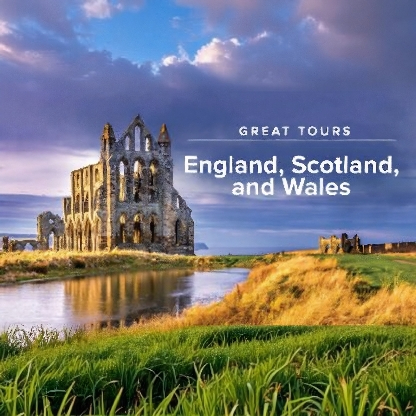
The Great Tours: England, Scotland, and Wales
Original price was: $69.99.$22.99Current price is: $22.99.
Get an insider’s take on the real Great Britain: where to go, where to avoid, and what are the must-see sites you’ve never heard of.
Overview
Get an insider’s take on the real Great Britain: where to go, where to avoid, and what are the must-see sites you’ve never heard of.
Course No. 8006
Whether you are searching for the past or want to better understand the world as it is today, travel—even virtually, from the comfort of home—offers a unique opportunity to see the world in new ways. Wander the streets of cosmopolitan London, roam the 1,000-year-old campuses of Oxford and Cambridge, or tour world-famous museums like the Tate Modern and the National Railway Museum. Or maybe you are aiming for a more pastoral adventure, like an expedition across the romantic wilds of the Scottish Highlands, or a journey to see the breathtaking vistas of the Jurassic coast. No matter what experience you are hoping to find, a tour of England, Scotland, and Wales rewards visitors with an astonishing array of historical, cultural, and scenic pleasures and reveals the heritage of a region that has influenced the world immeasurably.
But where should a would-be tourist start? Which are the truly must-see places? And where are the hidden gems that your average guidebook might omit? In other words, how do you get the most out of a tour through this magnificent island?
The Great Tours: England, Scotland, and Wales is just the source you need! Taught by acclaimed Professor Patrick Allitt, a British-born scholar who teaches at Emory University, these 36 splendid lectures give you an insider’s take on traveling through Great Britain. Whether you are planning a week-long vacation, a month-long grand tour, or just want to experience England, Scotland, and Wales from afar, this immersive course takes you on a voyage through not only the most popular tourist sites but also a trove of “hidden gems” overlooked by the traditional guidebooks.
Visually dazzling to help you see—and hear—the cosmopolitan cities and the breathtaking countryside, The Great Tours: England, Scotland, and Wales packs a punch for the insight it offers into this small island that has had an outsized influence on the world’s stage.
Course Structure
01: Welcome to Britain
See why Great Britain offers so much as a travel destination. From thousand-year-old castles and cathedrals to contemporary art museums and scenic hikes, there is something for everyone. Begin your tour with a look at the scope of all Britain has to offer—and a few off-the-beaten-path ideas for getting to know England, Scotland, and Wales.
Duration: 30 min
02: Prehistoric Britain
Great Britain’s history begins 5,000 years ago with a mysterious ancient people whose only vestiges are earthworks and stone circles like Stonehenge. Because of Stonehenge’s massive popularity, you may want to consider visiting other ancient ruins such as Avebury or Maiden Castle.
Duration: 30 min
03: Roman Britain
The next era in Britain’s history is the Roman conquest. In the first century B.C.E., the Romans invaded and spread their territory to the Anglo-Scottish border. There, Hadrian’s Wall marks the edge of the empire. Consider the Roman impact on Great Britain, from the city of Bath to the island’s long, straight roads.
Duration: 29 min
04: Anglo-Saxon and Viking Britain
After the Romans left Britain, a number of Germanic tribes stepped in to fill the power vacuum. With the help of the Venerable Bede and other contemporary sources, explore the Anglo-Saxon conquests. Then turn to the Viking attacks in the Middle Ages. Be sure to add Offa’s Dyke and the monastery of Lindisfarne to your travel itinerary.
Duration: 31 min
05: Britain’s Medieval Castles
Medieval castles and cathedrals are some of the most striking sites in all of Britain. Here, survey the development of castles built between 1066 and 1500. As you reflect on the evolution of the stone keep and outer wall, concentric design, and more, your tour takes you to such crowd-pleasers as Tower of London, Caerphilly in Wales, Dover Castle, and more.
Duration: 29 min
06: Britain’s Medieval Cathedrals
Like the medieval castles, Britain’s cathedrals are astounding sites and an absolute must for any visitor to the island. Here, Professor Allitt explores the major milestones in cathedral architecture, from the Romanesque style of Durham Cathedral to the gothic style of Canterbury. He also takes you to the world-renowned Westminster Abbey.
Duration: 31 min
07: Tudor Britain
From the end of the Wars of the Roses in 1485 to the Gunpowder Plot in 1605, Britain experienced severe political upheavals. Among other events, Henry VIII broke from the Catholic Church to found the Church of England. Witness how the era’s architecture—including Hampton Court Palace, Hardwick Hall, and Sulgrave Manor—reflected the political turmoil.
Duration: 30 min
08: Magna Carta and Civil War
Continue your study of the political shifts during Renaissance Britain, a period when kings were gradually forced to share power with Parliament. This tension broke bounds in the 17th century, when Charles I, defeated in a civil war, was beheaded at the Banqueting House in London. After Oliver Cromwell’s quasi-military dictatorship, the crown was restored to Charles II—but political tension persisted.
Duration: 29 min
09: Enlightenment Britain
Some of the greatest sites in Britain today are products of the Enlightenment. Delve into some of Christopher Wren’s architectural achievements, including the Royal Observatory and the splendid St. Paul’s Cathedral. Then move beyond London to explore the great country estates of Kedleston and Calke Abbey.
Duration: 30 min
10: Industrial Britain
Britain was home to the Industrial Revolution, driven by advancements in textiles, coal mining, and iron. Tour the country to see some of the monuments to industry, including Quarry Bank Mill in Cheshire, Coalbrookdale in Shropshire, and the Big Pit in the South Wales village of Blaenafon. Visit and travel on the nation’s canals and railways from the same era.
Duration: 29 min
11: Victorian Britain
Victorian Britain is a fascinating architectural period, which witnessed a revival of many older styles, culminating in the Neo-Gothic. Visit such masterpieces of the Gothic Revival as Manchester Town Hall, St. Pancras Station in London, and the Museum of Natural History. Then tour Kensington, where the Royal Albert Hall commemorates Victoria’s husband.
Duration: 31 min
12: Twentieth-Century Britain
Conclude your survey of British architecture with an overview of the 20th century—a period when, according to Professor Allitt, some of the nation’s worst buildings were constructed. The early part of the century saw striking achievements, such as Arts and Crafts style country houses, but the post-World War II era was an age of Brutalist concrete, from which we are only just escaping today.
Duration: 30 min
13: Edinburgh and Glasgow
Scottish nationalism is one of the more intriguing phenomena in today’s headlines. Here, look beyond the news reports to investigate Scotland’s two great cities: Edinburgh and Glasgow. While giving you a tour of the cities, Professor Allitt also introduces you to some of Scotland’s most famous figures, including Walter Scott, Adam Smith, and David Hume.
Duration: 30 min
14: Wild Scotland: Beyond Edinburgh and Glasgow
Continue your tour of Scotland with a look beyond the cities. You’ll visit the Scottish Highlands, which is the least densely populated part of Europe, and explore the great history of this wild land. Your investigation takes you to the tragic and beautiful valley of Glencoe; the Spey Valley, a mecca for Scotch whiskey lovers; and the beautiful Scottish islands.
Duration: 29 min
15: North Wales
Shift your attention to the other country within the nation. Beginning with Offa’s Dyke and touring a ring of castles—including the UNESCO World Heritage sites of Conwy Castle and Harlech—this tour of North Wales is an ideal introduction to the Welsh landscape, history, and heritage.
Duration: 30 min
16: Cardiff and South Wales
Head south to the capital city of Cardiff, where impressive civic buildings and the National Museum of Wales await you. The architecture of this city is magnificent and offers much to see, from the polychromatic fantasy rooms of Cardiff Castle to the dome over the National Museum. Then turn to the South Wales towns of Tredegar and Swansea, home of Dylan Thomas.
Duration: 29 min
17: The North of England
England is a nation of regions, and the wild Pennine Hills in the north—Wuthering Heights country—is one of the must-see stops in your travels. Here, cities such as Liverpool, Manchester, and York were industrial dynamos in the 19th century—and the National Railway Museum in York is one of Professor Allitt’s top-rated destinations for visitors.
Duration: 30 min
18: The English Midlands
You might be tempted to skip the English Midlands, but if you have the time in your itinerary, the region has much to offer. Home to Josiah Wedgwood’s pottery, quaint villages, and Robin Hood’s Sherwood Forest, the Midlands have a fascinating heritage and offer an incomparable look into the British story.
Duration: 30 min
19: East Anglia
Continue your survey of the great regions of England with a look at East Anglia. A rural district that has inspired nature lovers and scientists for generations, East Anglia is also home to stately country houses such as Blickling and Houghton Hall and country towns like Norwich. This quiet region warrants at least a day’s visit.
Duration: 29 min
20: England’s West Country
Look now to the dramatic landscape of the West Country. The sleepy villages of Somerset and Dorset give way to the colorful towns of Devonshire and Cornwall, which has become a magnet for visual artists. The hilltop island church of St. Michael’s Mount and the ancient fortress of Tintagel should not be missed.
Duration: 30 min
21: The Museums of London
In this lecture, trade the calm of the country for the bustle of the city. Professor Allitt takes you to some of the world’s finest museums, including the British Museum, home to the controversial Elgin Marbles, once plundered from the Parthenon in Athens. You’ll also visit the Victoria and Albert Museum, the National Gallery, and the Tate Modern.
Duration: 29 min
22: London’s Streets and Parks
Learn how to navigate London by tube and foot. Go inside the underground stations and learn why the tube is the best way to get around the city. Above ground, discover the urban retreats of Regent’s Park and Hyde Park, and the shopping hub that is Regent Street. With so many museums, parks, and attractions, London has never been a more interesting and fun city to visit.
Duration: 30 min
23: Buckingham Palace and Parliament
Buckingham Palace and the Houses of Parliament are two of the most popular tourist destinations, and they embody the government of Great Britain. See why these buildings are such a draw, learn about their architecture and renovations over the years, and reflect on the nature of Britain’s constitutional monarchy.
Duration: 30 min
24: Oxford and Cambridge
Step away from teeming London into the famous university towns of Oxford and Cambridge. Both house venerable academic institutions, each with its own distinct mood and atmosphere. Learn about some of the famous graduates from each university, and tour a sampling of their beautiful chapels, libraries, rivers, and gardens.
Duration: 28 min
25: Literary Britain: Chaucer and Shakespeare
Great Britain is home to one of the world’s great literary traditions—and literature is a terrific way to frame your tour through the island. In this first of four literary lectures, reflect on the work of two of Britain’s most-prized poets, Chaucer and Shakespeare. Retrace the pilgrims’ path of The Canterbury Tales, visit Shakespeare’s Globe Theatre beside the River Thames, and more.
Duration: 28 min
26: Literary Britain: The Romantics
Continue your literary journey through Britain. From the great Scottish writers Walter Scott and Robert Burns to Wordsworth’s evocative descriptions of the Lake District, the Romantic writers of the 18th and 19th centuries created an enduring mood and style that still resonate today. Also tour the quiet villages where Jane Austen worked and the Jurassic coast at Lyme Regis.
Duration: 29 min
27: Literary Britain: Poets and Novelists
Shelley, Keats, and Byron are three of the world’s finest poets, and their work is steeped in the history and landscape of Britain. Reflect on the land that inspired their finest works, and then turn to the world of the Brontë sisters in the North and Charles Dickens in the South, whose novels evoke not only the land but also the people of the 19th century.
Duration: 29 min
28: Literary Britain: The 20th Century
Round out your study of British literature with a survey of the 20th-century masters. Check out the Baker Street of Sherlock Holmes, visit the rural Dorset villages of Thomas Hardy, and then pop over to Bloomsbury in London to see where Virginia Woolf and her comrades created a new kind of literature.
Duration: 29 min
29: Artistic Britain: Painters and Sculptors
Britain has a distinguished artistic tradition along with a set of museums that house many of the world’s greatest visual masterpieces. Examine the lives and works of some of the great painters and sculptors, including William Hogarth, Joseph Turner, Thomas Gainsborough, Henry Moore, and Barbara Hepworth.
Duration: 28 min
30: Britain’s Estates and Gardens
Because of its mild and wet climate, Britain is well suited for flowers, and England has a proud history of gardening going back to the 1500s. In this visually rich lecture, tour some of the most stunning gardens in the nation today, including the Botanic Garden at Oxford University; Kew Gardens in London; and others, grand and obscure, throughout the provinces.
Duration: 30 min
31: Legacy of the British Empire
From the 17th through the 20th century, Britain’s empire spanned the globe, giving this small island an outsized role on the world’s stage. But while Britain was making an impact in India, New Zealand, Canada, and elsewhere, these nations were having an impact on Britain. Explore the ethnic and cultural diversity in Britain today.
Duration: 31 min
32: Seafaring Britain
Britain became a world power thanks to its domination of the seas in the 18th and 19th centuries. Visit the historic dockyard in Portsmouth, where you can see some of the ships that helped put Britain on the map. Then discover some of the less well-known but equally impressive ports and ships, plus some of Britain’s many coastal lighthouses.
Duration: 31 min
33: Britain’s War Memorials
As a world power, Britain fought many wars—which it has commemorated in many ways. Among other memorials, this lecture takes you to Blenheim Place (commemorating the Duke of Marlborough’s defeat of a great French and Bavarian army in 1704) to Trafalgar Square in London (with its memorial to Horatio Nelson), to Hyde Park Corner (the best place to see war memorials in England), and the Tomb of the Unknown Warrior in Westminster Abbey.
Duration: 29 min
34: Hiking England, Scotland, and Wales
While you need a car, train, or boat to get a comprehensive tour of Britain, arguably the best way to explore the nation is by foot. England, Scotland, and Wales are home to some of the best hiking paths in Europe, from the Lake District that inspired the Romantic poets to the Southwest Coast Path to the demanding Pennine Way trail up the spine of northern England.
Duration: 29 min
35: Britain’s Sporting Tradition
Soccer, cricket, tennis, golf: These sports were invented in Britain and play a major role in the nation’s culture today. Whether you are a rabid Man United nut or occasionally enjoy a match at Wimbledon, Britain has something for every sports fan—and the timing of sporting events may be something to consider when planning your great tour.
Duration: 31 min
36: How to Think about Visiting Britain
Tourism is a good test of self-knowledge: Why do you want to travel in the first place? While Britain is an ideal place to travel, it behooves you to spend a few minutes reflecting on why you want to go there so that you plan the most meaningful trip. Professor Allitt ends with a few practical tips to help you get the most from your travels.
Duration: 40 min
Related products



Courses