Skip to content
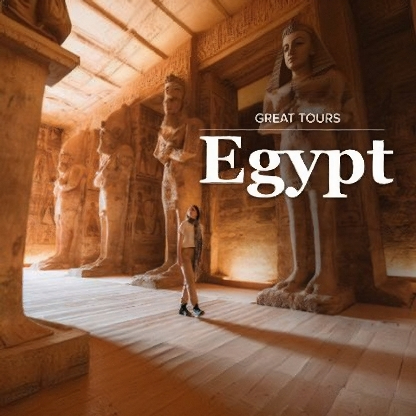
The Great Tours: A Guided Tour of Ancient Egypt
Original price was: $39.99.$8.99Current price is: $8.99.
Course No. 80020 — Unearth the mysteries of ancient Egypt through 24 richly detailed lessons that explore its monuments, art, ritual, cosmology, and everyday life. Egyptologist and curator Melinda Hartwig guides you through pyramids, temples, tombs, palaces, and workmen’s villages to reveal 5,000 years of Egyptian history and culture.
The Great Tours: A Guided Tour of Ancient Egypt
Overview
Course No. 80020 — Unearth the mysteries of ancient Egypt through 24 richly detailed lessons that explore its monuments, art, ritual, cosmology, and everyday life. Egyptologist and curator Melinda Hartwig guides you through pyramids, temples, tombs, palaces, and workmen’s villages to reveal 5,000 years of Egyptian history and culture.
Course Description
The glories of ancient Egypt have influenced art, literature, and popular imagination for millennia. This course visits the Nile’s great sites and museums, explains pyramid construction and royal funerary beliefs, reconstructs the rituals and festivals that sustained divine kingship, and examines intimate scenes of daily life preserved in tombs. Topics include the origins and symbolism of pyramids, the Amduat and Egyptian afterlife cosmology, the Opet festival, temples such as Karnak and Luxor, royal tombs in the Valley of the Kings and Queens, the workmen’s village at Deir el‑Medina, and Hellenistic and Roman‑period centers like Alexandria and Tanis. Throughout, the course combines archaeological evidence, material culture, and historical interpretation to present a vivid portrait of ancient Egyptian civilization.
Instructor
Melinda Hartwig — Egyptologist and museum curator
Lecture List
- Exploring the Gift of the Nile
- Description: The Nile’s role in Egyptian life; overview of gods, divine kingship, and symbolism of Egyptian architecture and ritual.
- Duration: 30 min
- The Major Museums of Cairo
- Description: Using Cairo’s museums to trace 5,000 years of Egyptian history; key objects from the Narmer Palette to Tutankhamun.
- Duration: 28 min
- How to Build a Pyramid
- Description: Origins and symbolism of pyramids, construction techniques, workforce organization, orientation, and funerary rites.
- Duration: 31 min
- The Great Pyramid: The Last Ancient Wonder
- Description: Khufu’s Great Pyramid—engineering, internal passages and chambers, burial sealing, and adjoining necropolis.
- Duration: 30 min
- The Great Sphinx and the Giza Plateau
- Description: Khafre’s complex, the Sphinx and its temple, Queen Meresankh’s tomb, Menkaure’s pyramid, and the Lost City of the Pyramid Builders.
- Duration: 32 min
- The Step Pyramid: Djoser’s Stairway to Heaven
- Description: The Step Pyramid at Saqqara—transition from mastaba to step pyramid and the 37‑acre mortuary complex’s features.
- Duration: 30 min
- The Capital at Memphis and the Saqqara Tombs
- Description: Memphis as capital; Temple of Ptah; Saqqara necropolis highlights including the Pyramid of Unas and notable tombs.
- Duration: 31 min
- Old, New, and Late Saqqara
- Description: New Kingdom cemetery mastabas, Teti’s pyramid, tombs of Mereruka and Kagemni, and the Serapeum with the Apis bull burials.
- Duration: 29 min
- Saqqara’s Famous Fifth‑Dynasty Tombs
- Description: Fifth‑Dynasty mastabas (Akhethotep, Ptahhotep II, Ti) and painted reliefs depicting daily life and elite concerns.
- Duration: 27 min
- King Sneferu and the First True Pyramid
- Description: Sneferu’s experiments—Meidum, Bent Pyramid, Red Pyramid—and the architectural innovations and failures leading to smooth‑sided pyramids.
- Duration: 28 min
- Power and Revolution: Beni Hasan and Amarna
- Description: Beni Hasan’s painted tombs and Akhenaten’s religious revolution; comparison of provincial and Amarna funerary imagery.
- Duration: 29 min
- Akhenaten’s City at Amarna and Hermopolis
- Description: Amarna’s royal tombs, northern tomb decoration, the Royal Road, and related Greco‑Roman necropoleis like Tuna el‑Gebel.
- Duration: 29 min
- Abydos: The Religious Center of Osiris
- Description: Abydos and the cult of Osiris; Seti I’s commemorative temple, Ramesses II’s funerary temple, and Um el‑Qu’ab.
- Duration: 29 min
- The Temple of Hathor at Dendera
- Description: Temple architecture as cosmic model; interior symbolism at Dendera and reliefs including Cleopatra VII.
- Duration: 28 min
- The Temple of Amun‑Re at Karnak
- Description: Karnak’s 1,500‑year building history; Hypostyle Hall, pylons, obelisks, and festival architecture honoring Amun‑Re.
- Duration: 30 min
- Luxor Temple and the Opet Festival
- Description: The Opet festival procession, rituals of royal regeneration, and Luxor’s role in the rites of divine kingship.
- Duration: 29 min
- Royal Tombs in the Valley of the Kings
- Description: The Amduat and the sun god’s nightly journey; tomb paintings, Tutankhamun’s discovery, and royal funerary decor.
- Duration: 29 min
- Valley of the Queens and Workmen’s Village
- Description: Nefertari’s tomb artistry and Deir el‑Medina’s daily records revealing the lives of tomb artisans.
- Duration: 28 min
- The Colossi of Memnon and Hatshepsut’s Temple
- Description: Amenhotep III’s memorial temple and Hatshepsut’s mortuary temple—monumentality, legitimacy, and royal portraiture.
- Duration: 28 min
- Theban Tombs: The Necropolis of Nobles
- Description: Nobles’ tombs on the west bank—ritual functions, transfiguration beliefs, and intimate scenes in tombs of Menna, Rekhmire, and Ramose.
- Duration: 28 min
- Ptolemaic Temples of Edfu and Kom Ombo
- Description: Ptolemaic-era Egyptian temples—Edfu’s Temple of Horus, Kom Ombo’s double shrine, and festival practices under Greek rulers.
- Duration: 26 min
- The Ancient Egyptian Frontier: Aswan
- Description: Elephantine island, Aswan’s frontier temples and shrines, Qubbet el‑Hawa tombs, and Nubian material culture.
- Duration: 28 min
- The Temples at Philae and Abu Simbel
- Description: Isis’s cult at Philae and Ramesses II’s Abu Simbel—rituals, monumental program, and modern rescue/relocation.
- Duration: 28 min
- Alexandria and the Lost City of Tanis
- Description: Alexandria’s Hellenistic and Roman monuments (lighthouse, library) and Tanis’s tomb treasures rivaling Tutankhamun.
- Duration: 32 min
Learning Objectives
- Understand the Nile’s ecological and cultural centrality to Egyptian civilization.
- Explain pyramid development, construction techniques, and funerary symbolism.
- Interpret temple architecture, ritual practice (e.g., Opet festival), and the role of divine kingship.
- Read tomb art and inscriptions to reconstruct aspects of daily life, work, and belief.
- Situate Hellenistic and Roman‑period Egypt (Alexandria, Tanis) within Egypt’s long cultural history.
Target Audience
Anyone interested in Egyptology, archaeology, ancient religions, art history, museum studies, or travel to Egyptian sites; suitable for general learners and students seeking a structured, site‑based tour of ancient Egypt.
Related products


Courses