Skip to content
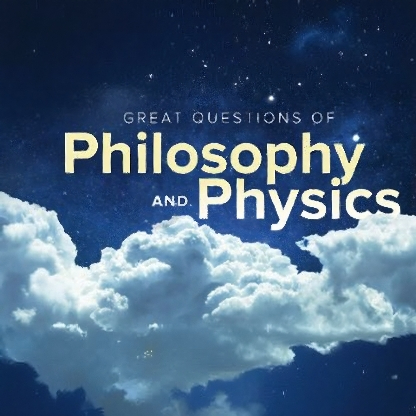
The Great Questions of Philosophy and Physics
Original price was: $24.99.$7.99Current price is: $7.99.
Philosophers have long puzzled over the nature of space, time, and matter. These inquiries led to the flowering of physics with the Scientific Revolution in the 17th century. Since then, the spectacular success of modern physics might appear to have made philosophy irrelevant. However, new theories have created a renewed range of philosophical concerns: What is the shape of space? Is time travel possible? Is there a grand unified theory that unites all of physics?
Overview
An award-winning teacher and philosopher makes sense of our strange universe.
Course No. 60000
Philosophers have long puzzled over the nature of space, time, and matter. These inquiries led to the flowering of physics with the Scientific Revolution in the 17th century. Since then, the spectacular success of modern physics might appear to have made philosophy irrelevant. However, new theories have created a renewed range of philosophical concerns: What is the shape of space? Is time travel possible? Is there a grand unified theory that unites all of physics?
Treating these puzzles with an entertaining and accessible approach, The Great Questions of Philosophy and Physics guides you through the concepts, theories, and speculations that underlie our understanding of reality. In 12 stimulating, half-hour lectures, award-winning teacher and philosopher Steven Gimbel of Gettysburg College covers the fundamental ideas of modern physics, highlighting the role of philosophy in setting ground rules, interpreting the results, and posing new questions.
Professor Gimbel describes the grand synthesis that Isaac Newton achieved with his universal theory of gravitation and its picture of absolute space and time. Then, you will see how Albert Einstein’s theory of relativity, combined with quantum theory, overthrew the Newtonian paradigm, posing a host of philosophical puzzles. Among them is Erwin Schrödinger’s famous thought experiment about a cat that is simultaneously dead and alive according to the standard interpretation of quantum mechanics. You will survey philosophical attempts to escape from this and other paradoxes, and explore the role of mathematics in physical theories. Does its extraordinary success imply that the world is a mathematical system?
You will close by exploring theological arguments that invoke the discoveries of physics to posit a creator God. As with other theories covered in the course, you will carefully weigh both sides using scientific evidence and the tools of philosophy.
Video Lectures
- Does Physics Make Philosophy Superfluous?
30 min
Trace the growth of physics from philosophy and see how logical positivism in the early 20th century energized the philosophy of physics.
- Why Mathematics Works So Well with Physics
35 min
Explore proposed answers to the question of why mathematics offers insight into the workings of the world, including the idea that the world is a mathematical system.
- Can Physics Explain Reality?
35 min
Delve into what makes some explanations scientific, questioning whether physics truly explains anything and exploring philosophical perspectives like Bertrand Russell’s rejection of causality.
- The Reality of Einstein’s Space
33 min
Assess arguments for the nature of space and how Einstein was influenced by Leibniz’s relational view, leading to his theory of relativity.
- The Nature of Einstein’s Time
29 min
Examine the weirdness of time, its connection to the early universe, and how Einstein’s theory predicts phenomena like time dilation and potentially time travel.
- The Beginning of Time
27 min
Investigate the concept of time’s beginning based on Einstein’s equations and the evidence for a “Big Bang,” discussing the implications of what might exist before.
- Are Atoms Real?
31 min
Compare the proof for the reality of atoms to evidence for other hypotheses while tracing the history of atomic theory and discussing “constructive empiricism.”
- Quantum States: Neither True nor False?
29 min
Enter the quantum realm, where traditional logic fails, exploring the foundations of quantum theory and the implications of the Heisenberg uncertainty principle.
- Waves, Particles, and Quantum Entanglement
30 min
Analyze how light can be both a wave and a particle, discussing perspectives from both realists and empiricists and Arthur Fine’s “natural ontological attitude.”
- Wanted Dead and Alive: Schrödinger’s Cat
29 min
Explore the famous thought experiment regarding Schrödinger’s cat and the four proposed solutions to the measurement problem.
- The Dream of Grand Unification
31 min
Follow the quest for a grand unified theory that incorporates both quantum phenomena and general relativity, critiquing unifying ideas like string theory.
- The Physics of God
29 min
Trace the historical debate over the existence of God through the lens of physics, examining arguments from both believers and skeptics.Related products



Courses