Skip to content
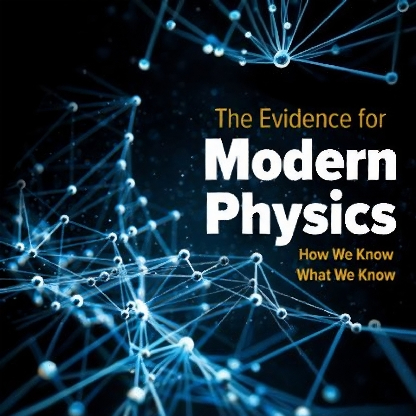
The Evidence for Modern Physics: How We Know What We Know
Original price was: $49.99.$9.99Current price is: $9.99.
Reveal the what and why of modern physics. A cutting-edge researcher explains how we know about black holes, gravitational waves, elementary particles, and much more. How do we know the universe is 13.8 billion years old? How do we know the speed of light is 299,792,458 meters per second? How do we know there are subatomic particles that live less than a trillionth of a trillionth of a second? Studying how physicists make discoveries is the best way to understand key developments in modern physics—from quantum mechanics to the theory of relativity to cosmology.
Overview
Course No. 10070
Reveal the what and why of modern physics. A cutting-edge researcher explains how we know about black holes, gravitational waves, elementary particles, and much more. How do we know the universe is 13.8 billion years old? How do we know the speed of light is 299,792,458 meters per second? How do we know there are subatomic particles that live less than a trillionth of a trillionth of a second? Studying how physicists make discoveries is the best way to understand key developments in modern physics—from quantum mechanics to the theory of relativity to cosmology.
In this 24-lesson course aimed at non-scientists, noted particle physicist Dr. Don Lincoln of Fermi National Accelerator Laboratory covers more than a century of progress in physics, describing exactly how scientists reach the conclusions they do. He starts with the atom, which was long hypothesized but wasn’t definitively proven until a paper by Albert Einstein in 1905. That was just the beginning, as researchers probed ever deeper into the atom’s complex structure, leading to the weird findings of quantum mechanics. Meanwhile, Einstein’s more famous work in relativity overturned conceptions of time and space, especially in the realm of the super-fast and ultra-massive.
Relativity and quantum theory are notoriously counterintuitive, but Dr. Lincoln shows why their conclusions must be true. He does the same for cosmology, which has advanced from the view that the Milky Way galaxy is all that exists to the realization that there are likely a trillion galaxies in the observable universe. Along the way, he deals with the Big Bang, black holes, dark matter, dark energy, and cosmic inflation, among other ideas. Some are purely speculative, but he points out what it would take to prove them.
The Evidence for Modern Physics is an intellectual rollercoaster ride that will amaze and enlighten. As Dr. Lincoln says, “You must wonder how we can say with such certainty that the world of the super-fast and ultra-small follow such bizarre rules. Well, you’re in luck, because that’s exactly what this course is about.”
Video Lessons
01: Do You Believe In Atoms?
Dr. Lincoln opens the course with the observation that all matter is made of atoms. But how do we know? The atomic hypothesis goes back to antiquity, although that was just an inspired guess. Survey the contributions of later scientists such as John Dalton and Albert Einstein. Discover why atoms are invisible to light microscopes, but not to the scanning transmission electron microscope.
Duration: 28 min
02: Peering inside Protons and Neutrons
Peer inside atoms to find mostly empty space, along with electrons and a compact nucleus, composed of protons and neutrons. These particles were all discovered indirectly through painstaking but straightforward experiments. Learn how physicists used more complex tools to uncover hundreds of even smaller objects. It took the quark theory to bring simplicity and unity to this seeming chaos.
Duration: 31 min
03: Seeing Light as Wave and Particle
Probe one of the most baffling mysteries of physics: the wave-particle duality of light. Trace the debate over the nature of light to its apparent solution in 1801, when Thomas Young demonstrated that light is a wave. A century later, Einstein proved that light also behaves as a particle. Astonishingly, further work showed that electrons and other matter also have this Janus-faced identity.
Duration: 29 min
04: The Paradox of Quantum Entanglement
Dr. Lincoln boldly confronts the paradox of quantum entanglement, which governs the behavior of particles that share the same quantum state. Discover that the rules of quantum mechanics defy every attempt to explain what seems inexplicable—implying, for example, that a cat could be simultaneously dead and alive in Erwin Schrödinger’s famous thought experiment. Explore other spooky examples.
Duration: 30 min
05: How We Know Special Relativity Is Real
Learn how Dr. Lincoln routinely conducts experiments that show the bizarre effects of Einstein’s special theory of relativity, which come into play at speeds approaching that of light. Like quantum theory, relativity strains credulity, but clocks really do slow down and length contracts at relativistic speeds; we just don’t notice these effects in our relatively slow-moving lives.
Duration: 28 min
06: Why the Speed of Light Is the Speed Limit
How can the speed of light be the same for everyone, regardless of their state of motion? First, investigate how the speed of light is determined. Next, consider the hypothesized medium for light propagation—the aether—which was dealt a fatal blow by the Michelson-Morley experiment in the 1880s. Finally, examine laboratory proof that the speed of light is constant for all observers.
Duration: 28 min
07: Discovering Subatomic Particles
Survey the fundamental particles and forces of the Standard Model, which is the prevailing theory of particle physics. Then focus on nonfundamental particles and the tools that discovered them, such as the cloud chamber. Easily built at home, the cloud chamber reveals the products of radioactive decay, including antimatter—which sounds like science fiction but is an authentic feature of reality.
Duration: 28 min
08: How Do You Weigh a Quark?
Learn the secret for measuring the masses and lifetimes of subatomic particles that exist for roughly a trillionth of a trillionth of a second. Using the Higgs boson and top quark as examples, Dr. Lincoln draws on a simplified version of Einstein’s mass-energy equation and Werner Heisenberg’s uncertainty principle to infer detailed information about truly ephemeral entities.
Duration: 27 min
09: Capturing the Ghostly Neutrino
Hear the story of the neutrino, the ghostly particle that passes through you at the rate of one quadrillion per second, with no ill effects. Neutrinos are created copiously in nuclear reactions and are fiendishly difficult to detect. Pinning them down took great experimental ingenuity, especially since neutrinos turn out to be quick-change artists, often transforming their identities in flight.
Duration: 30 min
10: The Search for the Higgs Boson
As a member of the research team, Dr. Lincoln recounts the discovery of the Higgs boson, one of the major science stories of the past half century. Predicted in 1964, the Higgs particle wasn’t experimentally confirmed until 2012. Trace the path to this triumph, as physicists narrowed down the properties of the elusive particle and utilized powerful particle accelerators in the hunt.
Duration: 30 min
11: Are Man-Made Black Holes Dangerous?
Evaluate three alarmist scenarios for a physics experiment gone horribly wrong. Some theorists predict that exotic phenomena such as strangelets, a false vacuum, and miniature black holes could be produced by new particle accelerators, leading to the destruction of Earth and even the universe! The risk, however small, hardly seems worth it. But Dr. Lincoln gives you good reasons to sleep soundly.
Duration: 29 min
12: How We Know What Stars Are Made Of
Scientists did not know the exact composition of the Moon until astronauts brought back rocks. So how do we know what the unimaginably more distant stars are made of? Get a short course in astrophysics as you explore the secrets of starlight, which reveal stellar temperature and elemental composition to observers on Earth. Then apply the lessons of nuclear physics to the life cycle of stars.
Duration: 31 min
13: Forming the Milky Way and Other Galaxies
Until 100 years ago, our Milky Way galaxy was thought to comprise the entire universe. Now we think there are roughly a trillion galaxies of various sizes and shapes in the observable universe. Investigate how astronomers reached this conclusion and how they mapped the structure and contents of the Milky Way, discovering a supermassive black hole at its center—among other galactic attractions.
Duration: 31 min
14: Finding Planets around Distant Stars
Planets beyond our solar system weren’t discovered until the 1990s. Since then, thousands have been confirmed around nearby stars, and billions likely populate the Milky Way Galaxy. Planets are so dim compared to the stars they orbit that observers had to come up with clever techniques to infer their presence. Focus on the “wobble” and “shadow” methods, which have been remarkably productive.
Duration: 28 min
15: The Awesome Evidence for General Relativity
Dr. Lincoln introduced Einstein’s special theory of relativity in Lesson 5. Now he covers general relativity, which incorporates gravity and predicts the warping of spacetime around massive objects. Study three phenomena that prove general relativity: an anomaly in the orbit of Mercury, the bending of starlight passing near the Sun, and the slowing of clocks in regions of stronger gravity.
Duration: 29 min
16: The Hunt for Gravitational Waves
General relativity predicts that titanic events such as colliding black holes cause the fabric of spacetime to ripple with gravitational waves. Join the search for these signals produced by rare events that are all but undetectable by the time they reach Earth. The existence of gravitational waves was inferred from observations in the 1970s and finally confirmed by detectors in 2015.
Duration: 29 min
17: How We Know the Universe Began with a Bang
The Big Bang is one of the few scientific concepts that has entered popular culture. But where did the idea come from? Trace this gripping detective story to attempts by a young female astronomer in the early 1900s to measure distances to stars. Her success set the stage for others to discover that the universe is expanding, as if from an initial “big bang.” More clues filled in the picture.
Duration: 31 min
18: The Case for Cosmic Inflation
Unlike the well-founded theories you’ve studied so far in this course, turn to one that is as-yet-unproven—but mindboggling in its implications. Cosmic inflation proposes that a period of explosive expansion occurred in the first instants of the Big Bang. This startling idea accounts for two puzzling features of today’s universe: the observed uniformity of matter and the flat geometry of space.
Duration: 30 min
19: How We Know Dark Matter Exists
Dark matter is the conjectured substance that outweighs ordinary matter by five to one. However, we can’t see it, nor can anyone say what it is—at least, not yet. The first clues to the existence of dark matter turned up in observations of stars and galaxies in the 1930s. Since then, the evidence has mounted. Consider alternative explanations and reasons to believe that dark matter is indeed real.
Duration: 32 min
20: How We Search for Dark Matter
Dig deeper into the quest to understand dark matter. Start by ruling out plausible early explanations, including that dark matter is invisible ordinary matter like cold hydrogen gas or rogue planets. Also rebut some popular exotic theories. Then Dr. Lincoln outlines current experiments to pin down this elusive substance, among them his own work with high-energy particle accelerators.
Duration: 32 min
21: How We Know the Universe Is Accelerating
Investigate evidence that the expansion of the universe reversed its gradual slow-down and stepped on the accelerator 5 billion years ago. “Dark energy” is the term given to this mysterious force that is expanding space at an ever-increasing rate. Learn how this remarkable phenomenon was discovered and explore its link to the cosmological constant proposed by Einstein a century ago.
Duration: 30 min
22: Measuring the Size and Age of the Universe
Draw on the astonishing facts about the universe you have learned since Lesson 15. Then add observations from recent satellite missions, and reach exact conclusions about the size and age of the universe. One thing you discover is that the diameter of the entire universe is at least 500 times larger than the visible universe. Since we can’t see that far, how do we know? Dr. Lincoln explains.
Duration: 32 min
23: What We Know about Quantum Foam
Few claims of physics are as absurd as that empty space is writhing with “virtual” particles—a foam of particles, antiparticles, and photons that appear and disappear with riotous abandon. Learn how Heisenberg’s uncertainty principle gives rise to this phenomenon of getting something from nothing, and discover that it is a crucial consideration for engineers creating microelectronics.
Duration: 29 min
24: Are Space and Time Quantized?
Finish the course with a leap into one of the most speculative realms of physics—the quest to understand gravity at the quantum scale. Examine why Einstein’s theory of gravity—general relativity—is incompatible with quantum mechanics. Then consider what a quantized theory of gravity would imply. One thing it means for sure is a future filled with bold theories and big surprises!
Duration: 33 min
Related products



Courses