Skip to content
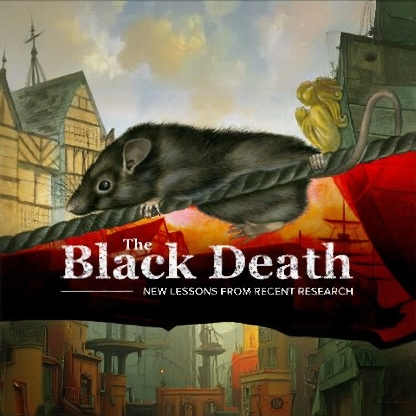
The Black Death: New Lessons from Recent Research
Original price was: $19.99.$4.99Current price is: $4.99.
Revisit the past to examine what the medieval experience of the Black Death can teach us about our own world and the science of disease. The world has been fundamentally changed by the shock and devastation of a 21st-century pandemic. COVID-19 has claimed six million lives; we process a daily deluge of often conflicting and/or overwhelming information; and humanity has no way of knowing when this collective trauma will finally end. Will our lives ever be the same again? It seems not.
Overview
Course No. 30400
Revisit the past to examine what the medieval experience of the Black Death can teach us about our own world and the science of disease. The world has been fundamentally changed by the shock and devastation of a 21st-century pandemic. COVID-19 has claimed six million lives; we process a daily deluge of often conflicting and/or overwhelming information; and humanity has no way of knowing when this collective trauma will finally end. Will our lives ever be the same again? It seems not.
Now, try to imagine the plague that devastated Europe in the Middle Ages and beyond: more than 25 million dead. Almost 400 years of outbreaks caused by a bacterium that would not be identified until the 19th century. The mortality rate was close to 85%, with as much as 70% of the population wiped out in some locations. Superstition was pervasive, and medical practices were frequently ineffective and harmful. What caused this tragedy, and what could have been done about it? For years, we thought we knew … but we often had it wrong.
In The Black Death: New Lessons from Recent Research, celebrated medievalist Dorsey Armstrong shares the fascinating new story of this old pandemic—revealed by dedicated researchers working with 21st-century technologies and a knowledge of language and history that now provide input from all geographic areas of the Medieval world. In seven engaging lectures, Professor Armstrong corrects explanations of the pandemic that are now known to be inaccurate and offers a more robust description of plague biology than has ever been known. COVID-19 isn’t likely to be humanity’s last experience with a zoonotic disease, so what can we learn now from these two pandemics that could help us in the future?
Course Outline
01: Reassessing the Black Death
As we deal with our own 21st-century pandemic, the curious among us have looked back to the 14th-century pandemic known as the Black Death. You’ll be surprised to discover how many of our assumptions and conclusions about that time have been upended as new methods of scientific inquiry have been applied to old questions.
Duration: 21 min
02: A Deeper Dive into Rat and Flea Behavior
A deeper understanding of rat and flea biology and behavior along with the 21st-century ability to examine ancient DNA have allowed us to correct long-held assumptions about the origin of the three known plague pandemics. Follow the fascinating scientific trail that now allows us to state with certainty where the plague did—and did not—originate.
Duration: 26 min
03: Human-to-Human Plague Transmission
Medieval peoples suffered from the unpredictability of the pandemic as it exploded in some seasons and locations, died down, and then showed up again years later. Explore what we have recently learned about transmission of the four types of plague—bubonic, pneumonic, septicemic, and digestive—and how that affected the timing and intensity of outbreaks.
Duration: 17 min
04: Plague, Grain, and the Mongols
We now know the grain trade was responsible for the movement of black rats and their fleas around the medieval world. Learn how a serious increase in European urbanization and well-established trade networks set the continent up for a devastating fall once the Mongols pushed west into the area.
Duration: 31 min
05: The Big Bang of the Black Death
Scientists have discovered that what gave the Black Death its stunning lethality and transmissibility was a mutation in a bacterial strain about 100 years before the plague showed up in Europe. Explore the genetics of Yersinia pestis and learn how scientists have confirmed that plague came into the European world only one time.
Duration: 26 min
06: The Fate of the Plague’s Survivors
We now understand better than ever that the experience of a pandemic—both then and now—is not a singular event or occurrence. It is an ongoing trauma, and we have no way to know when it will be over. Examine the inherent societal flaws that pandemics reveal and consider whether any of our social, economic, medical, and political safety nets held up the way we had hoped.
Duration: 22 min
07: The Old World Falls Away
For those who survived the upheaval of this medieval pandemic, European life—and even the understanding of the very purpose of government—had forever changed. Study the many ways in which society responded to this massive depopulation and its associated problems by looking at the social networks that were developed to better combat plague and provide relief and support.
Duration: 24 min
Related products