Skip to content
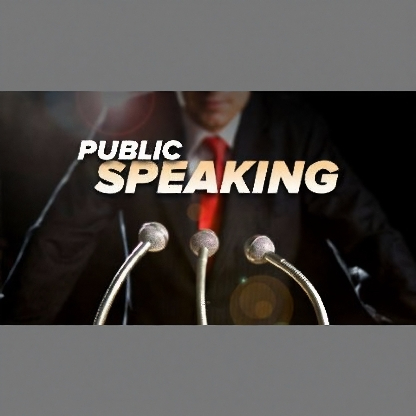
The Art of Public Speaking
Original price was: $29.99.$6.99Current price is: $6.99.
Public speaking is essential for success, yet many fear it or believe it’s an innate talent. Award-winning Professor John R. Hale—a master speaker with over 1,000 speeches—reveals this isn’t true. Success comes from confidence, practice, and proven techniques used by history’s greatest speakers.
The Art of Public Speaking
Overview
Course No. 2031
Learn how to prepare, craft, and deliver great speeches by studying history’s greatest orators.
Public speaking is essential for success, yet many fear it or believe it’s an innate talent. Award-winning Professor John R. Hale—a master speaker with over 1,000 speeches—reveals this isn’t true. Success comes from confidence, practice, and proven techniques used by history’s greatest speakers.
This 12-lecture course breaks down public speaking into three key components:
- How to prepare for a speech
- How to craft a compelling message
- How to connect with your audience
Discover the secrets behind unforgettable speeches and gain an invaluable reference for any speaking occasion.
Video Lessons
01: Overcome Obstacles – Demosthenes of Athens (33 min)
Learn how practice, memorization, and perseverance—as demonstrated by ancient Greek orator Demosthenes—can conquer stage fright and speech impediments.
02: Practice Your Delivery – Patrick Henry (30 min)
Master vocal and physical delivery (tone, posture, expression) using examples from Patrick Henry, Winston Churchill, and Oliver Cromwell.
03: Be Yourself – Elizabeth I to Her Army (30 min)
Connect deeply with audiences by sharing personal experiences, as shown in speeches by Elizabeth I and Sojourner Truth.
04: Find Your Humorous Voice – Will Rogers (31 min)
Use humor (hyperbole, surprise) to engage listeners, even in serious speeches—inspired by Will Rogers’ techniques.
05: Make It a Story – Marie Curie on Discovery (31 min)
Transform complex ideas into vivid stories, exemplified by Marie Curie’s explanation of radium.
06: Use the Power of Three – Paul to His People (31 min)
Structure speeches in trios for impact, analyzing Paul’s letter to the Corinthians.
07: Build a Logical Case – Susan B. Anthony (31 min)
Avoid logical pitfalls and craft persuasive arguments, modeled by Susan B. Anthony and Chief Joseph.
08: Paint Pictures in Words – Tecumseh on Unity (30 min)
Choose evocative words and metaphors, drawing from Tecumseh, Homer, and Aesop.
09: Focus on Your Audience – Gandhi on Trial (34 min)
Tailor speeches to specific listeners, as demonstrated by Gandhi and JFK.
10: Share a Vision – Martin Luther King’s Dream (33 min)
Inspire audiences with a clear vision, exemplified by MLK’s “I Have a Dream.”
11: Change Minds and Hearts – Mark Antony (29 min)
Persuade skeptics using emotion, repetition, and props—like Antony in Julius Caesar.
12: Call for Action – Lincoln at Gettysburg (33 min)
Craft powerful conclusions with clear calls to action, inspired by Lincoln’s Gettysburg Address.
Related products