Skip to content
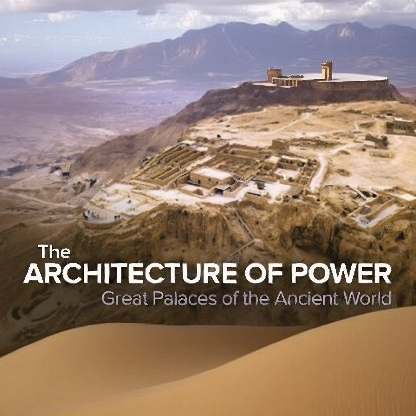
The Architecture of Power: Great Palaces of the Ancient World
Original price was: $49.99.$9.99Current price is: $9.99.
Course No. 3332 — Explore the nature of political power and cultural tradition through history’s most opulent and influential palaces. In 24 richly illustrated lectures, Professor Steven L. Tuck (Miami University) examines palaces as expressions of authority, ideology, technology, and taste—from ancient Near Eastern courts and Chinese imperial compounds to Roman emperors’ villas, Aztec royal complexes, and European absolutist residences.
Overview
Course No. 3332 — Explore the nature of political power and cultural tradition through history’s most opulent and influential palaces. In 24 richly illustrated lectures, Professor Steven L. Tuck (Miami University) examines palaces as expressions of authority, ideology, technology, and taste—from ancient Near Eastern courts and Chinese imperial compounds to Roman emperors’ villas, Aztec royal complexes, and European absolutist residences.
Course Description
A palace is more than a residence: it is a statement of legitimacy, a ritual stage, an administrative center, and a cultural laboratory. The Architecture of Power surveys palaces across time and space—some still standing, some known only from ruins, and others that disappeared entirely. You will visit Malkata and Amarna in Egypt; palaces of the Mycenaeans, Assyrians, Persians, and Hellenistic kings; Roman imperial residences from Nero to Diocletian; Hadrian’s eclectic villa; monumental Chinese palaces like Weiyang; Montezuma’s palace at Tenochtitlán; and later Renaissance and modern palaces including Versailles and contemporary presidential residences. Along the way, the course analyzes how architecture, landscape, art, ritual, and technology produced and reinforced power.
Instructor
Professor Steven L. Tuck — Miami University
Lecture List
- Palaces Past and Present
- Description: Introduction to the course with a modern analogue—Saddam Hussein’s palaces—to show how ancient models are repurposed in the recent past.
- Duration: 34 min
- Malkata Palace: Pharaoh, Foreigners, and Gods
- Description: The 14th-century BC palace as a microcosm of Egyptian court ritual, diplomacy, and royal display.
- Duration: 32 min
- Amarna: Palace of the First Sun King
- Description: Akhenaten’s new capital and palace architecture as instruments of religious and political revolution.
- Duration: 31 min
- Phaistos: Palaces between Asia and Europe
- Description: The Minoan/Crete palace at Phaistos as a crossroads of ritual, ceremony, and international exchange.
- Duration: 32 min
- Palace of Nestor at Pylos and Bronze Age Greece
- Description: The Mycenaean palace complex, its throne room, administration, and archaeological treasures.
- Duration: 32 min
- The Assyrian Palace at Nimrud: Empire in Stone
- Description: Ashurnasirpal II’s monumental architecture, sculpted reliefs, and propagandistic spectacle.
- Duration: 33 min
- Nineveh: The Architecture of Assyrian Power
- Description: Urban planning, river engineering, and the lamassu guardians of the late Assyrian capital.
- Duration: 34 min
- Persepolis: Palace of the Persians
- Description: A study of Achaemenid ceremonial architecture—the Gate of All Nations, stairways, and imperial iconography.
- Duration: 33 min
- Greek Palaces in Conquered Lands I
- Description: Hellenistic palace models after Alexander—blended Greek, Persian, and local forms of court life.
- Duration: 31 min
- Greek Palaces in Conquered Lands II
- Description: Two case studies (Jordan and Libya) showing variation in Hellenistic palace design and function.
- Duration: 31 min
- Greek Palaces Come to Roman Italy
- Description: How Greek palace practices influenced Roman elite residences through figures like Marcellus and Lucullus.
- Duration: 32 min
- Masada: Herod the Great between East and West
- Description: Herod’s desert fortress-palace, logistical feats, and the intersection of client kingship and Roman power.
- Duration: 32 min
- Herod the Great’s Summer and Winter Palaces
- Description: Herod’s contrasting palaces, Roman amenities (baths, gardens), and political messaging.
- Duration: 31 min
- Caligula’s Floating Palaces
- Description: Imperial pleasure ships—spectacle, engineering, and the theatrical display of authority at sea.
- Duration: 33 min
- Nero’s Domus Transitoria at Rome
- Description: Early experiments in Roman concrete and the transition to more theatrical imperial architecture.
- Duration: 32 min
- Nero’s Golden House: A Roman Palace Theater
- Description: The Domus Aurea as a sprawling, multimedia palace of spectacle and private power.
- Duration: 32 min
- Rome’s Great Imperial Palace of Domitian
- Description: The Palatine complex as the prototype imperial residence and symbolic center of Roman rule.
- Duration: 32 min
- Hadrian’s Villa, Tivoli
- Description: Hadrian’s villa as an autobiographical, cosmopolitan landscape blending architecture, art, and ideology.
- Duration: 32 min
- Diocletian’s Retirement Palace, Split
- Description: Diocletian’s palace as fortified residence, administrative center, and a new model for imperial retirement.
- Duration: 32 min
- Constantine’s Palace, Constantinople
- Description: The founding palatial landscape of Constantinople—ceremony, public spectacle, and imperial image-making.
- Duration: 33 min
- China’s Endless Palace: Weiyang Palace
- Description: The scale and cosmological symbolism of China’s largest imperial palace and its political role.
- Duration: 32 min
- The Palace of Montezuma II at Tenochtitlán
- Description: Aztec royal architecture, ritual practice, and the urban palace complex in the pre-Columbian Americas.
- Duration: 32 min
- Renaissance Palaces and the Classical Revival
- Description: The rebirth of classical palace forms in Europe—Kensington, Tuileries, Versailles—and their political meanings.
- Duration: 33 min
- Palaces in a World of Democracies
- Description: Reflection on modern equivalents of palaces (e.g., the White House), corporate headquarters, and how palace tropes persist.
- Duration: 38 min
Learning Objectives
- Analyze palaces as instruments of political authority, ceremonial performance, and cultural identity.
- Compare palace architectures across civilizations to identify common strategies of display and governance.
- Evaluate archaeological, textual, and art-historical evidence used to reconstruct court life.
- Understand technological and landscape choices (materials, gardens, waterways) that reinforced rulership.
- Reflect on continuities between ancient palatial models and modern centers of power.
Target Audience
Students and enthusiasts of ancient history, archaeology, architectural history, political anthropology, museum professionals, and anyone fascinated by how built environments shape and reflect power.
Related products