Skip to content
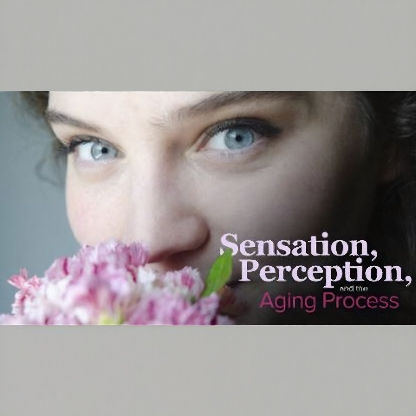
Sensation, Perception, and the Aging Process
Original price was: $29.99.$7.99Current price is: $7.99.
Understand how the process of aging will affect your experience of reality in this highly informative and useful course by an award-winning professor of psychology. Overview Course No. 1546.
Course Overview
Understand how the process of aging will affect your experience of reality in this highly informative and useful course by an award-winning professor of psychology. Overview Course No. 1546.
Why do we react to the world the way we do? And how is it that the physically adventurous young person whose greatest passion was riding the tallest roller coaster somehow grew into an adult whose stomach churns at the mere thought of such a ride? The answer, of course, is that though the physical world we occupy may be identical, the reality we experience is very different.
Our sensory systems can be altered over time, their acuity changing in response to aging or injury, life experiences, evolving personalities, and other factors. In this series of 24 eye-opening lectures, acclaimed teacher and psychologist Professor Francis Colavita of the University of Pittsburgh gives you a bio-psychological perspective on both the way humans navigate and react to the world and an understanding of the ways in which that process is ever-changing.
Rich in science, potent examples, and anecdotes, these gripping lectures explore subjects like how we see, hear, smell, taste, or touch; keep our balance, and understand exactly where we are in space. You’ll learn about motor memory, the ways in which our bodies process pain, and even why our taste in food changes over time. It is a fascinating journey that will answer myriad questions you never knew you had.
Course Lectures
01: Sensation, Perception, and Behavior
In addition to presenting an overview of the course, this lecture offers a brief introduction to psychology in general and Behaviorism in particular. It distinguishes between the physical, sensory, and perceptual worlds and introduces the distinction between a sensation and a perception.
Duration: 31 min
02: Sensation and Perception—A Distinction
We learn that the brain is the organ of perception. Beginning in infancy, experiences stored in our brains determine the meanings that sensory events will have for us and that shape our behavior.
Duration: 30 min
03: Vision—Stimulus and the Optical System
We begin learning how our sensory systems do their job of transducing energy from the physical world into language the brain understands—electrochemical activity—starting with the visual system.
Duration: 30 min
04: Vision—The Retina
This lecture explains the contributions that rods and cones—the human retina’s two types of receptors—make to normal vision, including visual acuity and sensitivity.
Duration: 30 min
05: Vision—Beyond the Optic Nerve
We look at the role played by the visual information processing centers of the brain in orienting and reacting to objects in space; identifying those objects; and determining their shape, form, color, and size. We also explore the consequences of damage to these processing centers.
Duration: 30 min
06: Vision—Age-Related Changes
This lecture describes how the supporting structures, receptors, and neural elements of the visual system undergo progressive physical changes related to the aging process, and how, as a consequence of these changes, vision is affected in predictable ways as we grow older.
Duration: 30 min
07: Hearing—Stimulus and Supporting Structures
What we call sound is the brain’s response small, rapid, in-and-out movements of the eardrums produced by pressure variations in air molecules. We examine how the supporting structures of the outer and inner ear begin the hearing process.
Duration: 30 min
08: Hearing—The Inner Ear
This lecture explains how the transduction process is accomplished by the auditory receptors, known as hair cells, as well as the difference between the two mechanisms by which sounds from the environment reach those cells.
Duration: 30 min
09: Hearing—Age-Related Changes
We look at several causes of age-related hearing loss, including changes in the ear canal and eardrum, degeneration of the temporal bone, reduced electrical output in the cochlea, progressive death of hair cells, and degeneration of the auditory nerve.
Duration: 30 min
10: The Cutaneous System—Receptors, Pathways
Experimental examination of our skin sense goes back more than 150 years, but the workings—and importance—of the cutaneous system turn out to be significantly more complicated than those original suggested.
Duration: 30 min
11: The Cutaneous System—Early Development
This lecture presents an overview of the research indicating the importance of cutaneous stimulation—especially tactile stimulation—to normal growth and development.
Duration: 30 min
12: The Cutaneous System—Age-Related Changes
Although there are decreases in cutaneous sensitivity that come with age, most have little effect on normal daily living. In fact, tactile stimulation is as important to young and old adults as it is to infants and children.
Duration: 30 min
13: Pain—Early History
Although we learn more each year about pain, many aspects of the topic still remain a puzzle, for example, “good pain” versus “bad pain,” the placebo effect, and cultural conditioning.
Duration: 30 min
14: Pain—Acupuncture, Endorphins, and Aging
This second lecture on pain examines a once-controversial technique, explores a possible explanation for its effectiveness, and looks at how age affects our ability to feel different kinds of pain.
Duration: 30 min
15: Taste—Stimulus, Structures, and Receptors
This introduction to the subject of taste looks at how the body gathers taste-related sensory data and why we have natural preferences for certain tastes.
Duration: 30 min
16: Taste—Factors Influencing Preferences
In general, people are born with the same innate taste preferences. Yet by adulthood, people around the world have such different taste preferences that it is difficult to believe those preferences were ever similar. We look at why this is so.
Duration: 31 min
17: Smell—The Unappreciated Sense
When asked which of their senses they would miss the least, many people choose smell. As this lecture shows, however, smell is far more important for humans than we realize.
Duration: 30 min
18: Smell—Consequences of Anosmia
What would it mean to lose the sense of smell? Research findings show the impact might be greater than we imagine.
Duration: 30 min
19: The Vestibular System—Body Orientation
In studying this little-known system, we learn about the components of the inner ear that the body depends upon to respond to and identify changes in our position in space.
Duration: 30 min
20: The Kinesthetic Sense—Motor Memory
Although often referred to as “muscle memory,” our kinesthetic sense is much more. It sends to the brain continuous sensory feedback from receptors located not only in the muscles but also in our tendons, ligaments, and joints.
Duration: 31 min
21: Brain Mechanisms and Perception
Evolution has not replaced the older parts of our brain but has simply added new parts. The old ones retain their original functions, while our higher mental processes, including perception, reside in our newest part, the cerebral cortex.
Duration: 31 min
22: Perception of Language
Language is made up of verbal auditory stimuli that have become charged with meaning. It is so critical to humans that it occupies two areas of the brain, one for producing speech and one for comprehending it.
Duration: 31 min
23: The Visual Agnosias
The complex way different “visual association areas” in the brain allow it to integrate sensory data and memory into visual images can occasionally produce extraordinary kinds of deficits.
Duration: 31 min
24: Perception of Other People/Course Summary
This final lecture describes some factors in how we perceive other people and presents a general summary of the course. Finally, it looks at current research and trends in the field of sensation and perception.
Duration: 32 min
Related products