Skip to content
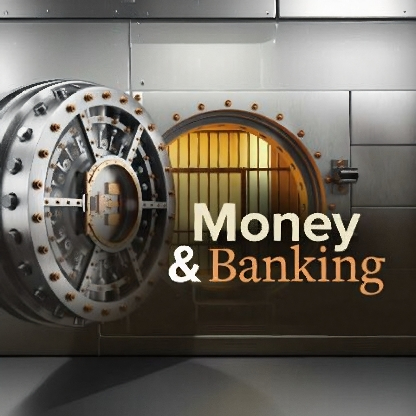
Money and Banking: What Everyone Should Know
Original price was: $69.99.$22.99Current price is: $22.99.
An economist and award-winning professor leads you in a panoramic exploration of our monetary and financial systems, their inner workings, and their crucial role in your world.
Money and Banking: What Everyone Should Know
Course Overview
An economist and award-winning professor leads you in a panoramic exploration of our monetary and financial systems, their inner workings, and their crucial role in your world. Money and finance play a deeply fundamental role in your life. As a guiding theme of these 36 content-rich lectures, you observe the ways in which economies require efficient and evolving financial institutions and markets to fulfill their potential. You’ll cover vital subjects:
- Central banks, commercial banks, and the Federal Reserve
- Interest rates and interest rate policy
- Bonds and stock markets
- Foreign exchange and international banking
This is a rare chance to gain a grounded understanding of our monetary and financial systems, grasping the elements that directly affect your life and future.
Video Lectures
- The Importance of Money – 31 min
Explore the fundamental nature of money as a social contract and its connections to economic well-being. - Money as a Social Contract – 30 min
Discover the evolution of money from barter to fiat systems. - How Is Money Created? – 30 min
Study the invention of paper money and the history of the gold standard. - Monetary History of the United States – 28 min
Learn about the U.S. government’s role in establishing a central bank and national currency. - Local Currencies and Nonstandard Banks – 30 min
Explore nontraditional financial models, including local currencies and microfinance. - How Inflation Erodes the Value of Money – 30 min
Investigate factors governing inflation and its detrimental effects. - Hyperinflation Is the Repudiation of Money – 29 min
Trace the causes and impacts of extreme inflation in various governments. - Saving-The Source of Funds for Investment – 32 min
Understand the relationship between saving and economic growth. - The Real Rate of Interest – 28 min
Differentiate between nominal and real interest rates. - Financial Intermediaries – 32 min
Investigate the role of financial middlemen in facilitating borrowing and lending. - Commercial Banks – 30 min
Learn how commercial banks operate, including money creation through loans. - Central Banks – 29 min
Understand the importance of central banks in controlling money supply and interest rates. - Present Value – 30 min
Learn how to compute the current value of future payments. - Probability, Expected Value, and Uncertainty – 29 min
Explore statistical tools for making financial decisions under uncertainty. - Risk and Risk Aversion – 29 min
Assess individuals’ willingness to accept financial risks. - An Introduction to Bond Markets – 31 min
Study the role of bond markets in channeling funds for government and private entities. - Bond Prices and Yields – 30 min
Investigate the relationship between bond prices and interest rates. - How Economic Forces Affect Interest Rates – 28 min
Understand how saving and investment patterns influence interest rates. - Why Interest Rates Move Together – 33 min
Learn about factors that cause interest rates to adjust together across the economy. - The Term Structure of Interest Rates – 32 min
Study how the Expectations Hypothesis forecasts future interest rates. - Introduction to the Stock Market – 30 min
Investigate stock market functions and how trades are made. - Stock Price Fundamentals – 32 min
Understand what determines prices in the stock market. - Stock Market Bubbles and Irrational Exuberance – 28 min
Explore the psychology behind stock market bubbles. - Derivative Securities – 32 min
Learn how derivative securities function to lower financial risk. - Asymmetric Information – 29 min
Discover how information disparities affect financial markets. - Regulation of Financial Firms – 31 min
Examine types of government regulations affecting financial institutions. - Subprime Mortgage Crisis and Reregulation – 31 min
Trace the events leading to the 2008 crisis and the regulatory responses. - Interest Rate Policy at the Fed and ECB – 31 min
Investigate the roles of the Federal Reserve and European Central Bank in setting interest rates. - The Objectives of Monetary Policy – 30 min
Explore the goals of government monetary policies. - Should Central Banks Follow a Policy Rule? – 30 min
Evaluate the case for predictable versus discretionary policies by central banks. - Extraordinary Tools for Extraordinary Times – 29 min
Learn about the Federal Reserve’s response to the Great Recession. - Central Bank Independence – 32 min
Understand the relationship between central bank independence and economic outcomes. - The Foreign Exchange Value of the Dollar – 33 min
Grasp how currency exchange rates operate and their implications. - Exchange Rates and International Banking – 32 min
Investigate the factors affecting exchange rate movements. - Monetary Policy Coordination – 30 min
Compare coordinated interest rate policies versus individual nations’ actions. - Challenges for the Future – 34 min
Consider key questions facing the world’s financial systems, including the U.S. deficit and the survival of the euro.
Related products


Courses