 Skip to content
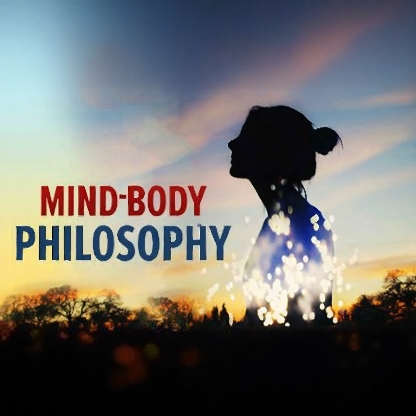
Mind-Body Philosophy
Original price was: $39.99.$7.99Current price is: $7.99.
Explore how the brain creates your experience of reality with an award-winning Professor of Philosophy.
Mind-Body Philosophy
Course Overview
Explore how the brain creates your experience of reality with an award-winning Professor of Philosophy.
Course No. 4932
How is it that our brain creates all the subjective experiences of our lives every single day – the experiences we call reality? That is the mind-body problem. In Mind-Body Philosophy, Professor Patrick Grim of the State University of New York at Stony Brook leads an intellectually exhilarating tour through millennia of philosophy and science addressing one of life’s greatest conundrums. But you won’t just be a spectator as Dr. Grim engages and encourages each of us to come to our own conclusions.
In this course, you’ll learn about the many ways in which philosophy, mathematics, psychology, and cutting-edge neuroscience have weighed in on the mind-body problem, all to varying degrees of success. You’ll learn how computers and artificial intelligence have challenged our notions of the mind and consciousness and what scientists have learned from our dreams, hallucinations, and experiences under anesthesia.
What is the answer to the mind-body problem? No one knows… yet. But in Mind-Body Philosophy, Dr. Grim suggests a new method of inquiry that could possibly lead to a solution: a philosophical science of consciousness, combining the best that philosophy and science have to offer.
Video Lectures
01: Mind, Body, and Questions of Consciousness (32 min)
The 3.5 pounds of gray matter in your skull processes all the information you need to live and thrive. But how can the physical matter of the brain create the subjective experience of your life? That is the mind-body problem.
02: Mind and Body in Greek Philosophy (31 min)
Learn what modern Western thought inherited from the Greeks and how the theories of Pythagoras, Socrates, Plato, and Aristotle still affect our thinking today.
03: Eastern Perspectives on Mind and Body (31 min)
Unlike Western philosophy’s dualism, Hindu and Buddhist traditions take a more practical line of inquiry, examining how to best live rather than discover absolute truth.
04: Using the Body to Shape the Mind (32 min)
Learn how Eastern disciplines like yoga and meditation, along with Western exercise habits, can affect both brain and mind.
05: History of the Soul (32 min)
While central to philosophy for millennia, the concept of the soul is not addressed by contemporary brain science. Learn why William James “exiled” the subject from modern psychology.
06: How Descartes Divided Mental from Physical (31 min)
Explore Descartes’ famous “I think; therefore I am” and his complete split between mind and body – ideas that still influence the mind-body debate today.
07: Mistakes about Our Own Consciousness (29 min)
Discover how wrong we can be about our own everyday experiences and consciousness itself.
08: Strange Cases of Consciousness (30 min)
Study of unusual brains reveals brain modularity, differentiation, and blending. Do we really see with our eyes?
09: Altered States of Consciousness (32 min)
What do dreams, lucid dreams, and hallucinations teach us about brain structure and function?
10: Memory, Mind, and Brain (31 min)
John Locke suggested your continuous sequence of memories makes you “you.” But what is memory and how is it related to emotions and dreams?
11: Self-Consciousness and the Self (31 min)
Journey through centuries of failed attempts to definitively understand the self and self-consciousness.
12: Rival Psychologies of the Mind (33 min)
Compare William James, Sigmund Freud, and Wilhelm Wundt’s competing approaches to a science of consciousness.
13: The Enigma of Free Will (30 min)
What do quantum mechanics and readiness potential studies reveal about our decision making?
14: Emotions: Where Mind and Body Meet (31 min)
Can the physical body affect emotions? Could emotions be required for rationality itself?
15: Could a Machine Be Conscious? (31 min)
Explore Turing and Wittgenstein’s question: “Could machines think?” and its implications for language, intelligence, and consciousness.
16: Computational Approaches to the Mind (32 min)
What can building intelligent machines teach us about our own intelligence and brain function?
17: A Guided Tour of the Brain (30 min)
We’ve mapped the brain’s neurons, synapses, and neurotransmitters. What haven’t we found? Consciousness.
18: Thinking Body and Extended Mind (30 min)
Cognition requires more than just the mind – learn how nervous systems integrate brain, body, and environment.
19: Francis Crick and Binding in the Brain (32 min)
After discovering DNA’s structure, Crick turned to consciousness research. Was he correct about the brain’s claustrum?
20: Clues on Consciousness from Anesthesiology (30 min)
Can we be certain an anesthetized patient feels no pain? Could we build a reliable “consciousness monitor”?
21: Of Mind, Materialism, and Zombies (31 min)
Use “zombie thought experiments” to clarify your personal views on mind, brain, and consciousness.
22: Thought Experiments against Materialism (30 min)
What can Leibniz’ “giant head” and Searle’s “Chinese room” tell us about materialism’s limits?
23: Consciousness and the Explanatory Gap (31 min)
Is it possible the human mind will never fully understand its own consciousness?
24: A Philosophical Science of Consciousness? (35 min)
Explore a step-by-step approach that could lead to richer understanding of consciousness and its evolutionary benefit.
Related products





Courses
