Skip to content
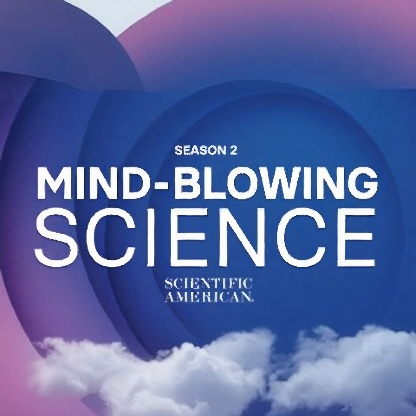
Mind-Blowing Science: Season 2
Original price was: $14.99.$5.99Current price is: $5.99.
Chock-full of even more astounding and mind-blowing moments, Mind-Blowing Science: Season 2 brings a new batch of Scientific American’s most popular articles to life.
Overview
Chock-full of even more astounding and mind-blowing moments, Mind-Blowing Science: Season 2 brings a new batch of Scientific American’s most popular articles to life.
Mind-Blowing Science is back! Season 2 of our National Capital Emmy® Award-winning series has arrived and it’s filled with even more mind-blowing moments as a new batch of Scientific American’s most intriguing articles are brought to life.
For those who are not already familiar with the venerable publication Scientific American, it was founded in 1845 and is the oldest continuously published magazine in the United States. Devoted to covering the advances in research and discoveries that are changing our understanding of the world and shaping our lives, Scientific American provides insights and illumination about the most important developments at the intersection of science and society. More than 200 Nobel Prize winners have contributed to this flagship publication, along with thousands of scientific experts across dozens of subjects, including Albert Einstein.
We invite you to join more than a dozen esteemed experts and take a deep dive across a broad assortment of fascinating topics that range from the Antikythera mechanism to the 300 “close calls” the Earth has had with asteroids.
Course Outline
01: Do We Live in a Simulation?
Is the world real, or could it—and you—just be a simulation? This episode examines the evidence for and against one of our most basic assumptions about existence.
Duration: 15 min
02: A Model Octopus
Dive into the mind of an octopus and see what we can learn about ourselves by comparing the human brain to the octopus brain.
Duration: 12 min
03: How to Control Your Feelings
Discover the five stages of emotional regulation and how you can learn to control your feelings to make smarter choices in challenging situations.
Duration: 21 min
04: How Birds Branched Out
Explore the history, evolution, and anatomy of birds to understand how they diversified into the many species we see today.
Duration: 13 min
05: Survival of the Friendliest
Learn how cooperative communication allowed Homo sapiens to thrive and how social sophistication influenced natural selection.
Duration: 19 min
06: A New Map of the Universe
Examine the largest map of the cosmos ever made and how it provides crucial information for studying cosmic history and dark energy.
Duration: 17 min
07: How Stress Shuts Down Your Brain
Discover what happens inside our heads during high-stress situations and how biological sex plays a role in our reactions to stress.
Duration: 16 min
08: Protecting Earth from Asteroids
Learn how NASA and other organizations monitor asteroids and prepare for potential impacts, despite the low likelihood of a catastrophic event.
Duration: 20 min
09: Extreme Birding
Follow Frank Gallo and the Raven Lunatics as they attempt to break their personal best record for bird species spotted in a single day.
Duration: 26 min
10: Lifting the Venus Curse
Explore the mysteries of Venus and what recent data from NASA could reveal about its transformation into an unearthly world.
Duration: 16 min
11: Top Emerging Technologies
Investigate how emerging technologies may help address global challenges such as climate change, health, energy use, and food production.
Duration: 13 min
12: Secrets of the Antikythera Machine
Join Tony Freeth to uncover the complexities of the Antikythera Machine, an ancient Greek device that defies historical timelines.
Duration: 15 min
13: Humans Are Still Evolving
Explore how human evolution is ongoing and what the future may hold for our species in the context of our evolutionary history.
Duration: 16 min
14: Psychedelic Treatments for Psychiatric Disorders
Examine the latest research on psychedelic-assisted psychotherapy and its potential as a treatment for mental disorders.
Duration: 7 min
15: Should Doctors Stop Prescribing Weight Loss?
Discover new approaches to health that focus less on weight loss and more on overall well-being, challenging traditional healthcare assumptions.
Duration: 15 min
Related products


Courses