 Skip to content
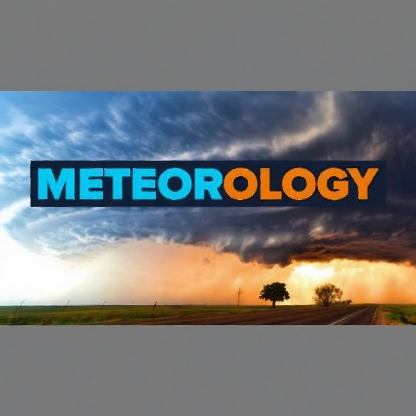
Meteorology: An Introduction to the Wonders of the Weather
Original price was: $29.99.$7.99Current price is: $7.99.
Gain new insight into the remarkable meteorological phenomena that surround us with this eye-opening course that probes these mysterious forces of nature.
Meteorology: An Introduction to the Wonders of the Weather
Course Overview
Gain new insight into the remarkable meteorological phenomena that surround us with this eye-opening course that probes these mysterious forces of nature.
Course No. 1796
In 24 fascinating lessons, Professor Robert Fovell combines geography, chemistry, and physics to explain:
- Atmospheric composition and layers
- Radiation and climate systems
- Cloud formation and precipitation
- Wind patterns and global circulation
- Extreme weather events
- Weather prediction techniques
Through vivid demonstrations and real-world examples, you’ll understand the dynamic relationships shaping Earth’s weather and climate.
Key Topics Covered:
- Atmospheric physics and thermodynamics
- Cloud formation processes
- Global wind circulation patterns
- Fronts and cyclonic systems
- Thunderstorms and tornado formation
- Tropical cyclones (hurricanes/typhoons)
- Ocean-atmosphere interactions
- Weather forecasting methods
Video Lectures
01: Nature Abhors Extremes (32 min)
Introduction to weather systems and their balancing role in nature.
02: Temperature, Pressure, and Density (28 min)
Fundamental atmospheric properties and the ideal gas law.
03: Atmosphere-Composition and Origin (29 min)
Earth’s atmospheric layers and their characteristics.
04: Radiation and the Greenhouse Effect (30 min)
Electromagnetic spectrum and planetary energy balance.
05: Sphericity, Conduction, and Convection (31 min)
Heat transfer mechanisms and seasonal variations.
06: Sea Breezes and Santa Anas (28 min)
Local wind systems and temperature-driven circulation.
07: An Introduction to Atmospheric Moisture (31 min)
Water vapor capacity and humidity concepts.
08: Bringing Air to Saturation (32 min)
Dew formation and elevation effects on cooking.
09: Clouds, Stability, and Buoyancy, Part 1 (32 min)
Cloud classification and formation processes.
10: Clouds, Stability, and Buoyancy, Part 2 (33 min)
Precipitation mechanisms and rain shadows.
11: Whence and Whither the Wind, Part 1 (31 min)
Global wind patterns and driving forces.
12: Whence and Whither the Wind, Part 2 (29 min)
Friction and centripetal forces in wind systems.
13: The Global Atmospheric Circulation (31 min)
Hemispheric air circulation models.
14: Fronts and Extratropical Cyclones (30 min)
Cyclonic storm development at air mass boundaries.
15: Middle Troposphere-Troughs and Ridges (31 min)
Pressure systems in upper atmospheric layers.
16: Wind Shear-Horizontal and Vertical (28 min)
Three-dimensional wind direction changes.
17: Mountain Influences on the Atmosphere (31 min)
Orographic effects on weather patterns.
18: Thunderstorms, Squall Lines, and Radar (31 min)
Storm development and meteorological radar.
19: Supercells, Tornadoes, and Dry Lines (29 min)
Severe storm structures and tornado formation.
20: Ocean Influences on Weather and Climate (33 min)
Ocean-atmosphere feedback systems.
21: Tropical Cyclones (33 min)
Hurricane/typhoon structure and conditions.
22: Light and Lightning (32 min)
Atmospheric optics and electrical phenomena.
23: Prediction and Predictability (31 min)
Numerical weather models and limitations.
24: The Imperfect Forecast (33 min)
Forecasting challenges demonstrated through Hurricane Rita.
Related products



Courses


