Skip to content
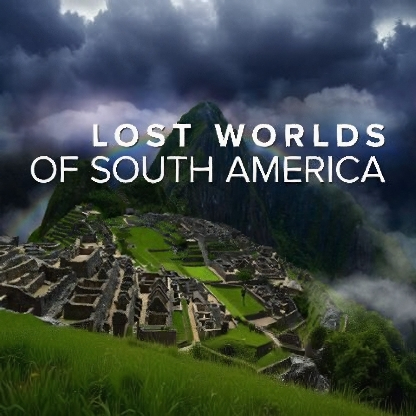
Lost Worlds of South America
Original price was: $49.99.$9.99Current price is: $9.99.
Trek through South America’s buried civilizations in 24 illustrated lectures that reveal coastal cities, Andean states, Amazonian discoveries, and the rise and fall of major cultures from the earliest settlements to the Inca and Spanish contact. Combining archaeological evidence, iconography, architecture, and recent discoveries, the course explores how these societies organized, engineered, and expressed themselves in textiles, ceramics, metallurgy, urban planning, and ritual life.
Course Overview
Trek through South America’s buried civilizations in 24 illustrated lectures that reveal coastal cities, Andean states, Amazonian discoveries, and the rise and fall of major cultures from the earliest settlements to the Inca and Spanish contact. Combining archaeological evidence, iconography, architecture, and recent discoveries, the course explores how these societies organized, engineered, and expressed themselves in textiles, ceramics, metallurgy, urban planning, and ritual life.
What you’ll learn
- The deep antiquity of South American settlement and early urbanism
- Regional developments: coastal, highland (Andean), and Amazonian cultures
- Material culture: ceramics, textiles, metallurgy, monumental architecture, and mortuary practice
- The social, religious, and political foundations of major cultures (Chavín, Moche, Tiwanaku, Wari, Chimú, Sican, Inca)
- Recent discoveries (Amazonian earthworks, pre‑Inca mummies, khipu research) and their implications
Video Lessons
01: South America’s Lost Cradle of Civilization (30 min)
Survey the continent’s cultural diversity and innovations that make South America a primary cradle of civilization.
02: Discovering Peru’s Earliest Cities (30 min)
Examine early urban sites (Caral, Kotosh, El Paraíso) with plazas, pyramids, and solar observatories dating to 3000 BCE.
03: South America’s First People (30 min)
Explore pre‑Clovis evidence (Monte Verde), Chinchorro mummies, cave art, and early agriculture and trade.
04: Ceramics, Textiles, and Organized States (28 min)
Trace the rise of complex societies through pottery, weaving, metallurgy, and emerging political hierarchies.
05: Chavín and the Rise of Religious Authority (28 min)
Study Chavín de Huantar’s architecture, iconography (the fanged deity), and its role as a religious cult center.
06: Cupisnique to Salinar—Elite Rulers and War (27 min)
Consider the archaeological signs of social stratification, defensive citadels, and early warfare in northern Peru.
07: Paracas—Mummies, Shamans, and Severed Heads (29 min)
Investigate Paracas mortuary practices, richly embroidered textiles, shamanism, and ritual trophy heads.
08: The Nazca Lines and Underground Channels (30 min)
Learn about Nazca aqueducts (puquios), sophisticated irrigation, polychrome craft, and the ritual landscape of geoglyphs.
09: The Moche—Pyramids, Gold, and Warriors (28 min)
Introduce Moche monumental architecture, murals, road systems, and artistic expressions of power and combat.
10: The Moche—Richest Tombs in the New World (28 min)
Explore the royal burials of Sipán: grave goods, regalia, and what elite tombs reveal about Moche society.
11: The Moche—Drugs, Sex, Music, and Puppies (35 min)
Decode Moche iconography, shamanic ritual, ceremonial violence, and the social meanings in their ceramics.
12: Enigmatic Tiwanaku by Lake Titicaca (33 min)
Survey Tiwanaku’s urban planning, raised‑field agriculture, monumental stonework, and ritual landscape.
13: The Amazon—Civilization Lost in the Jungle (28 min)
Review evidence for complex Amazonian societies: earthworks, anthropogenic soils, geoglyphs, and riverine settlements.
14: The Wari—Foundations of the Inca Empire? (29 min)
Assess Wari urbanism, road systems, terracing, and the debate over Wari imperialism versus cultural diffusion.
15: The Chimú—Empire of the Northern Coast (29 min)
Examine Chimú citadels (Chan Chan), administrative centers, irrigation, and conquest strategies prior to Inca incorporation.
16: The Sican—Goldsmiths of the Northern Coast (30 min)
Appreciate Sican metalwork, funerary elites, pyramid building, and distinctive ritual objects in gold and copper.
17: The Inca Origins—Mythology vs. Archaeology (30 min)
Contrast origin myths with archaeological data to understand how Inca identity and legitimacy were constructed.
18: Cuzco and the Tawantinsuyu Empire (31 min)
Explore Cuzco’s urban design, Coricancha, ancestral mummy cults, seismic‑resilient masonry, and imperial symbolism.
19: The Inca—From Raiders to Empire (29 min)
Follow Pachacuti and successors in state expansion, administrative integration, and the processes that built Tawantinsuyu.
20: The Inca—Gifts of the Empire (28 min)
Study Mit’a labor, road networks, suspension bridges, agricultural innovations, and state provisioning systems.
21: The Khipu—Language Hidden in Knots (34 min)
Survey khipu accounting systems, Spanish testimony on khipucamayuq, numeric encoding, and hypotheses about khipu writing.
22: Machu Picchu and the Sacred Valley (30 min)
Walk Machu Picchu’s terraces, gates, Torreón, and astronomical alignments to understand royal estates and ritual space.
23: Spanish Contact—Pizarro Conquers the Inca (29 min)
Reconstruct Pizarro’s capture of Atahualpa, the collapse of Inca political order, and the rapid Spanish conquest.
24: Remnants of the Past—Andean Culture Today (31 min)
Consider continuities in Andean agriculture, ritual, community organization, and cultural resilience in the modern era.
Related products