Skip to content
Learning Spanish: How to Understand and Speak a New Language
Original price was: $69.99.$22.99Current price is: $22.99.
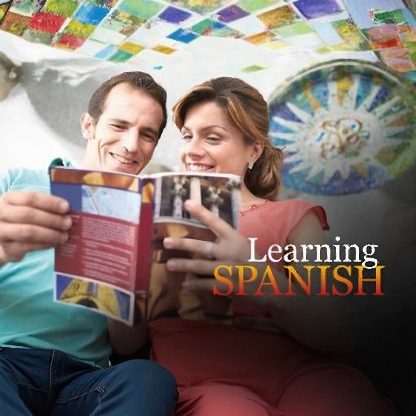
Experience the fastest and most direct way to learn Spanish—a beautiful and highly useful language—in this course that covers the curriculum of a first-semester college course in Spanish. Have you ever tried to learn another language, only to abandon your efforts due to boredom or frustration? In this highly effective course, we’re pleased to present an approach that turns the tables on the problems so many people face in learning a new language.
Overview
Experience the fastest and most direct way to learn Spanish—a beautiful and highly useful language—in this course that covers the curriculum of a first-semester college course in Spanish. Have you ever tried to learn another language, only to abandon your efforts due to boredom or frustration? In this highly effective course, we’re pleased to present an approach that turns the tables on the problems so many people face in learning a new language.
In 30 engaging lessons, this ingeniously constructed program leads you through the core building blocks of Spanish. Get “under the hood” of the language, learning the key concepts of grammar, culture, and vocabulary that will make Spanish easier than you ever imagined. You’ll also gain a rich working vocabulary that will prepare you for a wide range of everyday situations. The end of each lesson includes audio exercises that will build your pronunciation, comprehension, and conversational skills. Plus, the workbook includes plenty of reading and writing exercises to practice and build upon what you learn.
Your teacher, world-class language instructor Professor Bill Worden, has refined this approach over more than 20 years, distilling the step-by-step system that works best for adult learners. As an integral part of the language lessons themselves, he teaches learning strategies and provides audio exercises that will enable you to be a successful language learner and will help you actively use and remember the material.
Course Structure
01: Introduction to the Spanish Language
Begin by looking at both the “whats” of Spanish (elements such as grammar and vocabulary), and the “hows”—how to study, practice, and learn the language most effectively. Start with identifying cognates (Spanish words that are similar to their English equivalents), hearing the five Spanish vowel sounds, and practicing basic greetings, responses, and goodbyes.
Duration: 45 min
02: Definite Articles and Nouns
Learn the gender of Spanish nouns by practicing each new noun with its masculine or feminine definite article. Grasp how the suffixes of nouns can help identify their gender. Study how to make nouns plural, practice pronouncing Spanish consonants, and learn the letters of the Spanish alphabet.
Duration: 48 min
03: Subject Pronouns and the Verb Ser
Investigate the five singular subject pronouns and the seven plural subject pronouns in Spanish, and how they are used in Spanish-speaking cultures. Then conjugate the verb ser (to be) in the present tense, create simple sentences, and explore how Spanish adjectives agree with the nouns they modify in number and gender.
Duration: 43 min
04: Regular -ar Verbs in the Present
Here, learn about an important category of Spanish verbs—those whose infinitives end in -ar. Conjugate regular -ar verbs in the present tense by identifying the verb’s stem and adding the appropriate endings. Continue with Spanish adjectives and their placement, cognate adjectives, and the pronunciation of important consonants.
Duration: 49 min
05: Indefinite Articles and Numbers to 100
Acquire the Spanish indefinite articles (“a,” “an,” and “some” in English), and observe how indefinite articles are used in Spanish. Learn to count to 100, and practice simple math problems. Finally, complete your work with Spanish consonants, making important distinctions in the pronunciations of b, v, g, d, and x.
Duration: 42 min
06: The Verb Estar and Numbers over 100
Investigate the verb estar, the second Spanish verb for “to be.” Learn about the uses of estar, as contrasted with ser. Conjugate estar in the present tense, and use it with adjectives describing emotions, conditions, and locations. Learn to count to 1000, and conclude with a historical note about Spanish pronunciation.
Duration: 46 min
07: Regular -er and -ir Verbs in the Present
Conjugate two new categories of Spanish verbs—those that end in -er and -ir. For both, learn and practice the appropriate endings for the present tense. Continue with possessive adjectives, and study how these are used in Spanish. Then discover three ways of forming questions, and learn vocabulary related to the family.
Duration: 45 min
08: The Verb Ir in the Present
Begin with an important irregular verb: ir, meaning “to go.” Conjugate ir in the present tense, and learn about its key uses in Spanish. Next, study and practice common Spanish interrogatives—words used in asking questions. Finish by looking at effective ways to remember new words and build vocabulary.
Duration: 40 min
09: Expressing Time in Spanish
First, practice telling the time of day in Spanish, expressing the hour and minutes, and learn important vocabulary relating to time. Continue with the days of the week and vocabulary regarding days and dates. Finally, learn the months of the year, and form questions relating to time, dates, and the seasons.
Duration: 45 min
10: Expressions Using the Verb Tener
This lesson begins with another important irregular verb: tener (to have). Grasp how to conjugate tener, and learn expressions using it regarding physical conditions, emotional conditions, and age. Add more important vocabulary related to the family. Finish by considering some important strategies to help you succeed as a language learner.
Duration: 38 min
11: Verbs like Hacer and Interrogative Words
Study the verb hacer (to make or to do), and learn some of the many familiar expressions that use it. Continue with the similar verbs poner, salir, and traer, and take a deeper look at Spanish interrogatives. Learn how to talk about punctuation in Spanish, and discover how it is used.
Duration: 42 min
12: The Verbs Saber and Conocer
Spanish has two verbs, saber and conocer, which carry the meanings of the English verb “to know.” Investigate their conjugations, their differences in meaning, and their uses. Then add some new verbs that are conjugated like conocer, and begin to study Spanish prepositions, focusing on those that describe spatial relationships.
Duration: 45 min
13: Stem-Changing Verbs
Here, work with Spanish verbs that are irregular—not in their tense endings, but in the verb stems used to conjugate them. Study how to conjugate verbs of this type as you learn a range of new verbs. Also study prepositional pronouns, as well as rules for which syllables to stress when pronouncing Spanish words.
Duration: 42 min
14: Ver, Dar, and Other Irregular Verbs
Delve into the fascinating history of U.S. place names that are derived from Spanish, including the names of five states. Continue your work with key irregular verbs, and study important guidelines for conjugating them. Then, listen to excerpts from a Spanish newscast, and explore the value of listening to the news in Spanish.
Duration: 42 min
15: The Present Progressive
The present progressive is a useful grammatical construction in Spanish that describes something that is in progress right now, happening in the present. Learn how to form and use the present progressive, and how its use in Spanish differs from the way it’s used in English. Continue with vocabulary related to dining, meals, and eating venues.
Duration: 42 min
16: Direct Object Pronouns and Adverbs
Begin with additional vocabulary concerning food and drink, focusing on breakfast and lunch. Then study direct object pronouns (such as “them” in English), which replace direct object nouns to avoid redundancy, and learn their uses and placement in Spanish. Finally, encounter Spanish adverbs: common words used to modify verbs, adjectives, or other adverbs.
Duration: 41 min
17: Affirmatives, Negatives, and Demonstratives
Now add the Spanish demonstrative adjectives (“this” and “that” in English) and the related demonstrative pronouns, and study additional vocabulary related to eating dinner. Look at ways to create both affirmative and negative statements in Spanish, and learn about regional differences in the language as it’s spoken across the world.
Duration: 40 min
18: More Affirmative and Negative Expressions
Learn and practice a range of new vocabulary related to colors, followed by words that describe clothing. Take a detailed look at Spanish affirmative and negative adjectives (as in “some” and “none” in English), which can also be used as pronouns. Also study how to pronounce vowel combinations, diphthongs, and triphthongs in Spanish.
Duration: 39 min
19: Indirect Object Pronouns
Continue working with vocabulary related to clothing, and practice describing clothing. Then study Spanish indirect object pronouns—pronouns that replace indirect objects—and learn verbs that commonly use them. Last, explore some additional strategies for learning and remembering new vocabulary.
Duration: 41 min
20: Double Object Pronouns
Enlarge your vocabulary with words relating to rooms and furnishings in a house, and learn how to say ordinal numbers in Spanish. Then study how to use indirect and direct object pronouns together (as in, “I give it to you” in English), and explore some important expressions using the verb pensar (to think).
Duration: 38 min
21: Reflexive Verbs
Reflexive verbs are those for which the subject and the object of the action are the same (as in, “I wash myself” in English). Study how these verbs function in Spanish, and learn commonly used examples. Look deeply at the uses of the verbs ser and estar, the two Spanish verbs signifying “to be.”
Duration: 45 min
22: Talking about the Past: Acabar and Hace
Here, add important vocabulary relating to motion and travel, and learn some common reflexive verbs that describe mental and emotional states. Then study two useful constructions for speaking about the past: acabar de, which describes something that just happened, and hace…que, which expresses how long something has been going on.
Duration: 42 min
23: Talking about the Past: Desde Cuando…?
This lesson introduces two common constructions that allow you to ask how long someone has done something, and how long something has been going on. Following this, add a range of vocabulary related to leisure activities, household chores, and romantic relationships. Also explore strategies to improve your speaking in Spanish.
Duration: 43 min
24: Formal Commands and Unequal Comparisons
Continue to enlarge your vocabulary with words relating to places, such as public venues and businesses. Then learn how to say formal commands, also known as imperatives, as well as negative commands, and practice using them in different contexts. Study ways to compare two things that are not the same. Finally, consider two effective approaches to remembering grammar rules.
Duration: 43 min
25: Informal Commands
Study and practice informal commands, both affirmative and negative, including their important irregular forms. Learn vocabulary related to the human body, and practice commands referring to the body. Then grasp how to use pronouns with commands, and explore some of the most commonly used command forms in Spanish.
Duration: 45 min
26: Superlatives and Equal Comparisons
Delve into vocabulary relating to sports and outdoor activities, and investigate the importance of el fútbol, or soccer, in Spanish-speaking countries. Learn how to make comparisons involving actions, numbers, and things that are equal, and how to express superlatives. Last, consider a useful approach to thinking about and incorporating new vocabulary.
Duration: 44 min
27: Regular -ar Verbs in the Preterite
Begin to work with the preterite tense, which expresses actions completed in the past. Explore how to use this tense in Spanish, how to conjugate regular -ar verbs, and how to make preterite conjugations easy to remember. Expand on preterite usage by practicing with new vocabulary used in describing past events.
Duration: 44 min
28: Regular -er and -ir Verbs in the Preterite
Continue your exploration of this vital tense in Spanish, and learn to express past actions with regular -er and -ir verbs, stem-changing verbs, and irregular verbs. Observe how some Spanish verbs actually change meaning when used in the preterite. Also learn important adjectives that describe inherent characteristics of something, as well as others used to describe changeable conditions.
Duration: 41 min
29: Irregular Verbs in the Preterite
Round out your knowledge of the preterite by working with the full range of Spanish verbs that are irregular in this tense. Grasp why, in studying the present and preterite tenses, you have now learned the hardest verb conjugations in the Spanish language. Then add important vocabulary about work and money.
Duration: 47 min
30: Next Steps in Improving Your Spanish
Begin this final lesson with useful vocabulary regarding professions, technology, and the Internet. Learn about key verbs that are commonly used with prepositions, and review the preterite tense. Conclude by looking at ways to have an immersive experience with Spanish, and get a preview of a second level of Spanish study.
Duration: 49 min
Related products