Skip to content
Latin 101: Learning a Classical Language
Original price was: $69.99.$19.99Current price is: $19.99.
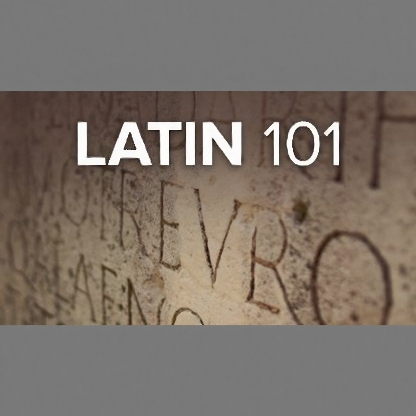
Latin 101 is a 36-lecture introduction to Classical Latin that teaches restored classical pronunciation, core grammar (declensions, conjugations, moods, voices), and reading skills through authentic authors such as Cicero, Virgil, Caesar, Plautus, and St. Jerome. Designed like a first‑year college course, it emphasizes clear explanations, frequent practice, and guided readings so you can progress from letter-sound correspondences to translating real Latin passages.
Course Overview
Latin 101 is a 36-lecture introduction to Classical Latin that teaches restored classical pronunciation, core grammar (declensions, conjugations, moods, voices), and reading skills through authentic authors such as Cicero, Virgil, Caesar, Plautus, and St. Jerome. Designed like a first‑year college course, it emphasizes clear explanations, frequent practice, and guided readings so you can progress from letter-sound correspondences to translating real Latin passages.
What you’ll learn
- Restored classical pronunciation and the Latin sound system
- The five noun declensions, adjectives, pronouns, and agreement rules
- All major verb conjugations, tenses, voices, moods, participles, and infinitives
- Syntax for indirect discourse, conditional and cum clauses, gerunds/gerundives, and more
- Reading practice with poetry, prose, inscriptions, law texts, and historical excerpts
Video Lessons
01: Pronouncing Classical Latin (33 min)
Introduction to the restored classical pronunciation, Latin letters and sounds, and rules of accentuation to make Latin sing as it did in antiquity.
02: Introduction to Third‑Conjugation Verbs (29 min)
Begin verb study with third‑conjugation patterns, learn the four principal parts of ago (I do), and practice present indicative and commands.
03: Introduction to the Subjunctive Mood (32 min)
Discover the present subjunctive formation (the long “a” marker) and see subjunctive use illustrated with Catullus’s famous lyric.
04: The Irregular Verbs Sum and Possum (30 min)
Master the irregular paradigms of sum (to be) and possum (to be able) across indicative, imperative, infinitive, and subjunctive forms.
05: Introduction to Third‑Declension Nouns (29 min)
Learn the largest noun class—third declension—covering stems, five cases, and practice with masculine and feminine nouns.
06: Third‑Declension Neuter Nouns (31 min)
Examine neuter patterns in the third declension (e.g., corpus) and practice distinctive neuter endings and common expressions.
07: First‑ and Second‑Declension Adjectives (32 min)
Study adjective agreement across number, case, and gender using first‑ and second‑declension paradigms and sample phrases.
08: First‑ and Second‑Declension Nouns (32 min)
Cover noun paradigms for first and second declensions and translate your first complex Latin sentence from classical sources.
09: Introduction to the Passive Voice (32 min)
See how Latin personal endings make the passive elegant and practice present passive forms with readings from Cicero and Virgil.
10: Third‑‑io and Fourth‑Conjugation Verbs (29 min)
Learn the -io verbs and fourth‑conjugation present indicative forms and encounter Latin in familiar cultural material.
11: First‑ and Second‑Conjugation Verbs (28 min)
Master the more regular first and second conjugations and review all five conjugational patterns in practical exercises.
12: Reading a Famous Latin Love Poem (28 min)
Apply forms you’ve learned by reading Catullus’s love poem to Lesbia and appreciating its grammar and poetic effects.
13: The Present Passive of All Conjugations (32 min)
Consolidate present passive endings across conjugations and translate selections from St. Jerome and imperial-era texts.
14: Third‑Declension Adjectives (31 min)
Decline third‑declension adjectives, noting patterns that simplify their use, and revisit Catullus vocabulary in context.
15: Third‑Declension I‑Stem Nouns (30 min)
Explore i‑stem variants within the third declension and read illustrative passages from Cato the Elder.
16: The Relative Pronoun (30 min)
Unlock relative clauses with qui, quae, quod—practice translations with Sallust and refine your prose comprehension.
17: The Imperfect and Future Tenses (29 min)
Learn the morphology and uses of the imperfect and future tenses in active and passive, and meet the imperfect subjunctive.
18: Building Translation Skills (30 min)
Apply tense knowledge to literary and historical extracts—from Catullus to Caesar and the Magna Carta—to sharpen translation technique.
19: Using the Subjunctive Mood (29 min)
Study subjunctive uses in prose and poetry (purpose, result, indirect commands) with examples from St. Jerome and biblical Latin.
20: Demonstrative Adjectives and Pronouns (29 min)
Master hic, iste, ille and their pronoun uses, then translate a dramatic Cicero passage showcasing rhetorical force.
21: The Perfect Tense Active System (33 min)
Introduce the perfect, pluperfect, and future perfect active tenses and practice conjugating duco (I lead) across the system.
22: Forming and Using Participles (31 min)
Learn participial formation and agreement and see how participles compress clauses into elegant Latin constructions.
23: Using the Infinitive (28 min)
Cover perfect, future, and passive infinitives and their role in indirect discourse along with exceptions to nominative subjects.
24: Reading a Passage from Caesar (31 min)
Translate significant sentences from Caesar’s Commentaries on the Gallic War—clear, high‑utility prose for learners.
25: The Perfect Tense Passive System (31 min)
Complete verbal paradigms with the perfect passive (past participle + sum) and read historical examples including Caesar’s death.
26: Deponent Verbs (31 min)
Investigate deponent verbs—passive forms that mean active—and learn how to conjugate and recognize them in texts.
27: Conditional Sentences (30 min)
Master if‑then constructions with a range of conditional types and see Cicero’s rhetorical use of conditions.
28: Cum Clauses and Stipulations (32 min)
Study temporal and circumstantial cum‑clauses and other subjunctive constructions, illustrated with memorable Latin sayings.
29: Reading Excerpts from Roman Law (29 min)
Read passages from the Twelve Tables and other legal excerpts to see Latin’s technical and formulaic usages in law.
30: Interrogative Adjectives and Pronouns (32 min)
Learn how to form direct and indirect questions with interrogatives and practice with authors like Catullus and Cicero.
31: Fourth‑ and Fifth‑Declension Nouns (31 min)
Complete noun paradigms by learning fourth and fifth declensions and translate liturgical and funerary Latin (dies irae).
32: Gerunds and Gerundives (30 min)
Differentiate gerunds (verbal nouns) and gerundives (verbal adjectives), and practice translating purpose and obligation constructions.
33: Counting in Latin (31 min)
Study irregular verbs (e.g., eo), future passive infinitives using the supine, and learn cardinal and ordinal numbers in Latin.
34: More on Irregular Verbs (32 min)
Survey additional irregulars, strategies for mastering them, and translate passages from Plautus, Martial, and Livy.
35: Comparison of Adjectives and Adverbs (30 min)
Learn comparative and superlative formation for adjectives and adverbs, and translate a poignant Roman epitaph.
36: Next Steps in Reading Latin (33 min)
Finish the course with a final translation exercise, guidance for continued study, and recommendations for intermediate resources and readings. Valete!
Related products