Skip to content
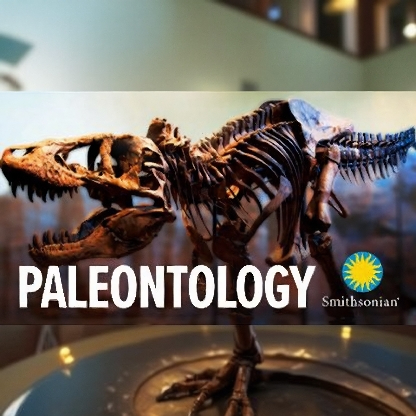
Introduction to Paleontology
Original price was: $29.99.$7.99Current price is: $7.99.
Explore the latest paleontological discoveries and what they reveal about life on Earth with the Smithsonian and an award-winning professor.
Introduction to Paleontology
Course Overview
Explore the latest paleontological discoveries and what they reveal about life on Earth with the Smithsonian and an award-winning professor.
Course No. 1657
This Smithsonian-created course takes you on an epic journey through Earth’s 4.54 billion-year history, from lifeless beginnings to today’s biodiverse planet. Award-winning professor Stuart Sutherland reveals how paleontology combines geology, biology, and anthropology to understand:
- Fossil formation and interpretation
- Mass extinctions and evolutionary recoveries
- Ancient ecosystems and climate changes
- Human origins and prehistoric species
Using the National Museum of Natural History’s collections, you’ll examine everything from microfossils to dinosaurs, and discover how paleontology helps address modern challenges.
Key Topics Covered:
- Fossilization processes and dating techniques
- Major evolutionary events (Cambrian explosion, etc.)
- Dinosaur biology and extinction theories
- Human ancestry and Neanderthal DNA
- Climate change through geological time
- Future applications of paleontology
Video Lectures
01: History on a Geological Scale (33 min)
Walk through Earth’s 4.54 billion-year timeline from first bacteria to modern humans.
02: Life Cast in Ancient Stone (34 min)
Meet pioneering paleontologists and learn fossil formation conditions.
03: Tools of the Paleontological Trade (33 min)
Explore modern technologies like CT scans revolutionizing fossil analysis.
04: How Do You Fossilize Behavior? (31 min)
Study trace fossils revealing ancient animal activities and environments.
05: Taxonomy: The Order of Life (29 min)
Understand classification systems from Linnaeus to modern cladistics.
06: Minerals and the Evolving Earth (31 min)
Discover how Earth’s 4,400 minerals co-evolved with life.
07: Fossil Timekeepers (33 min)
Learn dating methods showing Earth’s changing days/years.
08: Fossils and the Shifting Crust (34 min)
See how fossils document continental drift and species migrations.
09: Our Vast Troves of Microfossils (32 min)
Explore how microscopic fossils reveal climate history.
10: Ocean Fire and the Origin of Life (31 min)
Examine deep-sea vent ecosystems and life’s possible origins.
11: The Ancient Roots of Biodiversity (30 min)
Investigate the Cambrian explosion’s sudden diversity of life.
12: Arthropod Rule on Planet Earth (31 min)
Meet the trilobites – Earth’s dominant species for 250 million years.
13: Devonian Death and the Spread of Forests (30 min)
Discover how early forests may have caused mass extinction.
14: Life’s Greatest Crisis: The Permian (32 min)
Analyze Earth’s worst extinction (90% species lost).
15: Life’s Slow Recovery after the Permian (31 min)
Track evolution’s rebound leading to dinosaur dominance.
16: Dinosaur Interpretations and Spinosaurus (32 min)
Debate new findings about this semi-aquatic predator.
17: Whales: Throwing Away Legs for the Sea (30 min)
Trace whales’ evolution from small land mammals.
18: Insects, Plants, and the Rise of Flower Power (31 min)
Explore the coevolution of flowers and pollinators.
19: The Not-So-Humble Story of Grass (30 min)
Learn how grasses transformed ecosystems and human evolution.
20: Australia’s Megafauna: Komodo Dragons (28 min)
Follow giant lizards’ journey to Indonesian islands.
21: Mammoths, Mastodons, and the Quest to Clone (30 min)
Consider the ethics of de-extinction technologies.
22: The Little People of Flores (29 min)
Examine the controversial Homo floresiensis discovery.
23: The Neanderthal among Us (31 min)
Discover how Neanderthal DNA lives in modern humans.
24: Paleontology and the Future of Earth (41 min)
Apply paleontological insights to modern challenges.
Related products