Skip to content
Introduction to Machine Learning
Original price was: $39.99.$6.90Current price is: $6.90.
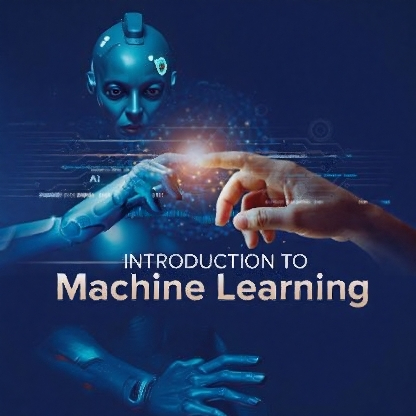
Introduction to Machine Learning
Course Description:
Search engines, navigation systems, and game-playing robots all rely on machine learning. This course, taught by pioneering researcher Professor Michael Littman, explores the history, concepts, and techniques behind smart machines. Through real-world applications and hands-on Python examples, you’ll learn the fundamentals of decision trees, neural networks, reinforcement learning, and deep learning, while also uncovering pitfalls such as bias, overfitting, and privacy risks.
Course Outline
01: Telling the Computer What We Want
Get a broad overview of machine learning, from its history and terminology to practical examples like medical diagnosis and green screen algorithms.
31 min
02: Starting with Python Notebooks and Colab
Learn how to use Python via browser-based notebooks, avoiding software installation hassles and gaining access to powerful computing resources.
17 min
03: Decision Trees for Logical Rules
Use decision trees to solve classification problems, from spelling rules to predicting diabetes based on health factors.
31 min
04: Neural Networks for Perceptual Rules
Explore neural networks, ideal for tasks like image and sound recognition. Compare them with decision trees for digit recognition.
30 min
05: Opening the Black Box of a Neural Network
Work through a simple neural network algorithm in Python to tackle the green screen problem from Lecture 1.
29 min
06: Bayesian Models for Probability Prediction
Discover how Naïve Bayes models predict outcomes like spam emails by applying probability and Bayes’ theorem.
29 min
07: Genetic Algorithms for Evolved Rules
See how genetic algorithms use principles of evolution to solve new problems by optimizing solutions over generations.
28 min
08: Nearest Neighbors for Using Similarity
Learn how nearest neighbor algorithms classify data based on similarity, from climate comfort to malware detection.
29 min
09: The Fundamental Pitfall of Overfitting
Understand the danger of overfitting—modeling training data too closely—and learn techniques to avoid it.
28 min
10: Pitfalls in Applying Machine Learning
Examine real-world pitfalls, such as hidden biases and misleading statistics, in medical care, law enforcement, and survival analysis.
28 min
11: Clustering and Semi-Supervised Learning
Combine labeled and unlabeled data using clustering to improve machine learning outcomes.
27 min
12: Recommendations with Three Types of Learning
Unpack recommender systems through supervised, unsupervised, and reinforcement learning, with examples from Netflix and academic peer review.
30 min
13: Games with Reinforcement Learning
Explore reinforcement learning strategies in games like Othello, chess, poker, and Go.
30 min
14: Deep Learning for Computer Vision
See how deep learning revolutionized image recognition in the ImageNet challenge and other visual tasks.
27 min
15: Getting a Deep Learner Back on Track
Debug a deep-learning classifier with step-by-step techniques to improve performance.
30 min
16: Text Categorization with Words as Vectors
Learn about word embeddings, which represent words in high-dimensional space for tasks like autocomplete and spelling correction.
30 min
17: Deep Networks That Output Language
Examine how deep learning generates language, from translation systems to creative story generation.
29 min
18: Making Stylistic Images with Deep Networks
Explore image generation using neural networks with both target images and general characteristic recognition.
29 min
19: Making Photorealistic Images with GANs
Understand how generative adversarial networks (GANs) create realistic images—and their potential for misuse.
30 min
20: Deep Learning for Speech Recognition
Trace the history of speech recognition and learn about today’s deep-learning systems for conversational AI.
30 min
21: Inverse Reinforcement Learning from People
Discover how algorithms infer human preferences and goals from observed behavior.
29 min
22: Causal Inference Comes to Machine Learning
Learn how causal inference distinguishes correlation from causation in problems like smoking and cancer.
30 min
23: The Unexpected Power of Over-Parameterization
See how over-parameterized deep networks defied expectations and fueled the deep learning revolution.
30 min
24: Protecting Privacy within Machine Learning
Investigate cases of data re-identification and strategies for protecting privacy in machine learning applications.
31 min
25: Mastering the Machine Learning Process
Conclude with meta-learning, algorithms that learn how to learn, and explore the future of machine learning.
34 min
Related products

By Area