Skip to content
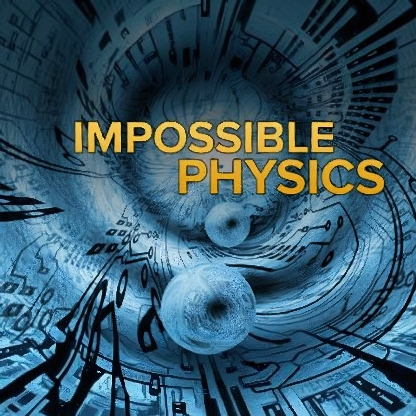
Impossible: Physics Beyond the Edge
Original price was: $29.99.$6.99Current price is: $6.99.
Delve into some of the most fascinating concepts at the edge of modern physics with a veteran Great Courses Professor who provides an ingenious teaching approach. Can machines produce limitless energy? Is time travel possible? Can anything travel faster than light? Is it possible to escape from a black hole? Each question is a puzzle that requires pieces from different parts of physics to solve. And after investigating these and other questions, you begin to see how all of physics is tied together in a system that is consistent, logical, beautiful, and often very surprising.
Overview
Delve into some of the most fascinating concepts at the edge of modern physics with a veteran Great Courses Professor who provides an ingenious teaching approach. Can machines produce limitless energy? Is time travel possible? Can anything travel faster than light? Is it possible to escape from a black hole? Each question is a puzzle that requires pieces from different parts of physics to solve. And after investigating these and other questions, you begin to see how all of physics is tied together in a system that is consistent, logical, beautiful, and often very surprising.
Veteran Great Courses Professor Benjamin Schumacher of Kenyon College, a pioneering theorist in quantum information, uses this ingenious approach in 24 delightful half-hour lectures that will entertain and nourish your mind while teaching you more physics than you ever imagined. The course is illustrated with hundreds of diagrams, 3-D animations, and images to convey fundamental ideas at the core of physics—all in pursuit of the answer to the question, “Is it possible?”
By the end of the course, you will have probed the nature of the impossible from many points of view and in many branches of physics—discovering that racing a light beam, hovering over a black hole, chasing quantum particles, trying to reverse the flow of time, and other astounding adventures make an excellent education in the fundamental laws of nature. These laws work together to create the sometimes perplexing, frequently surprising, and always wonderful world in which we live. As Professor Schumacher says, “If our goal is understanding, then there is nothing more practical than the impossible.”
Course Structure
01: From Principles to Paradoxes and Back Again
Prepare to explore the thrilling frontier that separates the possible from the impossible by first looking at what scientists mean by these two terms, and how the boundaries can shift. Professor Schumacher notes that by pondering the impossible, scientists gain amazing insights into the nature of physical laws.
Duration: 31 min
02: Almost Impossible
Many technological and scientific breakthroughs were thought to be impossible before they were achieved. Examine several famous cases in which foremost experts were proved wrong—about heavier-than-air flight, space travel, the chemical composition of stars, and the existence of life forms at ultrahigh temperatures.
Duration: 30 min
03: Perpetual Motion
Probe one of the most enduring of all impossible quests: the search for a perpetual motion machine. Learn how the futility of such a pursuit was explained four centuries ago by the Flemish mathematician Simon Stevin, whose work eventually led to the law of conservation of energy.
Duration: 31 min
04: On Sunshine and Invisible Particles
Investigate two challenges to the law of conservation of energy, also known as the first law of thermodynamics. In the 19th century, the source of the sun’s energy seemed inexplicable, until the discovery of radioactivity. Then, in the 20th century, a type of radioactive decay appeared to violate energy conservation, until the discovery of an invisible elementary particle.
Duration: 31 min
05: Reflections on the Motive Power of Fire
Learn how the 19th-century French engineer Nicolas Carnot showed that only a temperature difference can be used to generate work, and that some waste heat must always be lost—ideas that led to the second law of thermodynamics and the important concept of entropy.
Duration: 30 min
06: Maxwell’s Demon
Entropy always increases in a system in which work is being done. Investigate James Clerk Maxwell’s famous “demon”—an imaginary being that, in principle, appears to violate the entropy law. See how the demon paradox was resolved by interpreting entropy as information.
Duration: 30 min
07: Absolute Zero
Learn how absolute zero (0 K or -273.15 degrees Celsius) is unattainable due to the third law of thermodynamics. Nonetheless, remarkable things happen on the way toward this impossible goal. For example, electrical resistance and viscosity drop to zero in certain substances, and weird quantum mechanical effects occur.
Duration: 31 min
08: Predicting the Future
Consider a new kind of impossible thing: predicting the future in the presence of chaos. Even the slightest imprecision in present knowledge makes the long-term future unknowable. This is the phenomenon of dynamical chaos, also known as the “butterfly effect”—from the ability of a single flapping butterfly to radically affect future weather.
Duration: 29 min
09: Visiting the Past
Explore the paradoxes of time travel. These are so fundamental that most physicists regard time travel as a near-absolute impossibility, yet science-fiction writers—and a few imaginative physicists—have proposed ways to avoid these difficulties. Look into some of their intriguing ideas.
Duration: 30 min
10: Thinking in Space-Time
Is the passage of time merely “a stubborn illusion,” as Einstein believed? Investigate the revolutionary concept of space-time that emerges from his theory of relativity, which involved a major redrawing of the boundary between the possible and the impossible in physics.
Duration: 30 min
11: Faster than Light
Nothing can travel faster than light. Is there a way around this prohibition? Learn that it all depends on what is meant by a “thing.” By considering various thought experiments, discover that this ultimate speed limit applies fundamentally to information, which means it is impossible to send a message into the past.
Duration: 29 min
12: Black Holes and Curved Space-Time
Einstein’s general theory of relativity interprets gravity as a distortion of space-time near a massive object. Find out that for a very massive, dense object, this can result in a “black hole”—a region where the distortion is so strong that escape is impossible.
Duration: 32 min
13: A Spinning Universe, Wormholes, and Such
Delve deeper into Einstein’s theories to uncover some startling implications: The entire cosmos could be rotating on its axis, giving rise to several supposedly impossible phenomena, already dismissed. Weigh the evidence for and against “exotic” matter, wormholes, and other hypothetical features of space-time.
Duration: 31 min
14: What Is Symmetry?
Something is symmetric if it is impossible to tell whether a particular transformation has been applied. Explore this fascinating boundary between the possible and impossible, which includes some of the deepest principles of physics—among them, the surprising connection between symmetry and conservation laws discovered by mathematician Emmy Noether.
Duration: 31 min
15: Mirror Worlds
Inspect the universe through three special mirrors. One is an ordinary mirror that reflects left and right. Another mirror exchanges matter and antimatter. The third switches the future and the past. Is it possible to tell these mirror-worlds from our own? What does that imply about the laws of nature?
Duration: 31 min
16: Invasion of the Giant Insects
Test a favorite plot device of science-fiction movies by examining whether supersize gorillas, insects as big as trucks, and other ordinary creatures enlarged to gigantic size can really exist. Is there a physical reason such monsters are in fact impossible?
Duration: 30 min
17: The Curious Quantum World
With the discovery of quantum mechanics in the early 20th century, the accepted boundary between the possible and the impossible was changed in radical ways. Begin a series of lectures on the quantum realm with a look at three of its key features.
Duration: 29 min
18: Impossible Exactness
In Newtonian physics, the position and velocity of a particle can both be specified to any level of precision. Not so in quantum mechanics, where these are limited by Heisenberg’s famous uncertainty principle. Investigate the consequences of this fundamental restriction on what it’s possible to know.
Duration: 30 min
19: Quantum Tunneling
Discover how phenomena deemed impossible in classical physics are a regular feature of the quantum world—notably quantum tunneling, which is the ability of a subatomic particle to surmount a seemingly impassable energy barrier. One result of this effect: Black holes emit a slow trickle of energy known as Hawking radiation.
Duration: 29 min
20: Whatever Is Not Forbidden Is Compulsory
Explore a startling rule in quantum mechanics: Anything that can possibly happen, will happen. This means that whatever does not happen, whatever is truly impossible among the elementary particles, provides a clue to the fundamental laws of nature.
Duration: 32 min
21: Entanglement and Quantum Cloning
Delve into the weirdest of all quantum phenomena: entanglement, which causes a pair of quantum particles to behave as if they are telepathically connected. By cloning quantum particles, this effect could, in theory, allow faster-than-light signals, but there are fundamental reasons this is impossible.
Duration: 29 min
22: Geometry and Conservation
Where do conservation laws come from? How does nature “enforce” them? Investigate these questions by performing a remarkable thought experiment: See how Maxwell’s laws of electromagnetism and the geometry of space together imply the conservation of electric charge, even in a theoretical “electromagnetic-free” zone.
Duration: 32 min
23: Symmetry, Information, and Probability
Survey the landscape of the impossible by focusing on three recurring themes in the course: One, symmetries are among the deepest principles in physics; two, the idea of information is pervasive; three, many phenomena that appear to be impossible are only statistical impossibilities.
Duration: 29 min
24: The Future of the Impossible
Professor Schumacher concludes the course with his million-dollar list—those things he would be willing to bet a million dollars will remain impossible even in the face of future discoveries. But first he challenges you to draw on your newly acquired knowledge of physics to propose your own list.
Duration: 31 min
Related products