 Skip to content
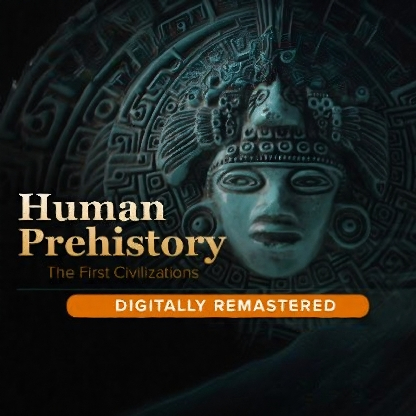
Human Prehistory and the First Civilizations
Original price was: $69.99.$14.99Current price is: $14.99.
This digitally remastered classic course presents 36 richly illustrated lectures that trace humanity’s journey from our earliest hominid beginnings more than 2.5 million years ago to the rise of the world’s first preindustrial civilizations. Guided by leading scholars, you will explore how small bands of hunter-gatherers evolved into complex societies, examining the biological and cultural diversity that emerged along the way.
Course Description
This digitally remastered classic course presents 36 richly illustrated lectures that trace humanity’s journey from our earliest hominid beginnings more than 2.5 million years ago to the rise of the world’s first preindustrial civilizations. Guided by leading scholars, you will explore how small bands of hunter-gatherers evolved into complex societies, examining the biological and cultural diversity that emerged along the way. Key themes include human adaptation to climate change, the shift from foraging to farming, and the birth of cities, states, and trade networks. You will meet Homo habilis, the first toolmaker; the artistic Cro-Magnons; the builders of Stonehenge; the Sumerians of Mesopotamia; Egypt’s pyramid builders; the enigmatic Harappans of the Indus; China’s early dynasties; and the Maya, Aztec, and Inka of the Americas. Throughout, you will see prehistory not as a list of sites and artifacts, but as the living story of people whose choices still shape our modern world.
Lecture-by-Lecture Outline
Foundations of Human Origins
- Introducing Human Prehistory – 31 min
Course themes: biological and cultural diversity, climate change, and the human stories behind archaeological sites.
- In the Beginning – 29 min
Fossil evidence from 6–3 million years ago reveals the earliest anatomical and behavioral changes among hominids.
- Our Earliest Ancestors – 30 min
Olduvai Gorge excavations illuminate Homo habilis, the first toolmaker, and the role of stone tools in scavenging and foraging.
- The First Human Diaspora – 28 min
Climate shifts and Ice Ages drive the initial movement of humans from Africa into Asia.
- The First Europeans – 30 min
Controversial dating places the first European colonizers 800,000 years ago, revealing flexible, mobile lifestyles.
- The Neanderthals – 30 min
Debunking stereotypes: efficient hunters and versatile tool users who thrived in late Ice Age Europe and Eurasia.
- The Origins of “Homo sapiens sapiens” – 30 min
Molecular biology places modern human origins in tropical Africa more than 100,000 years ago.
- The Great Diaspora – 30 min
How and why modern humans spread from Africa, with the Sahara acting as a critical gateway.
Hunter-Gatherer Worlds
- The World of the Cro-Magnons – 30 min
Cro-Magnon settlement of Europe 45,000 years ago and the merging of material and spiritual life.
- Artists and Mammoth Hunters – 30 min
Cave and portable art, big-game hunting strategies, and survival in the harsh late Ice Age.
- The First Americans – 30 min
Competing hypotheses and evidence for the peopling of the Americas.
- The Paleo-Indians and Afterward – 31 min
Regional hunter-gatherer societies from Eastern woodlands to the Great Plains and their rich ceremonial life.
The Agricultural Revolution
- After the Ice Age – 30 min
Post-glacial climate change and the possible link between a Canadian glacial meltwater release and the birth of agriculture in the Near East.
- The First Farmers – 30 min
Early farming settlements at Abu Hureyra and Jericho reveal the transition from foraging to herding and cultivation.
- Why Farming? – 30 min
Leading theories on agriculture’s origins and the transformative consequences of food production.
- The First European Farmers – 31 min
Spread of farming from southeast to northwest Europe after 7000 BCE and the possible role of the Black Sea flood.
- Farming in Asia and Settling the Pacific – 30 min
Rice in the Yangtze, millet in the Huangho, and the domestication of root crops enabling Pacific island settlement.
- The Story of Maize – 30 min
Genetic detective work tracing maize from wild teosinte to staple crop that transformed the Americas.
Birth of Civilizations
- The Origins of States and Civilization – 30 min
Defining “civilization” and exploring theories on how and why states first arose.
- Sumerian Civilization – 30 min
City-states between the Tigris and Euphrates, irrigation agriculture, and long-distance trade by 4000 BCE.
- Ancient Egyptian Civilization to the Old Kingdom – 30 min
The Nile Valley’s unification, pyramid builders, and the flamboyant Old Kingdom.
- Ancient Egypt—Middle and New Kingdoms – 30 min
Political revival under Mentuhotep and imperial expansion under Ramses II.
- The Minoan Civilization of Crete – 30 min
Palace of Minos at Knossos and the distinctive religious beliefs of Europe’s first high civilization.
- The Eastern Mediterranean World – 31 min
The Uluburun shipwreck and the 1300 BCE maritime trade network linking nine regions.
- The Harappan Civilization of South Asia – 30 min
Indus Valley cities, trade with Mesopotamia, and possible links to later Hinduism.
- South and Southeast Asia – 30 min
Post-Harappan Vedic culture, monsoon wind discovery, and the Indian Ocean trade system.
- Africa—A World of Interconnectedness – 30 min
Sudanese caravan routes and the cattle kingdoms of southern Africa within the Indian Ocean world.
- The Origins of Chinese Civilization – 30 min
Longshanoid cultures and the early dynasties of Xia, Shang, and Zhou.
- China—Zhou to the Han – 30 min
Unification under Qin Shihuangdi and Han expansion via Silk Road and monsoon routes.
- Southeast Asian Civilizations – 30 min
Indigenous roots plus Indian and Chinese influences culminating in the Khmer empire of Angkor.
Civilizations of the Americas
- Pueblos and Moundbuilders in North America – 30 min
Chaco Canyon, Mesa Verde, and the Mississippian chiefdoms of pre-Columbian North America.
- Ancient Maya Civilization – 31 min
Lowland Maya city-states, kingship, and the collapse around 900 CE.
- Highland Mesoamerican Civilization – 30 min
From early highland cultures to the rise and fall of the Aztec Empire.
- The Origins of Andean Civilization – 30 min
Moche state on Peru’s North Coast and the impact of natural disasters on early states.
- The Inka and Their Predecessors – 30 min
Inka imperial expansion and the swift Spanish conquest of 1532.
- Epilogue – 31 min
Review of human prehistory’s four great chapters and why understanding our deep past matters for the modern world.
Related products







Courses

Courses