Skip to content
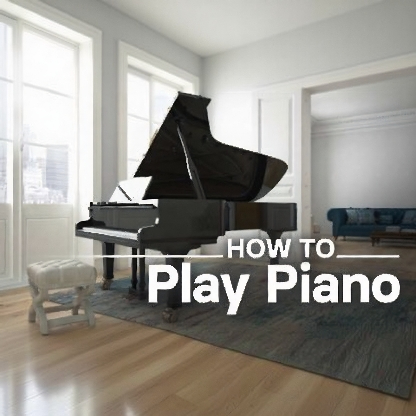
How to Play Piano
Original price was: $54.99.$22.99Current price is: $22.99.
Tickle the ivories and awaken your inner Beethoven with lessons from a master piano instructor—no appointment required. The piano is one of the most gratifying instruments to play, offering a gateway to music theory and practice. From folk melodies to jazzy improvisations, this versatile instrument allows for both melodic lead and harmonic accompaniment. Many aspiring pianists don’t know where to start or worry about the difficulty, but “How to Play Piano” demystifies the process, empowering you to enjoy the simple joys of playing.
How to Play Piano
Course Overview
Tickle the ivories and awaken your inner Beethoven with lessons from a master piano instructor—no appointment required. The piano is one of the most gratifying instruments to play, offering a gateway to music theory and practice. From folk melodies to jazzy improvisations, this versatile instrument allows for both melodic lead and harmonic accompaniment. Many aspiring pianists don’t know where to start or worry about the difficulty, but “How to Play Piano” demystifies the process, empowering you to enjoy the simple joys of playing.
Instructor
Professor Pamela D. Pike, an acclaimed pianist from Louisiana State University, guides you through 36 accessible lessons. With a blend of music theory, history, and practical instruction, you’ll progress from novice to expressive player. The self-guided nature of the course offers flexibility, with Professor Pike providing foundational and advanced techniques, as well as practice tips to enhance your learning journey.
Video Lectures
01: Basic Piano Rhythm and Fingering
Start playing immediately with basic exercises, rhythm patterns, and “Ode to Joy.”
Duration: 34 min
02: Pitch and Off-Staff Notation
Learn pitch, meter, measures, and notes, plus the C major five-finger pattern.
Duration: 31 min
03: Tonic and Dominant Harmony
Explore melody and harmony with tonic and dominant notes.
Duration: 31 min
04: Intervals and Basic Notation
Understand tempo, intervals, and basic notation with practical exercises.
Duration: 30 min
05: Major Chords and Simple Accompaniment
Familiarize yourself with landmark pitches, five-finger patterns, and chords.
Duration: 30 min
06: Fourths, Accidentals, and Relaxation
Discover accidentals, and play songs like “Aura Lee.”
Duration: 31 min
07: Primary Chords
Dive into primary chords and popular progressions.
Duration: 33 min
08: Transposition at the Piano
Learn to transpose melodies across keys, enriching your repertoire.
Duration: 29 min
09: Chord Inversions
Master inverted chords and recognize their staff representation.
Duration: 33 min
10: Chord Progressions and Arpeggios
Focus on chord inversions and cross-hand arpeggios.
Duration: 31 min
11: Accompaniment Patterns and Sight-Reading
Practice blocking, chord patterns, and sight-reading techniques.
Duration: 27 min
12: Harmonization and Damper Pedal
Explore G flat patterns, harmonization, and the damper pedal.
Duration: 33 min
13: Minor Finger Patterns and Chords
Shift focus to minor keys and learn new pieces.
Duration: 29 min
14: Articulation: Legato and Staccato
Develop artistic expression with staccato and legato techniques.
Duration: 29 min
15: One-Octave Major Scales and Major Intervals
Practice full scales in C major, G major, and D major.
Duration: 33 min
16: Dotted Rhythms and Isolated Repetition
Work on new rhythm patterns and Beethoven’s Minuet in G.
Duration: 27 min
17: Secondary Chords and More Dotted Rhythms
Review and explore secondary chords and dotted rhythms.
Duration: 31 min
18: Sixteenth Notes and More Secondary Chords
Deepen understanding of secondary chords and advance your skills.
Duration: 28 min
19: Compound Meter and Technique
Learn about compound meter with new pieces like “Cheerful Tune.”
Duration: 27 min
20: Parallel Major and Minor Keys
Explore parallel keys and learn pieces like “Elephant Stroll.”
Duration: 30 min
21: Three Forms of the Minor Scale and Syncopation
Elevate minor scale knowledge and experience syncopation.
Duration: 33 min
22: Artistic Expression and More Minor Keys
Enhance musicality with techniques for artistic expression.
Duration: 34 min
23: The Classical Period and Fortepianos
Understand the Classical era and play Mozart’s Sonata theme.
Duration: 29 min
24: Seventh Chords and Sonata Form
Study the significance of seventh chords and sonata form.
Duration: 33 min
25: Sight-Reading and Technique
Tackle sight-reading with new pieces and technical études.
Duration: 34 min
26: The Romantic Period and Seventh-Chord Arpeggios
Shift to the Romantic era and practice seventh-chord arpeggios.
Duration: 35 min
27: Extended Arpeggios and Pianist as Artist
Explore Romantic techniques with exercises and a lullaby.
Duration: 31 min
28: More Romantic Repertoire
Refine repertoire and tackle Liszt’s Liebestraum.
Duration: 29 min
29: Sonata Form Revisited
Revisit sonata forms with various masterworks.
Duration: 35 min
30: The Baroque Era and Harpsichords
Travel back to the Baroque era to understand its style and instruments.
Duration: 29 min
31: Baroque Repertoire
Learn and refine harmony with Baroque classics.
Duration: 30 min
32: Deliberate Practice and Learning Music
Use deliberate practice strategies for challenging pieces.
Duration: 33 min
33: The 20th Century and Modern Music
Explore modern styles and composers like Sibelius and Bartók.
Duration: 33 min
34: Chorale-Style Repertoire
Survey chorale-style music, enjoying hymn-like harmonies.
Duration: 31 min
35: Impressionism and the Una Corda Pedal
Examine impressionism through Debussy’s techniques.
Duration: 28 min
36: Triplets and Continuing Piano Study
Conclude with triplets and Beethoven’s Moonlight Sonata.
Duration: 36 min
Related products


By Area