 Skip to content
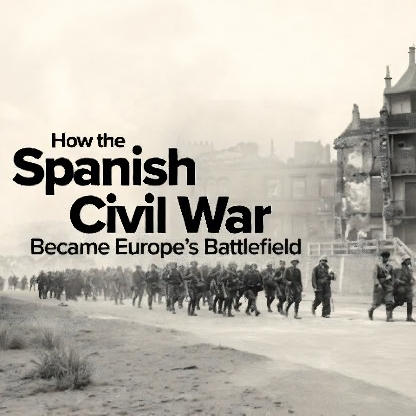
How the Spanish Civil War Became Europe’s Battlefield
Original price was: $39.99.$7.99Current price is: $7.99.
Enhance your understanding of the volatile period between the World Wars with this eye‑opening 24‑lecture survey of total war in Spain (1936–1939). Taught by Professor Pamela Radcliff (UC San Diego), the course situates the Spanish Civil War in a European context, analyzes long‑ and short‑term origins, examines the social and military dynamics of the conflict, traces international interventions, and considers the war’s legacy—Franco’s regime and the ongoing “memory wars.”
Course Overview
Enhance your understanding of the volatile period between the World Wars with this eye‑opening 24‑lecture survey of total war in Spain (1936–1939). Taught by Professor Pamela Radcliff (UC San Diego), the course situates the Spanish Civil War in a European context, analyzes long‑ and short‑term origins, examines the social and military dynamics of the conflict, traces international interventions, and considers the war’s legacy—Franco’s regime and the ongoing “memory wars.”
Course Details
- Course No.: 30470
- Instructor: Professor Pamela Radcliff (University of California, San Diego)
- Format: 24 recorded lectures (≈27–33 min each)
- Focus: political polarization, social divisions, military campaigns, international intervention, civilian experience, repression, postwar regime, and contested memory
Video Lectures (organized)
01: The Spanish Civil War in a European Context — 28 min
Introduction: why Spain’s civil war mattered to Europe and how it foreshadowed World War II.
02: Two Spains? Long‑Term Origins of War — 29 min
Structural divisions in geography, agriculture, economy, society, and religion that set the stage for conflict.
03: The Second Republic: Short‑Term Origins of War — 33 min
Political polarization (1931–1936), reform battles, and the collapse of effective majorities leading toward crisis.
04: The Opening Act: 1936’s Military Coup — 28 min
The July 1936 coup attempt, its partial success, and how it escalated into full civil war.
05: A Hot Summer: The War’s First Months — 31 min
The chaotic early phase of 1936: mass violence, terror campaigns, church desecrations, and civilian atrocities.
06: The Two Sides: Nationalists and Republicans — 29 min
Composition and coalitions of both sides: Nationalists (Catholics, conservatives, fascists) versus Republicans (socialists, anarchists, communists, regionalists).
07: Republican Revolution and Local Power — 31 min
Revolutionary social experiments, workers’ militias, and the challenges of decentralized power on the Republican side.
08: Rebuilding a Fractured Republican State — 30 min
Republican attempts to centralize authority and professionalize the war effort amid ideological divisions.
09: Francisco Franco Forms a Nationalist State — 32 min
Franco’s rise, consolidation of Nationalist authority, and the nature of his leadership compared to other authoritarian models.
10: Women in the War: Workers, Nurses, Soldiers — 29 min
Women’s roles on both sides: labor, nursing, combat roles, and shifts in gender expectations during wartime.
11: Western Powers Agree to Nonintervention — 28 min
The policy of nonintervention by Britain, France, and others, and its practical effects on the conflict.
12: The USSR and Mexico Aid the Republic — 27 min
Soviet and Mexican assistance to the Republic: nature, limitations, ideological strings, and consequences.
13: International Brigades Join the Civil War — 28 min
Volunteer brigades from around the world, motivations, organization, and cultural impact (e.g., Hemingway’s For Whom the Bell Tolls).
14: The Fascist Powers Aid the Nationalists — 27 min
Italian and German material and military support to Franco and how that shaped the war’s outcome and postwar alignment.
15: Vatican and Church in Spain’s Religious War — 28 min
The Catholic Church’s role, anti‑clerical violence, and the Church’s alignment with Nationalists.
16: The Propaganda War in a Divided Spain — 30 min
Cultural and visual propaganda (posters, film, literature, art)—including Picasso’s Guernica—and their role in shaping perceptions.
17: Military Campaigns in the Spanish Civil War — 29 min
Major battles, operational dynamics, and the turning points through which the Nationalists secured victory.
18: Guernica to Madrid: The Urban Battlefield — 27 min
Urban warfare, aerial bombing of civilians, and lessons from sieges and battles in cities like Guernica, Madrid, and Barcelona.
19: The War as Soldiers Experienced It — 29 min
Conscription, morale, trench and frontline life, and the everyday experience of combatants on both sides.
20: How the Nationalists Organized for Victory — 28 min
The Nationalists’ institutional development: political structure, finance, logistics, and the centralization that produced victory.
21: How the Republic Organized for the Long War — 30 min
Republican organizational struggles, loss of industrial base and material advantages, and the erosion of effective resistance.
22: Repression on the Two Sides — 33 min
Summary of atrocities, concentration camps, and the patterns of repression—acknowledging debates on scale while noting Nationalist brutality and postwar concealment.
23: The New Regime and the Aftermath of the War — 28 min
Franco’s postwar consolidation: executions, imprisonment, refugee flows, guerrilla resistance, and social trauma under authoritarian rule.
24: The Spanish Memory Wars — 32 min
Contemporary debates over commemoration, historical narratives, memory legislation, and how Spain’s past remains contested today.
Related products



Courses


Courses