Skip to content
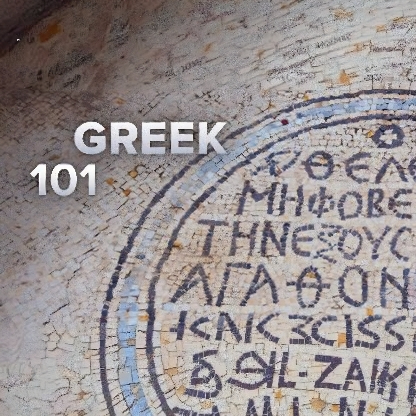
Greek 101: Learning an Ancient Language
Original price was: $69.99.$19.99Current price is: $19.99.
Embark on a journey to learn Ancient Greek with Professor Hans-Friedrich Mueller. This course uses Homer’s Iliad and the New Testament to introduce you to the language’s alphabet, grammar, and literary beauty. Gain insights into verb tenses, moods, and declensions, and prepare to read and appreciate Greek texts in their original form.
Overview
Course No. 2280
Embark on a journey to learn Ancient Greek with Professor Hans-Friedrich Mueller. This course uses Homer’s Iliad and the New Testament to introduce you to the language’s alphabet, grammar, and literary beauty. Gain insights into verb tenses, moods, and declensions, and prepare to read and appreciate Greek texts in their original form.
Video Lesson List
1. The Greek Alphabet & Pronunciation
Learn the Greek alphabet and practice pronunciation using the restored classical method.
34 min
2. First-Declension Nouns
Discover the endings for primarily feminine first-declension nouns and their variations.
31 min
3. Basic Rules of Greek Accentuation
Understand the three types of accents and their roles in Greek pronunciation and meaning.
32 min
4. Additional Patterns of the First Declension
Expand your knowledge of first-declension nouns, including masculine variations and compound verbs.
31 min
5. Verbs in the Present Tense
Focus on the present active indicative verbs and their endings.
30 min
6. Verbs in the Imperfect Tense
Learn the imperfect tense, which describes ongoing past actions.
31 min
7. Verbs in the Future & Aorist Tenses
Study the future and aorist tenses, and analyze examples from Homer and the New Testament.
31 min
8. First-Declension Masculine Nouns
Encounter masculine nouns in the first declension and their unique endings.
29 min
9. Understanding Dactylic Hexameter
Read the opening lines of Homer’s Iliad and learn about the epic meter, dactylic hexameter.
29 min
10. Practicing Dactylic Hexameter
Recite lines from the Iliad and study third-declension neuter endings.
32 min
11. The Middle/Passive Voice: Present & Future
Explore the middle and passive voices and their uses in different tenses.
30 min
12. Aorist & Imperfect Middle/Passive
Learn the middle/passive forms for past tenses and read more lines from the Iliad.
32 min
13. Perfect & Pluperfect Active
Form the perfect and pluperfect active tenses and see their usage in the New Testament and Homer.
30 min
14. Forming and Using Infinitives
Construct infinitives in various tenses and analyze examples from Matthew and Luke.
31 min
15. Active Participles
Understand participles as verbal adjectives and their agreement with nouns.
31 min
16. Middle/Passive Participles
Form middle/passive participles and continue reading the Iliad.
32 min
17. The Perfect System in the Middle/Passive
Learn the perfect, pluperfect, and future perfect middle/passive tenses.
32 min
18. The Subjunctive Mood
Discover the subjunctive mood and its examples in the New Testament and Homer.
32 min
19. The Imperative Mood, Active
Form imperative commands in the present and aorist tenses and read from the Iliad.
30 min
20. The Imperative Mood, Middle/Passive
Delve into imperative commands in the middle/passive and continue with the Iliad.
32 min
21. The Optative Mood
Learn about the optative mood, which expresses wishes, and read more from the Iliad.
32 min
22. The Aorist Passive
Study the aorist passive and its examples in the New Testament and Homer.
32 min
23. Third-Declension Adjectives
Explore third-declension adjectives and their variations.
32 min
24. Demonstrative Adjectives & Pronouns
Investigate Greek demonstrative adjectives and pronouns and their uses.
30 min
25. Personal & Possessive Pronouns
Study personal and possessive pronouns and their roles in Greek sentences.
30 min
26. Relative, Interrogative & Indefinite Pronouns
Learn about relative, interrogative, and indefinite pronouns and their examples in texts.
31 min
27. Regular -μι Verbs in the Active
Focus on the μι verb class, particularly in the active voice.
30 min
28. Regular -μι Verbs in the Middle/Passive
Extend your knowledge of μι verbs to the middle/passive voice.
32 min
29. Review of Regular -μι Verbs
Review distinguishing features of μι verbs and read more from the Iliad.
31 min
30. The Verb εἰμί
Study the irregular verb “to be” and learn to count in Greek.
30 min
31. Irregular Verbs & Tips for Further Study
Learn about more irregular verbs and receive guidance on continuing your Greek studies.
30 min
Related products