Skip to content
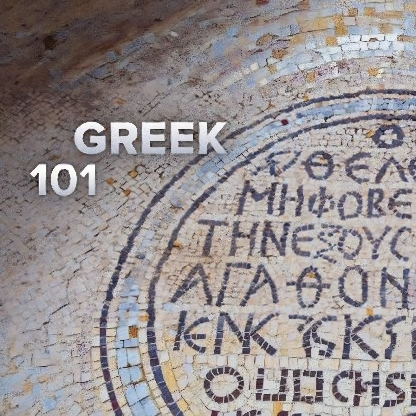
Greek 101: Learning an Ancient Language
Original price was: $69.99.$19.99Current price is: $19.99.
Ancient Greek records an astonishing range of literary, philosophical, religious, and historical works across a thousand years. This 36-lecture course uses two foundational texts—Homer’s Iliad and the New Testament—to introduce the language’s alphabet, grammar, syntax, meter, and basic translation skills.
Course Overview
Ancient Greek records an astonishing range of literary, philosophical, religious, and historical works across a thousand years. This 36-lecture course uses two foundational texts—Homer’s Iliad and the New Testament—to introduce the language’s alphabet, grammar, syntax, meter, and basic translation skills. Taught by Professor Hans-Friedrich Mueller, lessons emphasize how much nuance is lost in translation and show that even beginners can appreciate the expressive power of the originals.
What you’ll learn
- The Greek alphabet and restored classical pronunciation
- Declensions, verb systems, moods, voices, participles, and infinitives
- How to read and scan dactylic hexameter in Homer
- Practical translation skills for Homeric and Koine (New Testament) Greek
- Strategies for continued study in poetry, philosophy, history, and scripture
Video Lessons
01: The Greek Alphabet & Pronunciation (34 min)
Learn the 24 letters, classical pronunciation, diphthongs, and sound out sample words you will later read in sentences.
02: First-Declension Nouns (31 min)
Introduction to Greek noun genders and the first-declension endings (mostly feminine), and how case endings replace English word order/prepositions.
03: Basic Rules of Greek Accentuation (32 min)
Study the acute, grave, and circumflex accents and the ancient accenting system invented at Alexandria that aids pronunciation and meaning.
04: Additional Patterns of the First Declension (31 min)
Examine Homeric and Koine variations of the first declension and continuity across dialects separated by centuries.
05: Verbs in the Present Tense (30 min)
Learn present active indicative morphology—person, number, voice, mood—and primary endings for present tense verbs.
06: Adjective Forms & Second-Declension Nouns (30 min)
Expand to masculine and neuter nouns using second-declension endings and practice adjectival agreement with Homeric vocabulary.
07: Building Basic Translation Skills (30 min)
Review prior material, translate between English and Homeric/Koine Greek, and read the opening of the Gospel of John in original Koine.
08: First- & Second-Declension Pronouns (31 min)
Explore demonstrative adjectives and pronouns, their endings, and historical evolution from Homeric to Koine Greek.
09: Verbs in the Imperfect Tense (31 min)
Study the imperfect tense (ongoing past) with the augment and secondary endings that express continuous past action.
10: Verbs in the Future & Aorist Tenses (31 min)
Learn the future and aorist tenses and the notion of principal parts for recognizing tense forms, including irregular verbs.
11: First-Declension Masculine Nouns (29 min)
Identify masculine members of the first declension from nominative/genitive pairs and explore compound-verb subtleties.
12: The Root Aorist (29 min)
Analyze first, second, and root aorists, and see examples across Homer and the New Testament that illustrate different aorist usages.
13: Third-Declension Nouns (32 min)
Tackle the third declension—focus on genitive forms to identify declension class—and prepare for unadapted reading of the Iliad.
14: Understanding Dactylic Hexameter (29 min)
Read the first five lines of the Iliad, study dactylic hexameter rules, and learn how meter contributes to Homeric poetic power.
15: Practicing Dactylic Hexameter (32 min)
Recite the opening Iliad lines, study third-declension neuter endings, and read New Testament passages (Luke) in original Greek.
16: The Middle/Passive Voice: Present & Future (31 min)
Learn middle and passive voices (including the uniquely Greek middle) while reading additional Iliad lines.
17: Aorist & Imperfect Middle/Passive (32 min)
Compare primary and secondary middle/passive endings for present/future vs. past tenses and continue scanning Homeric meter.
18: Perfect & Pluperfect Active (30 min)
Introduce the fourth principal part to form perfect and pluperfect active tenses; read examples from John and Homer.
19: Forming and Using Infinitives (30 min)
Study principal parts relevant to passive forms and learn infinitive formation across tenses with Homeric and New Testament examples.
20: Active Participles (31 min)
Learn participles as verbal adjectives—formation, agreement, and usage—through examples in Matthew and the Iliad.
21: Middle/Passive Participles (31 min)
Examine middle/passive participles and how they compress complex ideas into single words in Greek prose and poetry.
22: The Perfect System in the Middle/Passive (32 min)
Form perfect/pluperfect/future perfect middle/passive from the fifth principal part and read an evocative Iliad passage.
23: The Subjunctive Mood (32 min)
Understand the subjunctive for doubt, purpose, wish, and fear; find examples in Luke and continue Iliad reading.
24: The Imperative Mood, Active (30 min)
Study command forms in present and aorist imperatives with examples from Luke and the Iliad.
25: The Imperative Mood, Middle/Passive (32 min)
Form middle/passive imperatives, note Homeric uncontracted endings, and read Iliad lines depicting Apollo’s wrath.
26: The Optative Mood (32 min)
Learn the optative mood for wishes and potentiality with examples in the Iliad and New Testament readings.
27: The Aorist Passive (32 min)
Delve into the aorist passive—its prevalence and function in Greek—and read further Iliad lines and New Testament parallels.
28: Third-Declension Adjectives (32 min)
Return to adjective declension patterns (third-declension adjectives), learn particles, and read more of the Iliad.
29: Demonstrative Adjectives & Pronouns (30 min)
Survey demonstratives (this/that/these/those), including reflexive forms, using Luke and Iliad examples to illustrate usage.
30: Personal & Possessive Pronouns (30 min)
Explore forms in New Testament Greek (Lord’s Prayer examples) and spot chiasmus while reading Iliad passages.
31: Relative, Interrogative & Indefinite Pronouns (31 min)
Conclude pronoun study with who/which/what and indefinite forms; practice with New Testament and Iliad extracts.
32: Regular -μι Verbs in the Active (30 min)
Study the active forms of the rarer but important -μι verb class and their role in compounds and classical texts.
33: Regular -μι Verbs in the Middle/Passive (32 min)
Continue with -μι verbs in the middle/passive, noting their relative regularity and occurrences in Luke and Homer.
34: Review of Regular -μι Verbs (31 min)
Compare -μι verbs with ω verbs, review forms in liturgical texts (Lord’s Prayer), and read further Iliad lines featuring μι compounds.
35: The Verb εἰμί (30 min)
Master the irregular but essential verb “to be,” practice counting, and analyze Iliad lines that consolidate prior grammar.
36: Irregular Verbs & Tips for Further Study (30 min)
Learn key irregular verbs (to go, to know), finish the assigned Iliad passage, and receive strategies for continuing Greek study in Homer, the New Testament, and beyond.
Related products