Skip to content
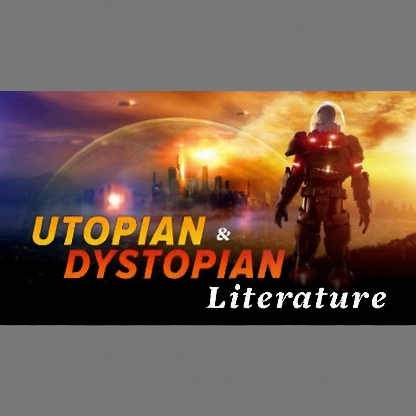
Great Utopian and Dystopian Works of Literature
Original price was: $29.99.$7.99Current price is: $7.99.
Can literature change our real-world society? At its foundation, utopian and dystopian fiction asks a few seemingly simple questions aimed at doing just that. Who are we as a society?
Great Utopian and Dystopian Works of Literature
Overview
Course No. 2341
Can literature change our real-world society? At its foundation, utopian and dystopian fiction asks a few seemingly simple questions aimed at doing just that. Who are we as a society? Who do we want to be? Who are we afraid we might become? When these questions are framed in the speculative versions of Heaven and Hell on earth, you won’t find easy answers, but you will find tremendously insightful and often entertaining perspectives.
Utopian and dystopian writing sits at the crossroads of literature and other important academic disciplines such as philosophy, history, psychology, politics, and sociology. It serves as a useful tool to discuss our present condition and future prospects—to imagine a better tomorrow and warn of dangerous possibilities. From Thomas More’s foundational text Utopia (1516) to the 21st-century phenomenon of The Hunger Games, dive into stories that seek to find the best—and the worst—in humanity, with the hope of better understanding ourselves and the world.
Join award-winning Professor Pamela Bedore, Associate Professor of English at the University of Connecticut, in 24 illuminating lectures that explore the history and development of utopian ideas and their dystopian counterparts. You’ll encounter powerful and influential texts as you travel centuries into the past and thousands of years into the future, through worlds that are beautiful, laughable, terrifying, and always thought-provoking.
Video Lectures
01: Utopia: The Perfect Nowhere (30 min)
Enter the world of utopian and dystopian fiction. Explore Ursula K. Le Guin’s The Ones Who Walk Away from Omelas and the ambiguities of “perfect” worlds.
02: Thomas More and Utopian Origins (32 min)
Discover how Utopia (1516) set conventions for the genre while critiquing the very idea of utopia.
03: Swift, Voltaire, and Utopian Satire (31 min)
Examine Candide and Gulliver’s Travels as satirical utopias of the 18th century.
04: American Dreamers: Hawthorne and Alcott (32 min)
Analyze 19th-century American utopian experiments through The Blithedale Romance and Transcendental Wild Oats.
05: Samuel Butler and Utopian Technologies (32 min)
Explore Erewhon’s critique of religion, health, and humanity’s relationship with machines.
06: Edward Bellamy and Utopian Activism (31 min)
Assess Looking Backward’s socialist vision and its real-world impact on Gilded Age America.
07: H. G. Wells and Utopian Science Fiction (30 min)
Trace how Wells merged utopia with sci-fi in works like A Modern Utopia.
08: Charlotte Perkins Gilman and Gendered Utopia (31 min)
Study Herland’s exploration of a women-only society and feminist utopian ideals.
09: Yevgeny Zamyatin and Dystopian Uniformity (31 min)
Dive into We, the first of the “Big Three Dystopias,” and its themes of totalitarian control.
10: Aldous Huxley and Dystopian Pleasure (30 min)
Analyze Brave New World’s critique of a society controlled by pleasure, not pain.
11: George Orwell and Totalitarian Dystopia (31 min)
Unpack Nineteen Eighty-Four’s language, surveillance, and political distortion.
12: John Wyndham and Young Adult Dystopia (30 min)
Examine The Chrysalids as a precursor to modern YA dystopian fiction.
13: Philip K. Dick’s Dystopian Crime Prevention (31 min)
Explore Minority Report’s themes of predestination and free will.
14: Anthony Burgess, Free Will, and Dystopia (32 min)
Debate the moral dilemmas of A Clockwork Orange’s ultraviolent world.
15: The Feminist Utopian Movement of the 1970s (33 min)
Survey classless, crimeless utopias in feminist speculative fiction.
16: Ursula K. Le Guin and the Ambiguous Utopia (31 min)
Revisit Le Guin’s The Dispossessed and its exploration of anarchist societies.
17: Samuel Delany and the Heterotopia (32 min)
Analyze Trouble on Triton’s fluid identities and societal freedom.
18: Octavia Butler and the Utopian Alien (31 min)
Study Xenogenesis’s alien-human hybrids and utopian paradoxes.
19: Octavia Butler and Utopian Hybridity (30 min)
Re-examine Butler’s boundary-challenging visions of humanity.
20: Margaret Atwood and Environmental Dystopia (30 min)
Contrast The Handmaid’s Tale and MaddAddam’s apocalyptic satire.
21: Suzanne Collins and Dystopian Games (30 min)
Unpack The Hunger Games’ critique of spectacle and inequality.
22: Cyberpunk Dystopia: Doctorow and Anderson (31 min)
Explore digital-age anxieties in Little Brother and Feed.
23: Apocalyptic Literature in the 21st Century (30 min)
Survey post-cataclysmic narratives and their hidden utopian hopes.
24: The Future of Utopia and Dystopia (35 min)
Reflect on the genre’s enduring relevance to global crises and human resilience.
Related products