 Skip to content
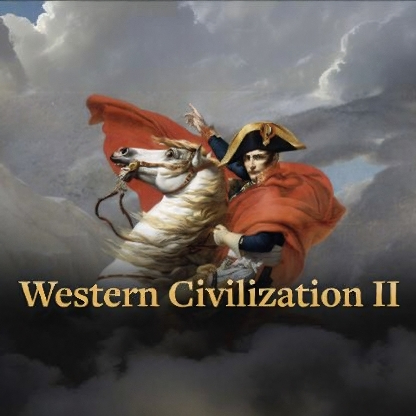
Foundations of Western Civilization II: A History of the Modern Western World
Original price was: $89.99.$22.99Current price is: $22.99.
Expand your understanding of an unprecedented period in world history with an expert historian as your guide. Beginning with the Renaissance, this 48-lecture series (Course No. 8700) by Professor Robert Bucholz traces 600 years of rapid innovation in philosophy, technology, economics, military affairs, and politics that transformed Europe from a post-Roman backwater into a dominant global force. The course presents a coherent narrative of the period’s events and trends and examines their impact on Europe and the wider world, including the United States.
Foundations of Western Civilization II: A History of the Modern Western World
Overview
Expand your understanding of an unprecedented period in world history with an expert historian as your guide. Beginning with the Renaissance, this 48-lecture series (Course No. 8700) by Professor Robert Bucholz traces 600 years of rapid innovation in philosophy, technology, economics, military affairs, and politics that transformed Europe from a post-Roman backwater into a dominant global force. The course presents a coherent narrative of the period’s events and trends and examines their impact on Europe and the wider world, including the United States.
Course Objectives
- Explain major political, social, cultural, religious, intellectual, scientific, and economic developments in Western Europe from the 16th through the 20th centuries.
- Analyze how geography, ideas, institutions, and technology shaped European power and global influence.
- Evaluate the roles of individuals, social groups, and structural forces in historical change.
- Consider the legacies and contemporary implications of Western civilization.
Lecture List (48 Lectures)
- 01 — The Importance of the West (32 min)
Overview of the past 500 years of European history and culture—government systems, economic structures, science and technology, literature, art, and music.
- 02 — Geography Is Destiny (31 min)
How Europe’s and the Atlantic world’s geography and climate shaped population patterns, migration, diplomacy, war, and political/cultural divisions.
- 03 — Culture Is Destiny (30 min)
The “Great Chain of Being” and how emerging political, social, religious, and cultural forces challenge medieval hierarchical assumptions.
- 04 — Renaissance Humanism — 1350–1650 (31 min)
Revival of classical texts changes ideas about education, the gentleman, the role of women, literacy, and textual accuracy.
- 05 — Renaissance Princes — 1450–1600 (31 min)
Rise of powerful rulers seeking trade routes and wealth to fund expanding state power and courtly ambitions.
- 06 — The New World & the Old — 1400–1650 (31 min)
Portuguese, Spanish, French, and English exploration and exploitation reshape economies, cultures, and political structures in Africa, Asia, and the Americas.
- 07 — The Protestant Reformation — 1500–22 (31 min)
Printing press and rising literacy enable the spread of reforming ideas, notably Martin Luther’s, with profound religious and political effects.
- 08 — The Wars of Religion — 1523–1648 (31 min)
Confessional conflict leads to decades of bloodshed, culminating in the Thirty Years’ War and a growing preference for peaceful settlement of religious disputes.
- 09 — Rational & Scientific Revolutions — 1450–1650 (30 min)
Copernicus, Galileo, Kepler, Bacon, Newton and the emergence of the Scientific Method that transforms knowledge about the natural world.
- 10 — French Absolutism — 1589–1715 (31 min)
The development and perfection of royal absolutism, exemplified by Louis XIV, as a model that other monarchies envied and emulated.
- 11 — English Constitutionalism — 1603–49 (31 min)
Stuart struggles with Parliament produce the English Civil Wars and ultimately the trial and execution of Charles I.
- 12 — English Constitutionalism — 1649–89 (30 min)
England experiments with republic and protectorate before the Glorious Revolution establishes a more constitutional and parliamentary model.
- 13 — War, Trade, Empire — 1688–1702 (31 min)
Post-1688 conflicts pit France against Britain and the Dutch for European dominance and colonial trade control.
- 14 — War, Trade, Empire — 1702–14 (30 min)
Britain’s military and financial innovations strengthen its trading position, built in part on the Atlantic slave economy.
- 15 — War, Trade, Empire — 1714–63 (31 min)
Continued conflicts leave Britain ascendant in North America and globally, while France and others recover from prolonged warfare.
- 16 — Life Under the Ancien Régime — 1689–1789 (31 min)
Commercial and financial change enlarges the middling orders (merchants, professionals) who will be crucial to social and political change.
- 17 — Enlightenment & Despotism (31 min)
Enlightenment thinkers (Voltaire, Diderot, Montesquieu, Rousseau) expand on earlier ideas; when monarchs fail to reform sufficiently, some begin to consider revolution.
- 18 — The American Revolution (31 min)
The American Revolution applies Enlightenment principles to government; the republic and constitution become a model for European reformers.
- 19 — The French Revolution — 1789–92 (31 min)
Fiscal crisis and failed reform produce a constitutional monarchy, abolition of aristocratic privilege, and the Declaration of the Rights of Man.
- 20 — The French Revolution — 1792–1803 (30 min)
Radicalization, the Reign of Terror, warfare with European monarchies, rising nationalism, and the emergence of Napoleon.
- 21 — The Napoleonic Empire — 1803–15 (30 min)
Napoleon’s military conquests spread nationalist ideas across Europe even as his empire is eventually defeated and the Congress of Vienna tries to restore the old order.
- 22 — Beginnings of Industrialization — 1760–1850 (30 min)
Britain’s financial, political, and social strengths make it the birthplace of the first Industrial Revolution and many technological innovations.
- 23 — Consequences of Industrialization — 1760–1850 (30 min)
Industrialization reshapes society and the global economy; its benefits and costs provoke diverse intellectual and political responses.
- 24 — The Liberal Response — 1776–1861 (31 min)
Liberals debate reforms to address working-class conditions, property rights, individual liberties, and political representation.
- 25 — The Romantic Response — 1789–1870 (31 min)
Romantic writers (Wordsworth, Blake, Shelley) react to industrial society by valuing emotion, nature, and individual creativity, influencing cultural perception.
- 26 — The Socialist Response — 1813–1905 (31 min)
Early socialist ideas of shared wealth evolve into Marx and Engels’ critique and call for radical change, though revolution does not uniformly follow.
- 27 — Descent of Man; Rise of Woman — 1830–90 (31 min)
Scientific advances challenge traditional beliefs; social change includes debates over gender roles and the rise of women’s movements.
- 28 — Nationalism — 1815–48 (30 min)
Nationalism sparks revolutions across Europe as many peoples press against the settlement of the Congress of Vienna.
- 29 — Nationalism — 1848–71 (30 min)
Though initial revolutions fail, the eventual unification of Germany (1871) significantly alters the European balance of power.
- 30 — Imperial Rivalry — 1870–1914 (31 min)
Competition for colonies intensifies international tensions and contributes to the causes of World War I.
- 31 — Industrial Rivalry — 1870–1914 (30 min)
The second Industrial Revolution creates new industrial powers that challenge Britain and alter international economics and power relations.
- 32 — The Alliance System — 1872–1914 (30 min)
Bismarckian treaties initially stabilize Europe, but shifting alliances and tensions eventually fuel broader conflict.
- 33 — Decadence & Malaise — circa 1900 (30 min)
Social and cultural anxieties at the turn of the century contribute to a sense of crisis that feeds the outbreak of war.
- 34 — The Great War Begins — 1914–16 (30 min)
Rapid mobilization and trench warfare create a bloody stalemate; early German plans for quick victory fail.
- 35 — Breaking the Deadlock — 1915–17 (31 min)
Both sides attempt breakthroughs; unrestricted submarine warfare draws the U.S. into the conflict while Germany seeks to destabilize Russia.
- 36 — The Russian Revolution — 1917–22 (31 min)
War and internal crises topple the czar, lead to provisional rule, and culminate in Bolshevik seizure of power and Russia’s withdrawal from the war.
- 37 — The End of the War — 1917–22 (31 min)
Germany seeks armistice amid shortages; the peace settlements impose harsh terms contributing to later resentment and instability.
- 38 — Recovery & Depression in the West — 1919–36 (30 min)
Postwar recovery is slow; U.S. credit helps rebuild Europe, while the 1929 crash produces a global depression with severe consequences.
- 39 — Totalitarian Russia — 1918–39 (30 min)
Lenin’s policies and Stalin’s rise bring forced collectivization and brutal domestic and foreign policies with catastrophic human costs.
- 40 — Fascist Italy, Nazi Germany — 1922–36 (30 min)
Disillusionment with democracy and capitalism fuels authoritarian movements; Mussolini and Hitler seize power promising stability and employment at grave moral cost.
- 41 — The Holocaust — 1933–45 (31 min)
Nazi policies lead to the systematic extermination of Jews and other targeted groups; lecture reflects on the crime’s meaning for Western civilization.
- 42 — The Failure of Diplomacy — 1935–39 (31 min)
Aggression in Asia and Europe, appeasement, and remilitarization set the stage for the outbreak of World War II.
- 43 — World War II — 1939–42 (30 min)
Blitzkrieg and early Axis advances continue until the U.S. entry after Pearl Harbor and Germany’s widening of the war.
- 44 — World War II — 1942–45 (31 min)
Allied industrial and military strength, especially the Soviet Union and the U.S., turn the tide—but at a huge human cost.
- 45 — American Hegemony, Soviet Challenge — 1945–75 (30 min)
Cold War bipolarity: nuclear standoffs, proxy wars, U.S. economic leadership (Marshall Plan), and Western reconstruction (lecture excludes the end of the Cold War).
- 46 — Rebuilding Europe — 1945–85 (30 min)
European nations decolonize, rebuild economies, and navigate a precarious existence between superpowers while rethinking global roles.
- 47 — The New Europe — 1985–2001 (30 min)
Post-Soviet transformations and European integration (including the EU) reshape regional politics and economics amid new challenges.
- 48 — The Meaning of Western Civilization (32 min)
At the 21st century’s start, Western legacies (democracy, capitalism, individual freedoms) face internal and external challenges—fundamentalism, terrorism, migration, and globalization—and the lecture asks whether European ideals will endure.
Related products






Courses