Skip to content
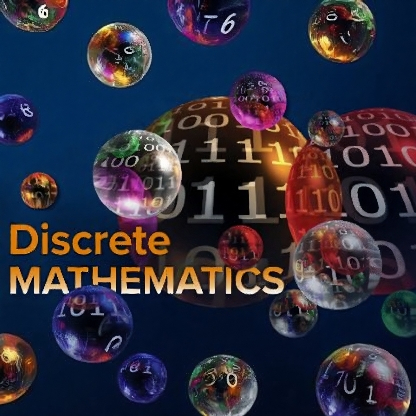
Discrete Mathematics
Original price was: $49.99.$9.99Current price is: $9.99.
Explore this modern realm of digital math with engaging and rigorous information that is mathematically accessible. Discrete Mathematics covers essential topics with vital applications in computer science, cryptography, engineering, and problem-solving. Unlike the continuous mathematics taught in most schools, this course focuses on distinct quantities and utilizes engaging visual methods.
Overview
Explore this modern realm of digital math with engaging and rigorous information that is mathematically accessible. Discrete Mathematics covers essential topics with vital applications in computer science, cryptography, engineering, and problem-solving. Unlike the continuous mathematics taught in most schools, this course focuses on distinct quantities and utilizes engaging visual methods.
Course Instructor
Professor Arthur T. Benjamin, an award-winning educator and mathemagician, leads you through this fascinating journey, presenting complex concepts of discrete mathematics in an entertaining way that is accessible to anyone with a basic knowledge of high school algebra.
Video Lessons
- What Is Discrete Mathematics?
- Duration: 33 min
- Description: Introduction to the concepts of discrete mathematics and its main topics.
- Basic Concepts of Combinatorics
- Duration: 34 min
- Description: Understanding the mathematics of counting, factorials, and binomial coefficients.
- The 12-Fold Way of Combinatorics
- Duration: 31 min
- Description: Overview of combinatorial counting principles through candy distribution examples.
- Pascal’s Triangle and the Binomial Theorem
- Duration: 33 min
- Description: Exploration of Pascal’s triangle and its mathematical properties related to binomial coefficients.
- Advanced Combinatorics—Multichoosing
- Duration: 32 min
- Description: Discover how to calculate combinations when choosing items with repetitions.
- The Principle of Inclusion—Exclusion
- Duration: 33 min
- Description: Learn the principle used to solve counting problems involving overlap.
- Proofs—Inductive, Geometric, Combinatorial
- Duration: 31 min
- Description: Explore different methods of proof including induction and geometric proofs.
- Linear Recurrences and Fibonacci Numbers
- Duration: 33 min
- Description: Study the relationships of Fibonacci numbers through linear recurrence.
- Gateway to Number Theory—Divisibility
- Duration: 33 min
- Description: Introduction to number theory and properties of divisibility.
- The Structure of Numbers
- Duration: 34 min
- Description: Analyze additive and multiplicative structures of integers.
- Two Principles—Pigeonholes and Parity
- Duration: 31 min
- Description: Explore the pigeonhole principle and parity proofs in number theory.
- Modular Arithmetic—The Math of Remainders
- Duration: 32 min
- Description: Introduction to modular arithmetic with applications in ISBN codes.
- Enormous Exponents and Card Shuffling
- Duration: 31 min
- Description: Explore applications of modular arithmetic in counting and card games.
- Fermat’s “Little” Theorem and Prime Testing
- Duration: 33 min
- Description: Using modular arithmetic to test for prime numbers.
- Open Secrets—Public Key Cryptography
- Duration: 34 min
- Description: Understand how public key cryptography utilizes number theory.
- The Birth of Graph Theory
- Duration: 29 min
- Description: Introduction to graph theory and related puzzles like Euler’s circuit.
- Ways to Walk—Matrices and Markov Chains
- Duration: 28 min
- Description: Explore random walks in graphs using matrices.
- Social Networks and Stable Marriages
- Duration: 29 min
- Description: Apply graph theory to social networks and the stable marriage theorem.
- Tournaments and King Chickens
- Duration: 31 min
- Description: Discover the properties of competitive tournaments in graph theory.
- Weighted Graphs and Minimum Spanning Trees
- Duration: 31 min
- Description: Analyze the structure of trees in graph theory for optimal connections.
- Planarity—When Can a Graph Be Untangled?
- Duration: 30 min
- Description: Understand planar graphs and key nonplanar examples.
- Coloring Graphs and Maps
- Duration: 33 min
- Description: Dive into the four-color theorem and its historical significance.
- Shortest Paths and Algorithm Complexity
- Duration: 33 min
- Description: Examine important graph theory problems like shortest paths and complex algorithms.
- The Magic of Discrete Mathematics
- Duration: 33 min
- Description: Conclude with a review of the course and a flourish of mathematical magic.
Related products

Courses