Skip to content
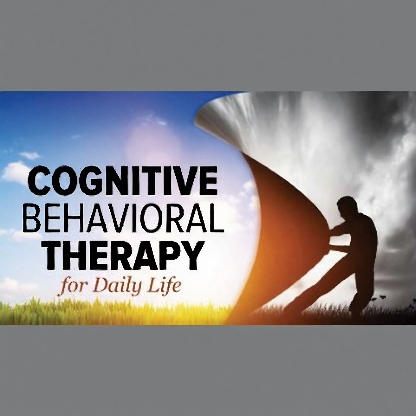
Cognitive Behavioral Therapy for Daily Life
Original price was: $29.99.$6.99Current price is: $6.99.
Explore the process and tools of cognitive behavioral therapy (CBT) with a professor of clinical medicine and discover how CBT techniques can help you deal with negative emotions every day.
Overview
Explore the process and tools of cognitive behavioral therapy (CBT) with a professor of clinical medicine and discover how CBT techniques can help you deal with negative emotions every day.
You talk to yourself all day long. We all do. Most of what we say carries no emotional weight, but sometimes, what we tell ourselves affects the very quality of our lives: “Of course I didn’t get that job. My father was right; no one’s going to hire me at my age.” In the 24 compelling half-hour lectures of Cognitive Behavioral Therapy for Daily Life, Professor Jason Satterfield will help you build your cognitive behavioral therapy (CBT) toolbox, giving you the skills you need to change those stories that hold you back and that keep you from experiencing your fullest life possible.
The CBT approach helps us because it’s almost never just the situation that directly affects our emotional health—it’s our thoughts about the situation. No matter what difficulties we face in life, it’s how we address those challenges that makes the difference.
In Cognitive Behavioral Therapy for Daily Life, you’ll have the opportunity to be the proverbial fly on the wall of the therapist’s office. As you see actors portraying clients, you see Dr. Satterfield discussing his thoughts about the six clients—explaining what he learns from what they do say and do not say, their body language, their willingness to take on and accomplish homework assignments, and more. He also explains which specific CBT tool(s) he chooses for each of them and why. Since several of these clients are shown in multiple sessions over time, you’ll see first-hand how they benefit from the implementation of CBT in their lives.
These tools and skills will not only help you address problems but will also help you learn to create and savor positive experiences that bring greater happiness, satisfaction, and meaning to your life.
Course Outline
01: A CBT Toolbox: Toward Wise Living
Learn why cognitive behavioral therapy (CBT) is such a powerful and effective therapy to help you move toward Wise Mind—that state where your emotions and cognition are working together, each from its own strength, to support you in your best possible life. You’ll meet Amanda, David, and Miriam and watch their initial CBT sessions.
Duration: 31 min
02: Laying a Foundation: Assessments and Goals
A full self-assessment is a foundational CBT skill, giving you a good sense of your strengths and areas for improvement. Learn how to access the NIH’s free PROMIS system to collect the data you’ll need for your self-assessment and case formulation.
Duration: 31 min
03: Behavioral Activation: Potent Mood Boosters
Explore the umbrella concept of behavioral activation and learn the important ABCs of behavior—antecedents, behavior, and consequences—to make them work for you.
Duration: 30 min
04: Advanced Behavioral Techniques
Learn about the numerous techniques for somatic quieting and watch as Dr. Satterfield suggests various behavioral activations for both Amanda and David.
Duration: 32 min
05: Capturing Thoughts and Making Connections
Investigate your two distinct systems of cognition and explore how your personal habits of mind have affected your behavior and emotions.
Duration: 30 min
06: Cognitive Restructuring and Thought Records
Learn how to create your own thought record, identifying your triggers, emotions, and automatic thoughts.
Duration: 30 min
07: Worry, Rumination, and Sticky Thoughts
Learn several techniques—from distracting yourself to scheduling official worry time—that can help you redirect your thoughts and avoid rumination.
Duration: 31 min
08: Digging Deeper: Rules and Core Beliefs
Use a new worksheet to identify your deepest beliefs and schemas, as well as your signature strengths.
Duration: 30 min
09: Toolbox in Action: Stress and Assertiveness
Explore blended techniques, using both cognitive and behavioral strategies to practice assertiveness and stress management.
Duration: 32 min
10: Understanding and Managing Emotions
Discover how to identify your primary emotions, their triggers, associated cognitions, and linked behaviors.
Duration: 31 min
11: Key Steps to Solving Problems
Learn about problem-solving therapy and how it can help manage the negative effects of stressful events.
Duration: 30 min
12: Grief, Sadness, and Depression
Learn about the relationships between sadness, grief, and depression, and how CBT can help at all points along the depressive continuum.
Duration: 31 min
13: Panic Attacks and Anxiety
Explore the treatment of exposure therapy and its success rates—the one aspect of CBT you should seek professional help to implement.
Duration: 33 min
14: Addiction and Pain Medications
Learn how CBT can play a significant role in the treatment of substance abuse disorders, particularly when combined with medication-assisted treatment.
Duration: 33 min
15: Embracing Imperfection
Determine which CBT cognitive and behavioral techniques can be helpful in treatment, and watch Amanda as she addresses her own perfectionism.
Duration: 29 min
16: Beating Procrastination
Learn to use your CBT thought record, core beliefs worksheet, and problem-solving therapy to identify ways to reframe tasks.
Duration: 28 min
17: Soothing Rejection, Promoting Connection
Learn about the nature of rejection and which CBT skills can help address habits of mind that work against us.
Duration: 30 min
18: Early Childhood Trauma and Neglect
Explore the ACEs study—Adverse Childhood Experiences—and how CBT can help you rewrite your own story.
Duration: 27 min
19: Managing Chronic Disease
Explore how chronic disease can affect self-image and how CBT can ameliorate many of the habits of mind that affect daily life.
Duration: 32 min
20: Coping with Chronic Pain
Learn which CBT tools can be used to manage the psychological suffering that usually accompanies chronic pain.
Duration: 29 min
21: How to End Insomnia and Finally Sleep
Explore the efficacy of CBT-I (“I” for insomnia) and learn about sleep hygiene and how to keep a sleep log.
Duration: 31 min
22: CBT for the Beginning of the End of Life
Explore the many CBT tools that can be used to work with end-of-life issues.
Duration: 33 min
23: Expanding CBT with Technology
Explore the exciting possibilities of expanding CBT accessibility through technology, including chatbots and mobile apps.
Duration: 31 min
24: Reclaiming and Rewriting Our Stories
Explore how CBT can inform and reshape our stories in constructive ways.
Duration: 30 min
Related products