Skip to content
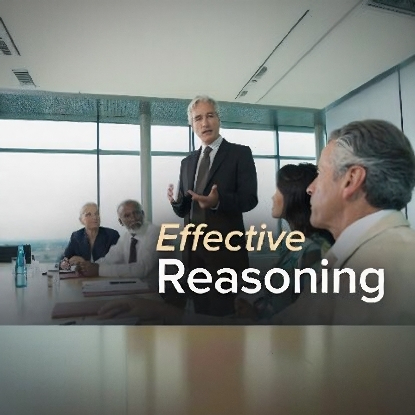
Argumentation: The Study of Effective Reasoning
Original price was: $39.99.$7.99Current price is: $7.99.
Learn the fundamentals of argumentation and build a foundation for communication and reasoning that will benefit you in every area of your life.
Argumentation: The Study of Effective Reasoning
Overview
Learn the fundamentals of argumentation and build a foundation for communication and reasoning that will benefit you in every area of your life.
What is effective reasoning? And how can it be done persuasively? These questions have been asked for thousands of years, yet some of the best thinking on reasoning and argumentation is recent and represents a break from the past. These 24 engaging lectures teach you how to reason, how to persuade others that what you think is right, and how to judge and answer the arguments of others—and how they will judge yours.
Professor Zarefsky makes argumentation accessible and familiar by breaking it into five easy-to-understand components. This course shows more useful approaches, focusing on the structure of arguments, the types of evidence, and the inferences that link evidence to claims. By the end of the course, you will have a practical framework for continuing to build your argumentation skills.
Course Structure
- Introducing Argumentation and Rhetoric
Duration: 32 min
Examine argumentation in its classical sense and its relationship to rhetoric. - Underlying Assumptions of Argumentation
Duration: 30 min
Explore the assumptions that underpin the use of argumentation in decision-making. - Formal and Informal Argumentation
Duration: 30 min
Review the defining features of deduction and induction in argumentation. - History of Argumentation Studies
Duration: 30 min
Trace the evolution of argumentation studies from ancient Greece to modern times. - Argument Analysis and Diagramming
Duration: 30 min
Learn how to analyze arguments and understand their structure. - Complex Structures of Argument
Duration: 30 min
Explore how arguments can be embedded in complex structures. - Case Construction – Requirements and Options
Duration: 30 min
Understand how to assemble a case and address all relevant issues. - Stasis – The Heart of the Controversy
Duration: 30 min
Identify the focal point of dispute in arguments. - Attack and Defense I
Duration: 31 min
Learn about the processes of refuting and rebuilding cases. - Attack and Defense II
Duration: 31 min
Continue the discussion on attacking arguments and defending them. - Language and Style in Argument
Duration: 30 min
Explore how language choices affect the presentation of arguments. - Evaluating Evidence
Duration: 31 min
Focus on the importance of evidence in supporting arguments. - Reasoning from Parts to Whole
Duration: 30 min
Examine inferences from examples and their role in arguments. - Reasoning with Comparisons
Duration: 30 min
Study reasoning from analogy and its significance in argumentation. - Establishing Correlations
Duration: 30 min
Learn about inferences from sign and how they predict outcomes. - Moving from Cause to Effect
Duration: 31 min
Explore causal inferences and their implications in arguments. - Commonplaces and Arguments from Form
Duration: 30 min
Understand inferences based on social knowledge and common beliefs. - Hybrid Patterns of Inference
Duration: 30 min
Examine hybrid inference patterns in argumentation. - Validity and Fallacies I
Duration: 30 min
Discuss what makes a good argument and common errors in reasoning. - Validity and Fallacies II
Duration: 30 min
Continue exploring general errors in reasoning and their implications. - Arguments between Friends
Duration: 31 min
Investigate the personal sphere of argumentation and its dynamics. - Arguments among Experts
Duration: 30 min
Explore how argumentation differs in specialized fields. - Public Argument and Democratic Life
Duration: 31 min
Learn about the role of argumentation in public discourse. - The Ends of Argumentation
Duration: 31 min
Consider the larger purposes served by the process of argumentation.
Related products

Courses