Skip to content
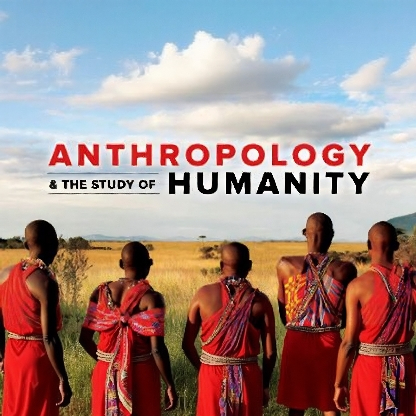
Anthropology and the Study of Humanity
Original price was: $29.99.$7.99Current price is: $7.99.
Biology, archaeology, language, and culture – gain a comprehensive understanding of humanity’s development from an acclaimed professor and field researcher
Anthropology and the Study of Humanity
Course Overview
Biology, archaeology, language, and culture – gain a comprehensive understanding of humanity’s development from an acclaimed professor and field researcher.
Course No. 1631
This 24-lecture course explores fundamental questions about human existence through the lens of anthropology’s four major subfields:
- Biological anthropology: Our primate origins and evolution
- Archaeology: Ancient civilizations and material culture
- Linguistic anthropology: The development of human communication
- Cultural anthropology: Diverse societies and belief systems
Professor Scott M. Lacy guides you through 63 million years of human development, from our earliest ancestors to modern cultural diversity, revealing what makes us uniquely human.
Key Topics Covered:
- Human evolution and migration patterns
- Development of tools, agriculture and cities
- Money, language and cultural systems
- Kinship, gender and social structures
- Religion, art and conflict resolution
- Applied anthropology in forensics and medicine
Video Lectures
01: Why Anthropology Matters (33 min)
Discover anthropology’s interdisciplinary approach to understanding humanity across time and space.
02: Science, Darwin, and Anthropology (31 min)
Trace scientific thought from ancient times through Darwin’s theory of natural selection.
03: Our Primate Family Tree (29 min)
Explore 63 million years of primate evolution and what we share with our closest relatives.
04: Paleoanthropology and the Hominin Family (31 min)
Follow human evolution from early bipedal species to Homo sapiens through fossil evidence.
05: Tracing the Spread of Humankind (27 min)
Examine theories of human migration out of Africa and into the Americas.
06: Anthropology and the Question of Race (29 min)
Understand race as a cultural construct through the history of anthropological thought.
07: Archaeology and Human Tools (27 min)
Learn how archaeologists study human development through stone tools like hand-axes.
08: Agricultural Roots of Civilization (30 min)
Investigate why humans transitioned from foraging to farming 10,000 years ago.
09: Rise of Urban Centers (29 min)
Tour ancient cities from Jericho to Cahokia that shaped early civilizations.
10: Anthropological Perspectives on Money (27 min)
Discover how credit systems predated physical money in human societies.
11: Anthropological Perspectives on Language (31 min)
Study language origins in primates and its revolutionary impact on human evolution.
12: Apocalyptic Anthropology (30 min)
Compare cultural visions of humanity’s end from religious prophecies to technological Singularity.
13: Cultural Anthropology and Human Diversity (31 min)
Transition from cultural evolutionism to relativism through pioneering anthropologists.
14: Field Research in Cultural Anthropology (30 min)
See how Hurston, Kroeber and Richards advanced ethnographic field methods.
15: Kinship, Family, and Marriage (29 min)
Explore diverse global concepts of family structure and social organization.
16: Sex, Gender, and Sexuality (30 min)
Analyze biological and cultural dimensions of human identity through twin studies.
17: Religion and Spirituality (31 min)
Track religious development from primate mourning rituals to organized faiths.
18: Art and Visual Anthropology (29 min)
Examine changing Western perceptions of world art and ethnographic filmmaking.
19: Conflict and Reconciliation across Cultures (30 min)
Apply anthropological methods to conflict resolution in global case studies.
20: Forensics and Legal Anthropology (28 min)
Follow forensic anthropologists analyzing human remains to build biological profiles.
21: Medical Anthropology (28 min)
Distinguish between illness experiences and biological diseases in healing systems.
22: Anthropology and Economic Development (31 min)
Explore development theory through post-WWII anthropological field research.
23: Cultural Ecology (33 min)
Investigate how environments shape – and are shaped by – cultural practices.
24: The Anthropology of Happiness (36 min)
Discover what four anthropological approaches reveal about human fulfillment.
Related products

Courses