Skip to content
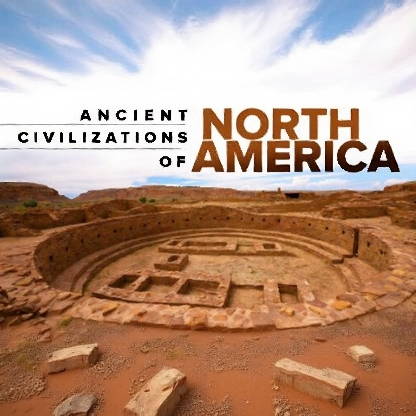
Ancient Civilizations of North America
Original price was: $49.99.$9.99Current price is: $9.99.
Join the Director of the Maya Exploration Center to discover the astounding accomplishments of ancient North Americans and their enduring legacy. In 24 illustrated lectures Professor Edwin Barnhart reconstructs the continent’s prehistoric and precontact civilizations—Poverty Point, the Adena and Hopewell, Cahokia, the Chaco phenomenon, the Ancestral Pueblo, Hohokam irrigation, Mississippian chiefdoms, coastal complex societies, Plains and Iroquoian cultures—and shows how archaeology, archaeoastronomy, genetics, and ethnohistory reveal a rich and sophisticated past.
Ancient Civilizations of North America
Course Overview
Join the Director of the Maya Exploration Center to discover the astounding accomplishments of ancient North Americans and their enduring legacy. In 24 illustrated lectures Professor Edwin Barnhart reconstructs the continent’s prehistoric and precontact civilizations—Poverty Point, the Adena and Hopewell, Cahokia, the Chaco phenomenon, the Ancestral Pueblo, Hohokam irrigation, Mississippian chiefdoms, coastal complex societies, Plains and Iroquoian cultures—and shows how archaeology, archaeoastronomy, genetics, and ethnohistory reveal a rich and sophisticated past.
Course Details
- Course No.: 3900
- Instructor: Professor Edwin Barnhart (Director, Maya Exploration Center)
- Format: 24 recorded lectures (approx. 25–38 minutes each)
- Focus: migrations and earliest peoples, Archaic innovations, moundbuilding and earthworks, city‑states and regional networks, southwestern architecture and astronomy, coastal hunter‑gatherer complexity, Plains and Northeastern polities, European contact and its consequences
Video Lectures (organized)
01: The Unknown Story of Ancient North America — 34 min
Why ancient North America has been misunderstood and how modern archaeology reveals complex societies, technologies, and urbanism.
02: The First Human Migrations to the Americas — 36 min
Genetic and archaeological evidence for migrations across Beringia, multiple colonization episodes, and dating challenges.
03: Clovis Man: America’s First Culture — 38 min
The Clovis point tradition, megafauna hunting economy, and the transition to later Paleo‑Indian cultures.
04: The Archaic Period: Diversity Begins — 36 min
Regional cultural diversification after megafaunal extinctions: seasonal rounds, fishing camps, and early sedentism.
05: Late Archaic Innovations — 32 min
Agriculture beginnings, pottery, permanent houses, metallurgy, burial practices, and the rise of ceremonial cemeteries.
06: Poverty Point: North America’s First City — 30 min
A 3,500‑year‑old planned community in the Lower Mississippi Valley: earthworks, trade networks, and early monumental architecture.
07: Medicine Wheels of the Great Plains — 28 min
Stone wheel monuments, variable functions, astronomical alignments, and the evolving meanings of medicine wheels.
08: Adena Culture and the Early Woodlands Period — 27 min
Conical burial mounds, ritual practices, and Adena influence across eastern North America.
09: The Hopewell and Their Massive Earthworks — 33 min
Hopewell trade networks, geometric earthworks, artistic tradition, and astronomical/ mathematical knowledge.
10: The Origins of Mississippian Culture — 31 min
Formation of Mississippian chiefdoms: maize intensification, bow & arrow adoption, and shared cosmology.
11: The Mississippian City of Cahokia — 31 min
Cahokia’s urban scale, mounds, social stratification, woodhenges, and ritual practices at North America’s largest precontact city.
12: The Wider Mississippian World — 33 min
Regional Mississippian centers (Spiro, Moundville, Etowah), shared iconography, and post‑Cahokia developments.
13: De Soto versus the Mississippians — 32 min
Hernando de Soto’s 1539–1543 expedition: encounters, violence, epidemiological consequences for indigenous polities.
14: The Ancient Southwest: Discovering Diversity — 28 min
Environmental zones of the Southwest and the adaptive strategies of multiple interacting cultural traditions.
15: The Basketmaker Culture — 25 min
Early sedentism in the Southwest, basketry importance, and pre‑pottery household economies.
16: The Mogollon Culture — 27 min
Mogollon village life, pit houses, rich painted pottery, and regional interactions.
17: The Hohokam: Masters of the Desert — 28 min
Extensive irrigation engineering (700+ miles of canals), public architecture, and craft production in the Salt and Gila basins.
18: The Ancestral Pueblo — 28 min
Pueblo architecture, aggregated roomblocks, kivas, and social responses to environmental constraints.
19: The Chaco Phenomenon — 30 min
Great Houses, Great Kivas, roads, long‑distance exchange, and the puzzles of demographic and ritual centrality at Chaco Canyon.
20: Archaeoastronomy in the Ancient Southwest — 26 min
Sun Daggers, Chimney Rock lunar observations, and astronomical alignments embedded in architecture and landscape.
21: The Periphery of the Ancient Southwest — 27 min
Neighboring nomadic lifeways, Patayan intaglios, and cultural diversity at the margins of sedentary zones.
22: Late Period Cultures of the Pacific Coast — 35 min
Complex coastal hunter‑gatherers: social stratification, potlatch economies, resource storage, and rich art traditions from California to Alaska.
23: Late Period Cultures of the Great Plains — 31 min
East/west Plains cultural distinctions, bison economies, effects of the horse, and European contact impacts.
24: The Iroquois and Algonquians before Contact — 37 min
Algonquian and Iroquoian lifeways; the Iroquois Great League of Peace and its political sophistication—possible influences on later democratic thought.
Related products






Courses