Skip to content
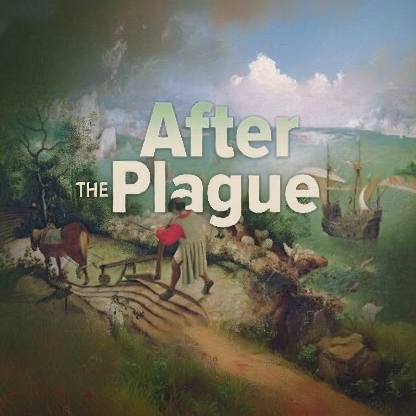
After the Plague
Original price was: $49.99.$9.99Current price is: $9.99.
With Geoffrey Chaucer’s The Canterbury Tales as a portal into a medieval Europe in the throes of disease, this 24‑lecture course examines how people across the continent reckoned with and responded to the political, economic, religious, and social transformations that followed the Black Death. Using literature (Chaucer, Boccaccio), archival evidence, and recent scholarship, Professor Simon Doubleday explores contagion, medicine, urban responses, demographic change, popular protest, gender and family dynamics, religious renewal and dissent, and long‑term economic and cultural consequences.
Course Overview
With Geoffrey Chaucer’s The Canterbury Tales as a portal into a medieval Europe in the throes of disease, this 24‑lecture course examines how people across the continent reckoned with and responded to the political, economic, religious, and social transformations that followed the Black Death. Using literature (Chaucer, Boccaccio), archival evidence, and recent scholarship, Professor Simon Doubleday explores contagion, medicine, urban responses, demographic change, popular protest, gender and family dynamics, religious renewal and dissent, and long‑term economic and cultural consequences.
Course Details
- Course No.: 8260
- Instructor: Professor Simon Doubleday (Hofstra University)
- Format: 24 recorded lectures (approx. 25–30 minutes each)
- Focus: Black Death pathology and spread, medieval globalization, public health and medical responses, literature and memory (Chaucer, Boccaccio), social upheaval (peasant revolts, Jacquerie), gender and family effects, religious change, and long‑term political and economic consequences
Video Lectures (organized)
01: Resilience: Rethinking the Black Death — 25 min
Introduction to the course; overview of plague pathology, symptoms, mortality patterns, and Chaucer’s early life as a lens on 14th‑century England.
02: Medieval Globalization and the Black Death — 28 min
How trade, pilgrimage, and diplomatic networks transmitted contagion across Eurasia and why medieval Europe was far more interconnected than commonly assumed.
03: Death Ships: The Spread of Plague in Europe — 28 min
Maritime and overland routes of contagion, urban vs. rural diffusion, regional case study of Spain, and contemporary descriptions of the pandemic’s passage.
04: Children, Plague, and Grief — 27 min
The demographic impact on children and family structures, orphan care, and community responses to widespread childhood mortality.
05: Famine, Flood, and Earthquakes — 26 min
Pre‑existing disasters (crop failures, floods, seismic events) that weakened societies and shaped responses to the Black Death.
06: Plague Medicine: Opium, Gold, Poison Clouds — 26 min
Medieval medical theories and plague treatises; role of humoral theory, herbal remedies, alchemy, and the turn toward empirical observation.
07: Filth: How Medieval Cities Fought the Plague — 26 min
Urban public‑health measures before and after 1348: sanitation, quarantine, civic regulation, and the administrative capacity of medieval towns.
08: Laughter and Joy: Boccaccio’s Decameron — 25 min
Boccaccio’s narrative response to plague: humor, storytelling, social critique, and survival strategies amid catastrophe.
09: Wives, Widows, and Witches — 25 min
Gendered impacts of the plague: widows’ economic roles, shifting opportunities for women, and the rise of witchcraft accusations in some contexts.
10: Justice in the Age of Robin Hood — 26 min
Law, order, and vigilantism: criminality, corruption, and popular tales (Robin Hood) as expressions of demands for justice.
11: Into the Sky: How Plague Changed Faith — 25 min
Religious reactions—penitential movements, intensified devotional practices, pilgrimage, and poets like Petrarch who reflected spiritual anxieties.
12: Astrology, Apocalypse, and Plague — 27 min
Astrological and apocalyptic explanations for the pandemic; the role of cosmology and prognostication in medieval thought.
13: Travel and Wanderlust: Sir John Mandeville — 26 min
Medieval travel literature and imagination during an age of restricted mobility—how exotic accounts offered psychological escape and shaped worldview.
14: Plague in the Islamic World — 26 min
Comparative perspectives: Islamic medical thought, religious interpretations, and the experience of plague in Muslim‑ruled Iberia and the wider Mediterranean.
15: Jewish Experiences of the Black Death — 27 min
The pandemic’s devastating effects on Jewish communities, scapegoating and massacres, and communal survival strategies across Europe.
16: Revolution in Rome: Cola di Rienzo — 27 min
Popular political movements in the aftermath of plague; the rise and fall of Cola di Rienzo as an expression of anti‑baronial unrest.
17: Uprising in France: The Jacquerie — 25 min
Causes, course, and consequences of the 1358 peasant revolt in northern France and its connection to wartime strain and plague pressures.
18: England: The Black Death and Economic Change — 25 min
Labor shortages, wage pressures, land‑use shifts, and legal responses in post‑plague England; long‑term structural change in rural economy.
19: The Peasants’ Revolt: England 1381 — 26 min
Origins, leadership, demands, and suppression of the 1381 revolt; how plague‑era socioeconomic transformation fed popular mobilization.
20: The Arthurian Court of Richard II — 26 min
Court culture, patrons, and the “Camelot” imagery under Richard II amid social tension and artistic renewal in late 14th‑century England.
21: Plague, Heresy, and the Questioning Spirit — 26 min
Religious dissent and reform impulses: radical critiques of clerical authority and the preconditions for later reform movements.
22: The Passionate Mystic: Margery Kempe — 26 min
Mystical devotion and lay spirituality in the aftermath of plague, with Margery Kempe as a case study of female religious experience and public piety.
23: The Canterbury Tales and the Specter of Death — 26 min
Close readings of selected Canterbury Tales (Clerk’s Tale, Melibee, Man of Law) to illuminate attitudes toward suffering, stoicism, and communal life after plague.
24: The Plague and Us: Reaching across Time — 30 min
Synthesis and reflection: what the Black Death tells us about resilience, institutional adaptation, cultural memory, and how the medieval experience resonates in modern art, film, and public discourse.
Related products