Skip to content
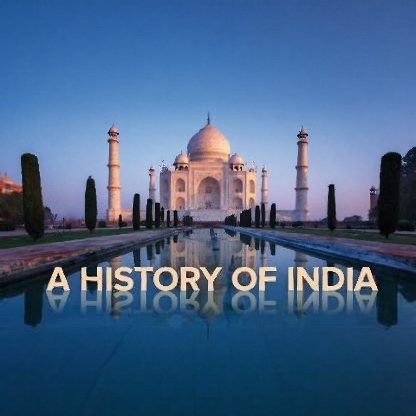
A History of India
Original price was: $69.99.$14.99Current price is: $14.99.
An award‑winning professor takes you on a breathtaking survey of South Asia from its earliest societies through the modern challenges of the 21st century. Over 36 lectures, this course traces geography and deep prehistory; the Indus, Vedic, Mauryan, Gupta, and Mughal eras; the arrival and impact of Islam; the coming of competing European powers and the British East India Company; colonial rule and the Raj; the rise of modern nationalism (Gandhi, Ambedkar, Jinnah, Bose); Partition and the creation of India, Pakistan, and Bangladesh; and the politics, society, and economies of contemporary South Asia.
Course Overview
An award‑winning professor takes you on a breathtaking survey of South Asia from its earliest societies through the modern challenges of the 21st century. Over 36 lectures, this course traces geography and deep prehistory; the Indus, Vedic, Mauryan, Gupta, and Mughal eras; the arrival and impact of Islam; the coming of competing European powers and the British East India Company; colonial rule and the Raj; the rise of modern nationalism (Gandhi, Ambedkar, Jinnah, Bose); Partition and the creation of India, Pakistan, and Bangladesh; and the politics, society, and economies of contemporary South Asia.
Course Details
- Course No.: 8350
- Format: 36 lectures (approx. 28–35 minutes each)
- Focus: archaeological and textual foundations, religious and philosophical traditions (Hinduism, Buddhism, Jainism, Islam), major empires and states (Maurya, Gupta, Mughal), European contact and colonialism, nationalist movements, Partition, and postcolonial developments in India, Pakistan, and Bangladesh
Video Lectures (organized)
01: Earliest History of the Indian Subcontinent — 33 min
Geographic foundations: plate tectonics, river systems (Indus, Ganges), ecological zones, and how physical geography shaped settlement, agriculture, and regional diversity.
02: Migration and the Adivasi — 34 min
Prehistoric and early populations: the Adivasi (indigenous forest peoples), genetic and linguistic evidence, and the long‑term persistence and status of indigenous communities.
03: Indus Valley Civilization — 31 min
Urban Bronze Age centers (Harappa, Mohenjo‑Daro): urban planning, material culture, undeciphered script, and theories on decline.
04: Indo‑European Vedic Culture — 31 min
The Vedic corpus and the emergence of Vedic civilization; early social and ritual structures that would shape later Hindu thought.
05: Caste: Varna and Jati — 30 min
Origins and meanings of the varna system and the more complex, occupationally based jati system; social organization and mobility across time.
06: Epic Literature: Ramayana — 31 min
The Ramayana as myth, moral tale, and cultural text—its plot, characters (Rama, Sita), and role in South Asian value systems.
07: Epic History: Mahabharata — 30 min
The Mahabharata’s scope, narrative complexity, and its dual roles as mythic history and ethical/philosophical resource.
08: Dharma in the Bhagavad Gita — 28 min
Philosophical core of the Gita: duty (dharma), ethical action, detachment, and its enduring influence on Indian thought.
09: The Origins and Rise of Jainism — 30 min
Jainism’s foundations, emphasis on ahimsa (non‑violence), ascetic practices, and social role in the 6th–5th centuries BCE.
10: The Origins and Rise of Buddhism — 29 min
Life of Siddhartha Gautama, Four Noble Truths, Eightfold Path, and the spread of Buddhism within and beyond South Asia.
11: The Mauryan Empire — 31 min
Chandragupta Maurya’s consolidation, state formation, administration, and the scale of early imperial rule.
12: Ashoka’s Imperial Buddhism — 30 min
Ashoka’s conversion after Kalinga, propagation of dhamma, rock‑edicts, and the use of imperial power to promote ethical governance.
13: Deccani and Southern States — 31 min
Political and cultural developments on the Deccan plateau and in southern kingdoms, highlighting regional diversity beyond the north Indian core.
14: Northwest and North India — 31 min
Post‑Mauryan regional polities, Silk Road interactions, and the Gupta era’s cultural achievements.
15: Brahmanic Synthesis — 30 min
Consolidation of Brahmanical norms, dharma literature (shastras), and the formation of classical Hindu social and religious structures.
16: Indian Parsis, Jews, and Christians — 30 min
Diasporic communities: Parsis (Zoroastrian), Jewish, and early Christian presence—trade, accommodation, and contribution to Indian pluralism.
17: Islam Comes to India — 30 min
Routes and modes of Islam’s spread (trade, missionary, conquest), early Muslim communities, and syncretic developments.
18: Indian Sultans — 31 min
Regional sultanates (Delhi Sultanate and others), polity formation, administration, and cultural synthesis between Islamic and Indic traditions.
19: The Early Mughal Empire — 33 min
Babur’s conquest, Timurid legacy, foundation of Mughal imperial structures and military patterns.
20: The Reign of Emperor Akbar — 35 min
Akbar’s administrative reforms, religious policy (dialogues at Ibadat Khana), marriage alliances, and the construction of a syncretic imperial ideology.
21: Later Mughal Emperors — 33 min
Jahangir, Shah Jahan and the cultural/architectural apex (Taj Mahal), court life, and imperial patronage.
22: The Mughals and the Marathas — 32 min
Aurangzeb’s expansion, the rise of the Maratha confederacy, and the gradual imperial decline leading to regional polities.
23: Competing European Empires — 29 min
Portuguese, Dutch, French, and British coastal ventures: trade patterns, factory forts, and early colonial competition.
24: The British East India Company — 32 min
From factory to state: Company military conquest (Bengal), revenue systems, the transformation of trade, and the mechanics of early British rule.
25: The Issues and Events of 1857 — 29 min
The 1857 uprising (mutiny): causes (military, social, economic, cultural), course, suppression, and its reconfiguration of British policy.
26: The British Raj and Early Nationalism — 31 min
Transfer from Company to Crown, administrative structures of the Raj, early reform and nationalist currents.
27: India and Indians in the World — 31 min
The South Asian diaspora: soldiers, students, labor migrants; Indian global connections and cross‑cultural exchanges.
28: Mahatma Gandhi — 29 min
Gandhi’s biography, satyagraha and ahimsa, political strategy, and his centrality to mass anti‑colonial mobilization.
29: Nationalists Ambedkar, Bose, and Jinnah — 30 min
Diverse nationalist voices: Ambedkar (Dalit rights), Subhas Chandra Bose (militant anti‑colonialism), and Jinnah (Muslim League and Pakistan).
30: The Partition of 1947 — 30 min
End of British rule: negotiations, hurried Partition, mass displacement, and communal violence.
31: West and East Pakistan — 28 min
The fraught polity of two wings, political marginalization of East Pakistan, and tensions that escalated to conflict.
32: The New Pakistan — 30 min
Pakistan’s post‑1971 trajectory: military rule, Islamization, democratic struggles, and key political figures.
33: Independent Bangladesh — 29 min
Birth of Bangladesh in 1971, the war for independence, nation‑building challenges, and contemporary issues.
34: India under Nehru — 31 min
Nehru’s vision of secular, socialist‑oriented democratic modernization and the institutional foundations of independent India.
35: Modernizing India — 29 min
Post‑Nehru developments: Indira Gandhi’s rule, Emergency, regional movements, nuclearization, economic reforms, and political evolution.
36: South Asia into the 21st Century — 34 min
Contemporary dynamics: demographic pressures, globalization, economic growth, communal politics, regional rivalries, and future challenges and opportunities.
Related products