Skip to content
30 Masterpieces of the Ancient World
Original price was: $69.99.$14.99Current price is: $14.99.
36 richly illustrated lectures that travel the globe to present 30 iconic works of ancient and prehistoric art—from Chauvet cave paintings and the Uruk Vase to Tutankhamun’s mask, Laocoön, the Olmec heads, Borobudur, and Andean textiles—using each masterpiece to illuminate the societies that created it and the universal themes of rulership, religion, fertility, and mortality.
Course Overview
36 richly illustrated lectures that travel the globe to present 30 iconic works of ancient and prehistoric art—from Chauvet cave paintings and the Uruk Vase to Tutankhamun’s mask, Laocoön, the Olmec heads, Borobudur, and Andean textiles—using each masterpiece to illuminate the societies that created it and the universal themes of rulership, religion, fertility, and mortality.
Course Details
- Course No.: 7820
- Instructor: Professor Diana Krumholz McDonald
- Format: 36 lectures (approx. 28–34 min each)
- Focus: masterpieces in context—archaeology, iconography, function, technique, and cultural meaning
Video Lectures (organized)
01: Where Do We Come From? — 34 min
Introduction to the course’s themes: what makes a masterpiece and why ancient art still matters.
02: Ancient Cave Art — Chauvet, France — 32 min
Study the realistic animal paintings of Chauvet and what they reveal about Paleolithic perception and ritual.
03: The Uruk Vase — Vision of an Ordered World — 28 min
Narrative registers from Mesopotamia that express political order and ritual authority.
04: The Standard of Ur — Role of the King — 31 min
A Sumerian inlay depicting war and banquet scenes that illuminate early kingship and social hierarchy.
05: “Ram Caught in a Thicket” — 29 min
A small three‑dimensional sculpture from Ur tied to burial ritual and fertility symbolism.
06: Great Ziggurat at Ur — Ancient Architecture — 32 min
Ziggurat form, religious function, and the monumental expression of Sumerian city religion.
07: Victory Stela of Naram‑Sin — 31 min
Akkadian imperial propaganda that portrays king as divinized victor in a unified pictorial field.
08: Neo‑Assyrian Palace Reliefs — 29 min
Lion hunts and battle reliefs as visual statements of royal power and ideological order.
09: “Queen of the Night” — Babylonian Goddess — 29 min
A mysterious erotic/terrifying relief that illuminates Mesopotamian religion and iconography.
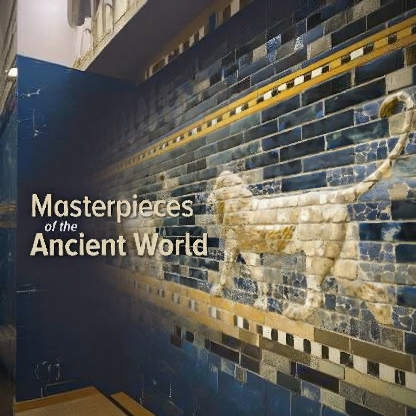
10: Ishtar Gate and Processional Way — 30 min
Nebuchadnezzar’s glazed brick monuments as civic ritual architecture and animal symbolism.
11: The Ancient City of Persepolis — 33 min
Achaemenid palatial program, reliefs, and imperial ideology at Persia’s ceremonial capital.
12: Palette of Narmer — The Conquering King — 33 min
Early Egyptian state formation and visual rhetoric of kingship in a ceremonial palette.
13: Statue of Khafre — Rebirth of a King — 33 min
State sculpture and funerary ideology expressed in the serene, monumental image of a pharaoh.
14: Tutankhamun’s Mask — 31 min
The artistry, materials, and symbolic program of the boy‑king’s funerary mask.
15: Tomb Painting of Nefertari — 33 min
A richly painted royal tomb interior that illustrates Egyptian afterlife belief and elite visual culture.
16: Kritios Boy — Idealized Athletic Youth — 28 min
A breakthrough in Greek naturalism and contrapposto signaling a new sculptural realism.
17: Discobolus — Motion in Sculpture — 31 min
Myron’s representation of athletic motion and classical ideals of proportion and harmony.
18: Parthenon Marbles — Metopes and Frieze — 31 min
High classical sculptural program that narrates myth, civic identity, and Athenian achievement.
19: Greek Vase Painting — “Death of Sarpedon” — 28 min
Red‑figure technique as narrative medium and the depiction of heroic action on pottery.
20: Aphrodite of Knidos — 27 min
The celebrated female nude as a cultural and aesthetic turning point in Greek art.
21: Laocoön — Three‑Dimensional Narrative — 32 min
Hellenistic drama and emotional expression embodied in a complex sculptural group.
22: Column of Trajan — 32 min
Spiral narrative relief as monumental record of Roman conquest, engineering, and commemorative art.
23: Bronzes of Ancient China — 32 min
Shang and Zhou bronze ritual vessels: casting technology, ancestor cult, and elite display.
24: Great Stupa at Sanchi — 32 min
Buddhist architecture and relief sculpture as didactic pilgrimage monument in India.
25: Borobudur — Ancient Buddhist Stupa — 30 min
Java’s cosmic mandala in stone: narrative reliefs and Buddhist cosmology on a monumental scale.
26: Colossal Olmec Heads — 32 min
Gigantic carved heads from Mesoamerica: portraiture, rulership, and the power of monumental stone.
27: Sarcophagus Cover of Pakal at Palenque — 34 min
Maya cosmology and royal ideology encoded in tomb sculpture and iconography.
28: Carved Stone Lintels of Yaxchilán — 32 min
Ritual, sacrifice, and elite performance carved into vivid Maya stone reliefs.
29: Teotihuacan — Temple of the Feathered Serpent — 30 min
Urban planning and serpent iconography in a major pre‑Aztec Mexican metropolis.
30: Colossal Stone Statue of Coatlicue — 31 min
Aztec monumental sculpture combining terror and symbolism in the Serpent Skirt goddess.
31: Aztec Calendar Stone — 32 min
Cosmology and ritual timekeeping expressed through massive carved stone iconography.
32: Moche Earspools — Miniature Masterpieces — 30 min
Exquisite metalwork from Sipán illustrating craftsmanship, ritual, and elite display in ancient Peru.
33: Ancient Andean Ceramics — 31 min
Functional pottery as social text: pattern, use, and iconography in Andean cultures.
34: Ancient Andean Textiles — 33 min
High‑status weaving traditions demonstrating abstract design and technical virtuosity long before modern abstraction.
35: What Can We Learn from Ancient Art? — 31 min
Synthesis of lessons: how ancient masterpieces inform identity, belief, and artistic continuities.
36: How Ancient Art Reverberates — 34 min
Comparisons with modern art, enduring themes (animals, fertility, death, rulership), and the legacy of ancient masterpieces.
Related products