Skip to content
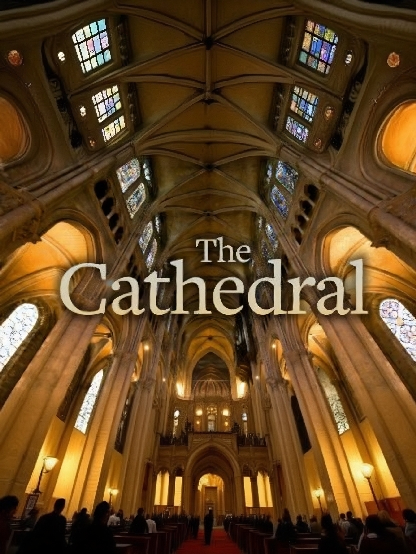
The Cathedral
Original price was: $39.99.$9.99Current price is: $9.99.
The Cathedral
Explore the evolution, majesty, and intrigue of cathedrals worldwide, as you embark on 3-D tours with a noted medieval historian.
Course Description
The Cathedral takes you on a remarkable journey through the history and architecture of the world’s most iconic cathedrals. Led by a renowned medieval historian, you’ll explore early Christian architecture, the monumental Romanesque style, and the breathtaking innovations of Gothic design. From Notre Dame in Paris to Chartres, Reims, Amiens, and beyond, discover how these sacred buildings became symbols of faith, power, and artistic mastery. The course also examines cathedrals across England, Italy, Spain, the Holy Roman Empire, and even the New World, concluding with the revival of Gothic architecture in modern times. Through 3-D tours, sculpture analysis, stained glass studies, and historical context, this course reveals why cathedrals remain among humanity’s greatest cultural achievements.
The Cathedral
Explore the evolution, majesty, and intrigue of cathedrals worldwide, as you embark on 3-D tour
01: What Is a Cathedral?
Start yo
32
02: Early Christian Archite
Go back to
31 min
03: Romanesque – A New Monumental Style
By 1100, many churches in western Europe were built using a range of local styles, all of which in some manner hearkened back to classical Roman forms. Here, explore the development of the Romanesque style and survey impressive examples of Romanesque cathedrals in France, Germany, Italy, and England.
30 min
04: Vaulting – A Look at Roofs
What’s the best way to build a church’s ceiling? This lecture takes you through the evolution of church roofs—from flat wood ceilings to stone barrel vaults to magnificent ribbed vaulting. Without these developments, you’ll discover, there could have been no Gothic cathedrals.
31 min
05: Romanesque at Its Best
Sainte Foy in Conques. Saint Mary Magdalene in Vézelay. Saint-Lazare at Autun. Focus on these three French churches as definitive examples of Romanesque style and decoration. In particular, investigate how sculptural masterpieces on columns and over entrances rendered biblical stories into simple, visually arresting messages to instruct the faithful.
30 min
06: Saint-Denis and the Beginning of Gothic Style
Scholars agree that the first Gothic building in history is the Abbey Church of Saint-Denis, located outside of Paris. After learning about this building’s role in French history, tour the building’s facade and interior, noting in particular the ribbed and pointed vaults, large stained glass windows, and extraordinary infusion of sunlight.
30 min
07: The Urban Context of Cathedrals
Place the power of cathedrals in a more urban context as you explore the factors that led to the widespread reemergence of cities as the religious centers of Europe. Then, take a brief look at three “experimental” Gothic cathedrals in northern France: Sens, Senlis, and Noyon.
31 min
08: Notre Dame in Paris
In the first of two lectures on early Gothic cathedrals, focus on perhaps the most famous cathedral in the world: Notre Dame in Paris. Gain new insights into how this magnificent building was created and learn the importance of features from its justly famous facade to its dramatic flying buttresses.
30 min
09: Early Gothic Style – Laon
Located in a much smaller town, the Cathedral of Laon is a quite different Gothic experiment than Notre Dame—but just as fascinating. Learn what’s so unusual about the style, substance, and placement of the three arches on its facade, the statues of oxen on top of its towers, and more.
30 min
10: Chartres – The Building
Notre Dame de Chartres is perhaps the most influential Gothic cathedral—so influential that Professor Cook devotes three lectures to exploring it. In the first, focus on the building itself, including its systematic use of flying buttresses, groundbreaking three-layered elevation, and rich interplay between verticals and horizontals.
30 min
11: Chartres – The Sculpture
Continue your virtual tour of Notre Dame de Chartres with a closer look at the cathedral’s three porches, whose sculpted portals contain the largest collection of statuary of any Gothic cathedral. With their precise details, hidden narratives, and coordinating themes, these sculptures teach, inspire, and even evoke fear.
31 min
12: Chartres – The Windows
Professor Cook concludes his in-depth look at Chartres with a handsomely illustrated lecture on its famous stained glass windows, as well as a description of how these brilliant works of art are created. Of the 175 glass windows in the cathedral, about 150 of them contain their original medieval glass.
31 min
13: Amiens – The Limits of Height
Enormous. Soaring. Awe-inspiring. Find out why the Cathedral of Amiens—Professor Cook’s favorite cathedral—deserves these and other titles by surveying the structure of the building and its dizzying heights. It’s a chance to find out why Amiens takes visitors to the limits of what a Gothic building can do.
30 min
14: Amiens – The Facade
The front of the Cathedral of Amiens is the single greatest sculptural display in all of Gothic decoration. Here, make sense of the complexities and details of the cathedral’s facade by approaching its larger-than-life sculptures from the point of view of the 13th-century people for whom they were built.
30 min
15: Reims – The Royal Cathedral
Another of France’s most beautiful—and important—cathedrals is located in the city of Reims. Survey the building’s long and dramatic history, from the time of Joan of Arc to the bombardments of World War I, and look closely at examples from its statues, spires, and stained glass windows.
31 min
16: Cathedrals – Who Builds? Who Pays? How Long?
You’ve witnessed the majesty of some of Europe’s great cathedrals. But how on earth were they actually built? This lecture separates myth from reality, using models, illuminated manuscripts, stained glass windows, and other sources to reveal the technical process of creating impressive buildings that would inspire millions.
31 min
17: New Developments in Gothic France
Using the abbey of Saint-Denis; the cathedrals at Bourges, Troyes, and Beauvais; and the chapel of Saint Chapelle as case studies, examine the progression in the Gothic style that took place during the late 13th century. Among these are advanced buttressing systems, even higher vaults, and the addition of still more windows.
31 min
18: Late Gothic Churches in France
Witness the evolution of Gothic architecture in the 14th, 15th, and early 16th centuries. Looking closely at a series of French cathedrals, abbeys, and churches, you’ll find powerful examples of the flamboyant style, including more elegant stone tracery and glass windows that are more painted than stained.
31 min
19: Early Gothic Architecture in England
Cross the English Channel into England, where you tour four classic examples of the country’s Gothic style: the cathedrals at Canterbury, Salisbury, Wells, and Lincoln. In addition, investigate the major and subtle differences between these and the French cathedrals you looked at in earlier lectures.
31 min
20: Decorated and Perpendicular English Gothic
Continue your virtual travels through England, this time paying particular attention to specific cathedrals, abbeys, and chapels that feature developments unique to the English Gothic style. Highlights of this lecture include Westminster Abbey, Kings College Chapel in Cambridge, and Ely Cathedral.
31 min
21: Gothic Churches in the Holy Roman Empire
Venture into the former territory of the Holy Roman Empire in this highlight of the most famous Gothic cathedrals from this part of Europe. Here, study the Gothic cathedrals of Strasbourg, Cologne, and Prague, as well as the exuberance of Kutná Hora’s cathedral in the Czech Republic.
31 min
22: Gothic Churches in Italy
While the term “Gothic” is rarely used in an Italian context, Professor Cook pinpoints both traditional and unique Gothic elements present in the cathedrals of Siena and Orvieto, as well as in the Basilica of Saint Francis in Assisi. He also guides you through other buildings, including the most Gothic cathedral in Italy, Milan Cathedral.
32 min
23: Gothic Styles in Iberia and the New World
Turn west to the Gothic cathedrals of Spain, many of which exhibit a unique mixture of Roman, Muslim, French, and German influences. Then, go across the ocean to see how Spanish churches developed in the New World, including a visit to Santo Domingo in the Dominican Republic, the oldest cathedral in the Americas.
31 min
24: Gothic Architecture in Today’s World
With the spread of Renaissance ideas and styles, Gothic architecture eventually subsided, only to experience a vibrant revival in the 19th and 20th centuries. In this concluding lecture, sample neo-Gothic churches in countries like Ecuador, China, South Africa, and the United States.
31 min
Related products