Skip to content
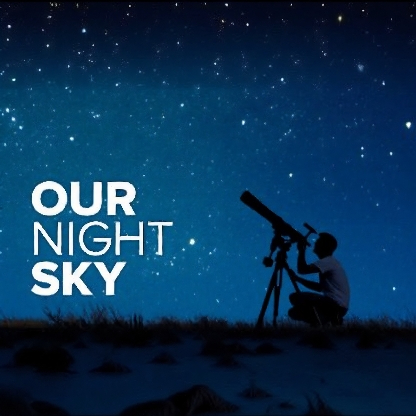
Our Night Sky
Original price was: $29.99.$6.99Current price is: $6.99.
Gain a superb introduction to the wonders of the night sky with this course—taught by an award-winning astronomer—that explores the fundamentals of stargazing. For thousands of years, the star-filled sky has been a source of wonder, discovery, entertainment, and instruction. Ancient people from nearly every continent and culture wove exciting stories about the mythological figures they saw in the heavens. People also used the sun, moon, and stars for time-keeping and navigation.
Overview
Course No. 1846
Gain a superb introduction to the wonders of the night sky with this course—taught by an award-winning astronomer—that explores the fundamentals of stargazing. For thousands of years, the star-filled sky has been a source of wonder, discovery, entertainment, and instruction. Ancient people from nearly every continent and culture wove exciting stories about the mythological figures they saw in the heavens. People also used the sun, moon, and stars for time-keeping and navigation.
Careful observers throughout Europe, the Middle East, Asia, and elsewhere kept precise astronomical records, eventually paving the way for the Scientific Revolution and its remarkable discoveries about the nature of the universe.
Course Structure
01: The Constellations and Their Stars
Begin your study of the night sky by investigating the origin of the constellations—the traditional groupings of stars that mostly date to antiquity. The well-known constellation Orion illustrates the fascinating mix of beauty, mythology, and scientific knowledge to be found wherever you look in the heavens.
Duration: 34 min
02: Seeing and Navigating the Sky
The naked eye is a powerful instrument—if you know how to use it. Learn the best times and conditions for observing, how to identify the positions and magnitudes of stars and planets, how the sky changes over the course of a night, how to use astronomical maps such as a planisphere, and more.
Duration: 34 min
03: Using Binoculars and Backyard Telescopes
There are many choices when selecting binoculars or a telescope. Learn what to look for in light-gathering power, optical design, magnification, mounts, and other features. Professor Murphy also suggests several tips for getting the best observing experience out of your equipment.
Duration: 30 min
04: Observing the Moon and the Sun
Charting the motions and changes of the sun and moon may be humankind’s oldest astronomical activity. Discover how both objects offer rich opportunities for study. Also learn the precautions to take when observing the sun, which is the only star that can be seen up close and in detail.
Duration: 33 min
05: Observing the Planets with a Telescope
The rings of Saturn, the bands of Jupiter, the phases of Venus, the polar caps of Mars—these and other planetary features are visible through a small telescope. Learn when viewing opportunities arise for each of the planets and what sights await the dedicated observer.
Duration: 34 min
06: Meteor Showers, Comets, Eclipses, and More
Explore a variety of special phenomena that are among the wonders of the sky. Some, like bright meteors, auroras, and many comets, are largely unpredictable. Others, like eclipses and annual meteor showers, occur at well-known times—although it may require a special trip to see them.
Duration: 33 min
07: The Northern Sky and the North Celestial Pole
Embarking on the second half of the course in which you systematically tour the entire sky, study two constellations that are continuously in view from the Northern Hemisphere: Ursa Major and Cassiopeia. Also explore the slowly shifting position of true north in the sky.
Duration: 32 min
08: The Fall Sky
Navigate your way around the autumn sky from the Northern Hemisphere, discovering how the classical myth of Andromeda ties together the stories of the nearby constellations of Cassiopeia, Perseus, Cepheus, Pegasus, and Cetus. The sights include the Andromeda galaxy, the nearest large galaxy to our own.
Duration: 31 min
09: The Winter Sky
Continuing your focus on the constellations of the Northern Hemisphere, survey the magnificent winter sky, dominated by Orion. “Star hop” around the region, which includes a wealth of interesting stars, globular clusters, nebulae, and other features, especially the Orion Nebula—the finest nebula in the northern sky—and the Pleiades and Hyades star clusters in Taurus.
Duration: 33 min
10: The Spring Sky
The spring sky opens the view into intergalactic space perpendicular to the plane of the Milky Way. Among the objects visible are the immensely rich galaxy clusters in Virgo and Coma Berenices, which are many millions of light-years distant and can be seen with small and moderate telescopes.
Duration: 31 min
11: The Summer Sky
Arching high overhead in the summer sky is the Milky Way, which is the plane of our galaxy seen from the inside. Tour this densely packed region of stars of all types, from dusty regions of star birth to the exquisite shells of dying stars. Here, a useful orienting feature is the Summer Triangle.
Duration: 31 min
12: The Southern Sky and the Milky Way
In this final lecture, travel to the Southern Hemisphere for sky views inaccessible from northern latitudes. Discover the famous Southern Cross, the Large and Small Magellanic Clouds, and a spectacular panorama of the Milky Way—along with new myths and stories that add a human dimension to our marvelous night sky.
Duration: 32 min
Related products

By Area