 Skip to content
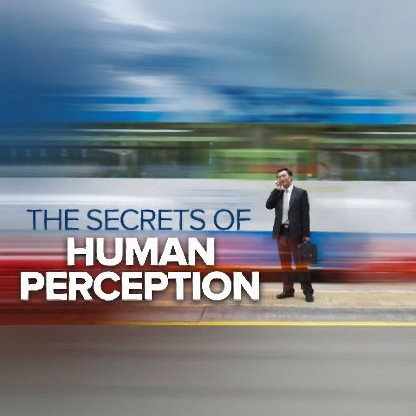
Understanding the Secrets of Human Perception
Original price was: $29.99.$7.99Current price is: $7.99.
Discover the secret life of your senses through an intriguing and unforgettable 24-lecture course delivered by a masterful educator who has spent several decades immersed in exploring the frontiers of human perception. Your senses aren’t just a part of you—they define you. Nothing you experience would be possible without the intricate power of your senses. But how much about them do you really know?
Course Overview
Discover the secret life of your senses through an intriguing and unforgettable 24-lecture course delivered by a masterful educator who has spent several decades immersed in exploring the frontiers of human perception. Your senses aren’t just a part of you—they define you. Nothing you experience would be possible without the intricate power of your senses. But how much about them do you really know?
Your ability to sense and perceive the world around you is so richly detailed and accurate as to be miraculous. No tool in the entire universe of scientific exploration can come close to matching the ability of your brain to use information sensed by your eyes, ears, skin, tongue, and nose to produce a rich sensory experience in just milliseconds.
In recent years, neurobiologists and other scientists have uncovered new insights into how your senses work and the amazingly complex and fascinating things they can do. And now you can share in what they’ve discovered—through this intriguing series of 24 lectures from an award-winning teacher. Knowing how your senses work and the ways they shape how you see, interact with, and understand your life will help you think more critically about everything you sense and perceive, strengthen your appreciation of the senses that make this possible, prepare you to be an active consumer of new scientific evidence on how our senses work, and much more.
With Professor Vishton as your guide, you’ll consider each of your senses from multiple perspectives:
- Explore how your brain processes different sensory information.
- Consider how your senses work together and within the context of the environment around you.
- Discover how your senses connect you to the world and other people.
Using both cutting-edge research and simple experiments, tests, and demonstrations to hone your understanding, he has created a world-class learning experience that will change the way you think about your senses.
Course Lectures
01: Your Amazing, Intelligent Senses
Embark on a fascinating journey into the secret life of your senses. In this introductory lecture, Professor Vishton uses a series of demonstrations to prove that perception is, in fact, amazing; shows you how your sensory systems inherently rely on making “educated guesses”; and lays the roadmap for the lectures ahead.
Duration: 32 min
02: The Physiological Hardware of Your Senses
Get a working knowledge of sensory physiology that will prove important for the lectures ahead. Learn how neurons function, how your senses translate energy into electrical signals, how your brain organizes this energy, and how you can mentally represent the infinite range of things out in the world.
Duration: 30 min
03: Neuroimaging-The Sensory Brain at Work
Learn how brain researchers figured out how the functions of sensation and perception map onto particular brain regions. Focusing on what happens when you recognize a face, see how brain-injured patients, functional magnetic resonance imaging, and scientific studies have brought us closer than ever to understanding this complex subject.
Duration: 31 min
04: Brain Modules-Subcomponents of the Senses
There is evidence out there to support the idea that your senses arise from many separate, independent “modules.” Here, Professor Vishton discusses the evidence for this organization and demonstrates how your mind puts these modules together to create the rich, combined sensory experience you live with every day.
Duration: 30 min
05: Perceiving a World in Motion
Explore three key aspects of how you sense motion. First, learn why motion information is important for perceiving the location, shape, and identity of objects around you. Then, examine how your brain perceives and infers motion. Finally, discover how you interpret the complex patterns of motion delivered to your retinas.
Duration: 31 min
06: Seeing Distance and Depth
Probe a classic mystery of sensory processing: depth perception. When is depth perception not accurate? How do cues such as convergence and motion parallax support your perception of size and depth? And how do you put these sources of information together to produce a single, accurate picture of what’s around you?
Duration: 32 min
07: Seeing Color and Light
Turn now to the ways that you perceive color. After a quick discussion of the physics of light and color, Professor Vishton explains the trichromatic theory of color perception (how color is processed in your retinas) and the opponent process theory of color perception (how color is interpreted in your visual cortex).
Duration: 33 min
08: Your World of Taste and Olfaction
In the first of six lectures on your nonvisual senses, focus on taste and smell. You’ll learn where your unique flavor preferences come from, how smells are processed in your brain, why aromas can recall particular memories and emotions, how taste interacts with smell and vision, and much more.
Duration: 28 min
09: Hearing the World around You
What are the physics of sound? How does your auditory system transform sound into patterns of neural activity? How does sound localization—the process through which you can infer the location of different sound sources—work? Uncover the answers to these and many other questions about your sense of hearing.
Duration: 30 min
10: Speech and Language Perception
In this fascinating lecture, discover how you produce and perceive language. Explore how you communicate ideas using basic sounds; how you determine where one word ends and another begins; how things you think are being perceived by your ears are actually sensed by your eyes, and more.
Duration: 32 min
11: Touch-Temperature, Vibration, and Pressure
Broaden your understanding of just how detailed and intricate your sense of touch is. You’ll spend time considering the different reception systems embedded in your skin; the ways you use touch to control your actions and to explore your surroundings; and how this particular sense grounds your other senses.
Duration: 34 min
12: Pain-How It Works for You
Pain is more than just a nuisance—it’s extremely important to your well-being. Get an overview of the systems of pain perception; the ways your brain processes pain formation; how seeing pain in others can quite literally cause you to feel pain yourself; and what happens when the pain system breaks down.
Duration: 28 min
13: Perception in Action
Recent scientific studies have shown that your actions can actually control your perceptions. Here, Professor Vishton guides you through our latest understanding of the interplay between action and perception.
Duration: 31 min
14: Attention and Perception
Examine how attention works in the human visual system. You’ll learn how attention functions, how it enables you to locate mental resources effectively, how it works as a “spotlight” highlighting aspects of visual input, and how it serves as “perceptual glue” pulling together aspects of a stimulus into perceptual objects.
Duration: 29 min
15: Kinesthetic Perception
One human sense often left off the standard list of five: kinesthetic perception, or how you perceive and move your body. Consider aspects of kinesthetic perception, including your vestibular sense (how you perceive the position of your whole body) and proprioception (how you perceive the position of individual body parts).
Duration: 28 min
16: Seeing, Remembering, Inferring Infants
Get a better understanding of adult perception by exploring the intriguing process of perceptual development from birth to the first few years of life. How do infants see? Control their eye movements? Use their sensory input to make inferences about things they can’t directly see?
Duration: 29 min
17: How Infants Sense and Act On Their World
Continue building on ideas about how infant perception works and develops. In this lecture, you’ll focus on how an infant’s nonvisual senses develop; how an infant connects sensory abilities to actions such as crawling, reaching, and grasping; and how these action abilities influence an infant’s sensory and perceptual abilities.
Duration: 31 min
18: Illusions and Magic
Enter the world of illusions and see how, in addition to being entertaining, they can reinforce and further develop your grasp of human sensation and perception. Professor Vishton guides you through some of his favorite visual illusions, including the Kanizsa triangle, the “Café wall,” and the “paper dragon” illusions.
Duration: 30 min
19: Perceiving Emotion in Others and Ourselves
Consider perception and emotion from a variety of perspectives. How does emotion ramp up your sensory sensitivity to fear, or reduce it for disgust? How can various emotional states change your perception of time and space?
Duration: 33 min
20: Sensing the Thoughts of Others-ESP
Reading minds. Detecting lies. Predicting the future. Debunk these and other “paranormal phenomena” by exploring how we infer others’ thoughts and actions through standard perception.
Duration: 34 min
21: Opponent Process for Perception and Life
Make sense of opponent process, one of the most fundamental organizational principles by which your brain is organized. Consider how opponent process is implemented at the level of individual neurons and how it maintains your internal state of well-being.
Duration: 31 min
22: Synesthesia-Tasting Color and Seeing Sound
Focus on the strange and interesting phenomenon of synesthesia, which draws seemingly bizarre connections between different sensory inputs. Studying this subject reveals some interesting facts about normal perception as well.
Duration: 29 min
23: How Your Sensory Systems Learn
How do wine experts correctly identify wine after a single sip? How do chess masters recreate pieces of a game on a chessboard? The answer is perceptual learning, or the ways your sensory systems change after repeated exposure to stimulus.
Duration: 30 min
24: Fixing, Replacing, and Enhancing the Senses
Cochlear implants, artificial retina projects, tactile television—just three of the fascinating topics you’ll learn about in this final lecture on fixing and replacing damaged sensory systems.
Duration: 34 min
Related products




By Area
